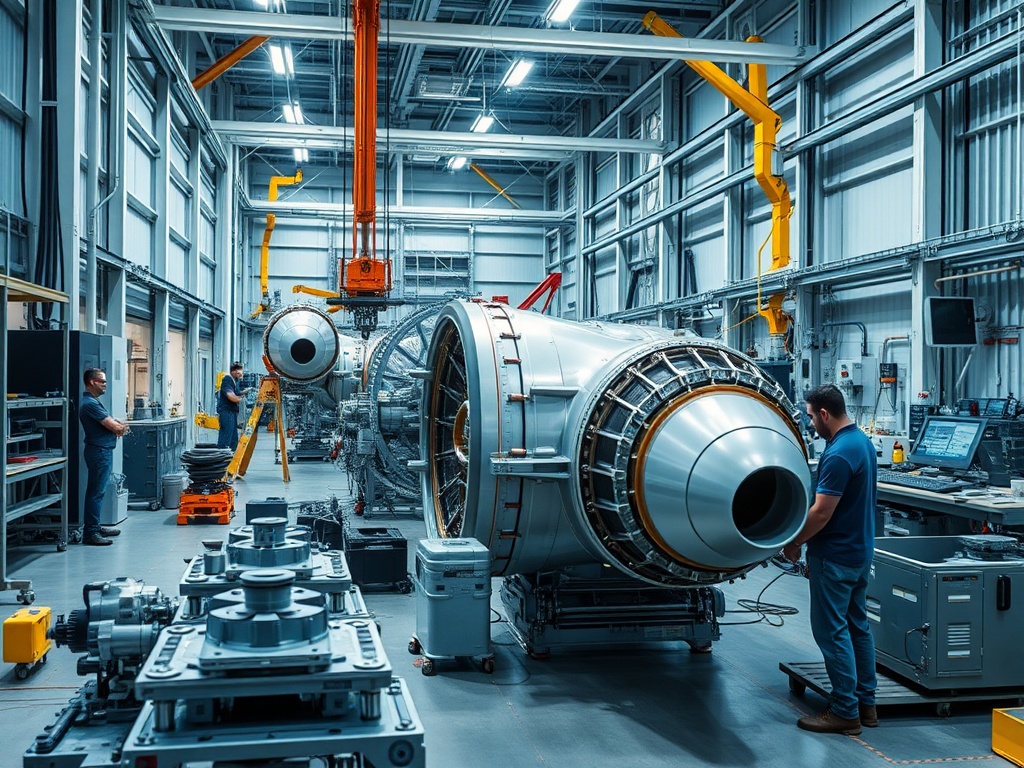

The Time Revolution in Hypersonic Manufacturing: An Exponential Leap
The defense and military technology industry has historically been a field of constant innovation, but the recent news that a U.S. firm has achieved a tenfold reduction in the production time of hypersonic propulsion components marks a significant milestone. This advancement not only represents an improvement in manufacturing processes, but also illustrates a radical transformation driven by additive technologies, which are reshaping the dynamics of the sector.
The Context Behind the Innovation
The use of additive technologies to accelerate the production of complex components exemplifies how the industry is adopting more agile and efficient methods. In the case of hypersonic propulsion, where precision and speed of production are crucial, the ability to reduce the construction time of components from months to weeks is a monumental breakthrough.
This shift addresses not only a technical necessity but also a strategic demand to maintain a competitive edge in a global environment where technology is advancing rapidly. Speed is not just a matter of efficiency; it is a direct response to market pressures for faster and more effective innovations.
The Consumer Psychology in the Military Arena
While it may seem that the decision to adopt new technologies in the military sector is solely based on technical factors, the reality is that it is also influenced by psychological aspects. The 4 Forces of Progress, a framework I use to analyze decisions, are clearly visible here.
The push comes from frustration with traditional methods that are slow and costly. The magnetism of the new solution lies in its ability to offer faster and more efficient production. However, we cannot overlook the anxiety that change produces, especially in a sector where errors are not an option. Lastly, the habit of relying on proven methods can represent a significant barrier.
Overcoming Cognitive Friction
Adopting new technologies always comes with cognitive friction. The inherent complexity of these systems can create resistance, both at the organizational and individual levels. The key to overcoming these barriers is to minimize the apparent complexity and maximize the perceived value for users.
In the case of hypersonic manufacturing, the company has succeeded not only in making its product shine but also in mitigating the fears associated with adopting something new. They have simplified the process, reducing the cognitive load, and ensuring that the value of the technology is clear and tangible for all involved.
The Lesson for Business Leaders
This success story in hypersonic manufacturing offers a crucial lesson for leaders across all sectors: it is not enough to have a superior product if fears and frictions are not adequately addressed. The real challenge lies in designing strategies that not only enhance the appeal of innovation but also eliminate any resistance to change.
The question leaders must ask themselves is whether they are investing all their capital in making their product shine or if they are also dedicating resources to dispel the fears and frictions that prevent adoption. The answer to this question could determine the success or failure of their market strategy.