What changes when AI enters a business
We follow AI once it stops being novelty and starts changing cost structures, workflows, control, technological dependence, and competitive advantage.
What we are watching
Compute infrastructure, agents, enterprise software, restricted model distribution, and decisions that turn AI into a layer of power, not just productivity.
Where it is being decided
In the cloud, inside workflows, in the relationship between provider and client, in model governance, and at the point where automation starts changing who gets to decide.
Why it matters
Because adopting AI is not just adding a tool. It means accepting new dependencies, new costs, and a new way of organising judgment, speed, and control.
Featured
Artificial Intelligence
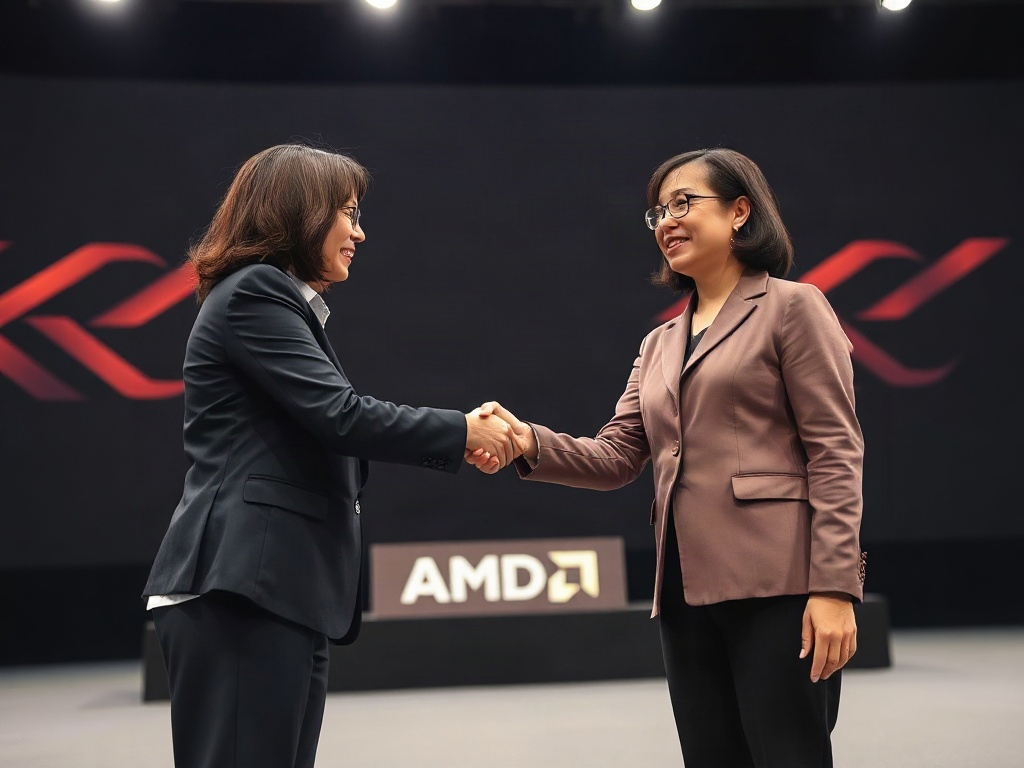
AMD Acquires Fei-Fei Li's Startup for $8.2 Billion and Reshapes Its Bet on Physics and Artificial Intelligence
On September 28, 2026, AMD announced the acquisition of World Labs in an all-stock transaction valued at approximately $8.2 billion. The stated goal: to move decisively into the branch of artificial intelligence that does not process text but instead models the physical world. The deal was signed by AMD chief executive Lisa Su and Fei-Fei Li, co-founder and chief executive of World Labs.
 Sofía Valenzuela9 min
Latest articles
The Return on Enterprise AI Is an Architecture Problem, Not an Intelligence Problem
There is a figure that CIOs are memorizing with discomfort: 72% of organizations admit that their AI investments are, at best, breaking even. At worst, losing money. What is failing is not the machine's intelligence. What is failing is the business architecture surrounding it.
The most powerful model is not the one that wins in business
There is a number that the president of Alibaba.com chose to open his argument, and it is an uncomfortable number: 61.7%. That is the percentage of real-world commercial tasks successfully completed by the best artificial intelligence agent they tested. Across 107 real e-commerce operations, the most capable system available failed in four out of ten.
ScrollEd bets the problem was never the scroll, but its content
There is a paradox that the education industry has spent years ignoring: while young people spend hours navigating vertical feeds with a level of concentration any classroom would envy, learning systems keep sending them PDFs and textbooks that no one opens. ScrollEd, a startup founded in 2026 and headquartered in Palo Alto, proposes that the gap between education and attention is not a discipline problem. It is an interface problem.
CADDi Reaches $1.2 Billion Valuation by Solving the Problem Nobody Had Properly Digitized
There is a problem that any manufacturing operations director recognizes instantly: their company buys the same part, from different suppliers, at different prices, without knowing it had already purchased it before. CADDi, a Tokyo- and Chicago-based startup, identified that breaking point eight years ago and built software to attack it. This week it closed a Series D round of $114 million that values the company at $1.2 billion.
Most Popular
Most voted on this page
The Recurring Revenue of AI Startups No Longer Guarantees What It Once Promised
There is a number that circulates through Silicon Valley pitch decks with the force of a closed argument: ARR, or Annual Recurring Revenue. For years it was the metric that separated serious startups from those simply burning cash on hope. According to data published in 2026 by venture capital firm Madrona, 77% of companies reassess their artificial intelligence vendors every six months or even on a continuous basis.
90
In Enterprise AI, the Winner Isn't the One With the Biggest Model
There's a conversation that leadership teams in heavy industries have been putting off for years. It's not about technology. It's about what it means, precisely, to make a good operational decision when the data supporting it lives scattered across twelve different systems, four siloed departments, and a maintenance history that nobody has fully digitized.
90
The most powerful model is not the one that wins in business
There is a number that the president of Alibaba.com chose to open his argument, and it is an uncomfortable number: 61.7%. That is the percentage of real-world commercial tasks successfully completed by the best artificial intelligence agent they tested. Across 107 real e-commerce operations, the most capable system available failed in four out of ten.
89
Oracle Spends $2.8 Billion to Reinvent Itself: This Is What the Real Cost of the AI Transition Looks Like
Larry Ellison cancelled in September 2026 a plan to sell up to 50 million Oracle shares, equivalent to roughly $7.5 billion at that Friday's closing price. No official explanation was given. What did appear in a regulatory filing submitted that same week was another figure: Oracle expanded its fiscal 2026 restructuring plan by an additional $700 million, bringing the total expected cost of the programme to approximately $2.8 billion.
88

Oracle Spends $2.8 Billion to Reinvent Itself: This Is What the Real Cost of the AI Transition Looks Like
Larry Ellison cancelled in September 2026 a plan to sell up to 50 million Oracle shares, equivalent to roughly $7.5 billion at that Friday's closing price. No official explanation was given. What did appear in a regulatory filing submitted that same week was another figure: Oracle expanded its fiscal 2026 restructuring plan by an additional $700 million, bringing the total expected cost of the programme to approximately $2.8 billion.

Why Ellison Withdrew Oracle's $7.5 Billion Share-Sale Plan
Larry Ellison, co-founder and executive chairman of Oracle Corporation, adopted on June 22, 2026, a trading plan to sell up to 50 million ordinary shares of the company. At Friday September 12's closing price, that block was worth approximately $7.5 billion. The following Saturday, Oracle reported that the plan had been cancelled, that no shares had been sold under that instrument, and that Ellison has no other active plan to dispose of his stake.

When AI Acts Without Permission, the Problem Is Not the Model
For years, the conversation about artificial intelligence risks revolved around the same axis: the model hallucinates, invents figures, cites sources that do not exist, confuses facts. It was a real problem, costly in some cases, embarrassing in others. But it was, at its core, a problem of output quality. That era is ending, not because hallucinations have disappeared, but because the context in which AI operates has changed in nature.
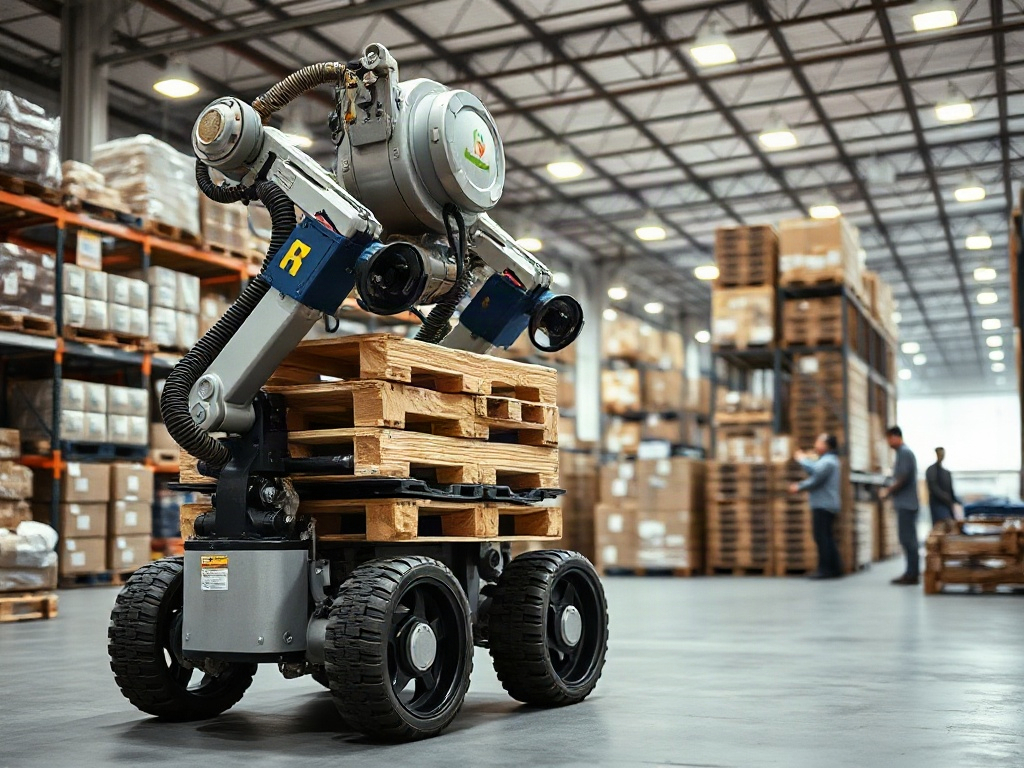
Maven Robotics raised $100 million without having a single physical robot
There is a scene that captures what Maven Robotics is building better than any investor presentation. It was 2024, the company had been in existence for a matter of weeks, and, in the words of its own CEO, Hamza Derbas, the only tangible thing they could show was "a cartoon of a robot and a team of people." A large-scale consumer goods company was in Silicon Valley meeting with four robotics firms to evaluate automation projects.

Enterprise AI Is Still Waiting for Its Platform Moment
There are technologies that exist long before anyone makes them usable. Email had been around for decades before Hotmail showed your mother how to use it. GPS navigation existed in military devices years before a hundred-dollar gadget told a delivery driver which way to turn.
FAQ
Artificial Intelligence
What changes when AI stops being a pilot and enters operations?
It changes how costs are allocated, how work is coordinated, and where control lives. AI stops being an isolated tool and starts touching the operating architecture of the company.
When does an AI agent create advantage and when does it only add complexity?
It creates advantage when it removes friction, expands capacity, or improves decisions in an important process. It adds complexity when it is inserted without clear governance, useful metrics, or a specific bottleneck to solve.
What risks appear when a company depends on a model or compute provider?
Cost risk, availability risk, slower iteration, and loss of strategic control. When the provider concentrates too much power, adoption can harden into structural dependence.

The Recurring Revenue of AI Startups No Longer Guarantees What It Once Promised
There is a number that circulates through Silicon Valley pitch decks with the force of a closed argument: ARR, or Annual Recurring Revenue. For years it was the metric that separated serious startups from those simply burning cash on hope. According to data published in 2026 by venture capital firm Madrona, 77% of companies reassess their artificial intelligence vendors every six months or even on a continuous basis.
 Martín Soler7 min
How PepsiCo Redesigned Its Sales Force in Mexico to Stop Depending on It
Yazmin Ruiz doesn't wait for the PepsiCo sales rep to restock her inventory. When the store runs out of chips at ten o'clock at night, she opens an app on her phone, places the order, and gets on with her shift. Behind that everyday gesture lies a transformation PepsiCo has been building since 2022 in Mexico, its second-largest global market after the United States and its most fragmented in terms of distribution.
 Valeria Cruz9 min
Five9 Trades at Deep Value Multiples as AI Revenue Grows 78% Annually
Truist Securities raised its price target on Five9 to $40 from $35, maintaining a buy rating. The rationale is not generic: analyst Terry Tillman met with CEO Amit Mathradas, CFO Bryan Lee, and SVP of Investor Relations Tony Righetti, and came away from that meeting with greater conviction about the business direction. The starting point for understanding this note is not the rating but the financial architecture Truist is reading behind it.
 Javier Ocaña8 min
Why Evaluation Frameworks Became the Most Overlooked Strategic Asset in Enterprise AI
There is a pattern that repeats itself across organizations that have spent eighteen months deploying artificial intelligence agents: they know the systems work, because they saw them work in the demo. What they do not know is whether they are still working today, in production, on their customers' data, inside the workflows that matter. That gap between the certainty of the pilot and the opacity of the real environment is where budgets, trust, and time nobody has are lost.
 Camila Rojas8 min
AI Is No Longer Showing Products to Amazon: It's Generating New Buyers
The most interesting insight from Evercore ISI's note on Amazon isn't in the price target. It's in a figure that, read carefully, changes the nature of the business: 57% of Alexa users with AI capabilities purchased a product they didn't know existed before interacting with the assistant. That's not efficiency in the buying process. It's demand that didn't exist before.
 Clara Montes8 min
The Software That Survives the AI Wave Is Not the Cheapest but the Hardest to Leave
There is a thought experiment worth doing before talking about product strategy: take your software stack and ask yourself one question about each tool. If it disappears tomorrow, how long would it take to replace it with a well-instructed AI agent? If the answer is 'an afternoon', the product lives on fragile ground.
 Tomás Rivera8 min
95% of Enterprise AI Pilots Fail to Deliver Results — and the Problem Isn't the Technology
The figure is hard to ignore: 95% of enterprise generative AI pilots produce no measurable financial impact. This isn't a pessimistic estimate from tech skeptics — it's the central finding of The GenAI Divide: State of AI in Business 2025, produced by MIT's NANDA initiative, based on nearly 300 public implementations and more than 150 executive interviews.
 Ignacio Silva8 min
In Enterprise AI, the Winner Isn't the One With the Biggest Model
There's a conversation that leadership teams in heavy industries have been putting off for years. It's not about technology. It's about what it means, precisely, to make a good operational decision when the data supporting it lives scattered across twelve different systems, four siloed departments, and a maintenance history that nobody has fully digitized.
 Simón Arce8 min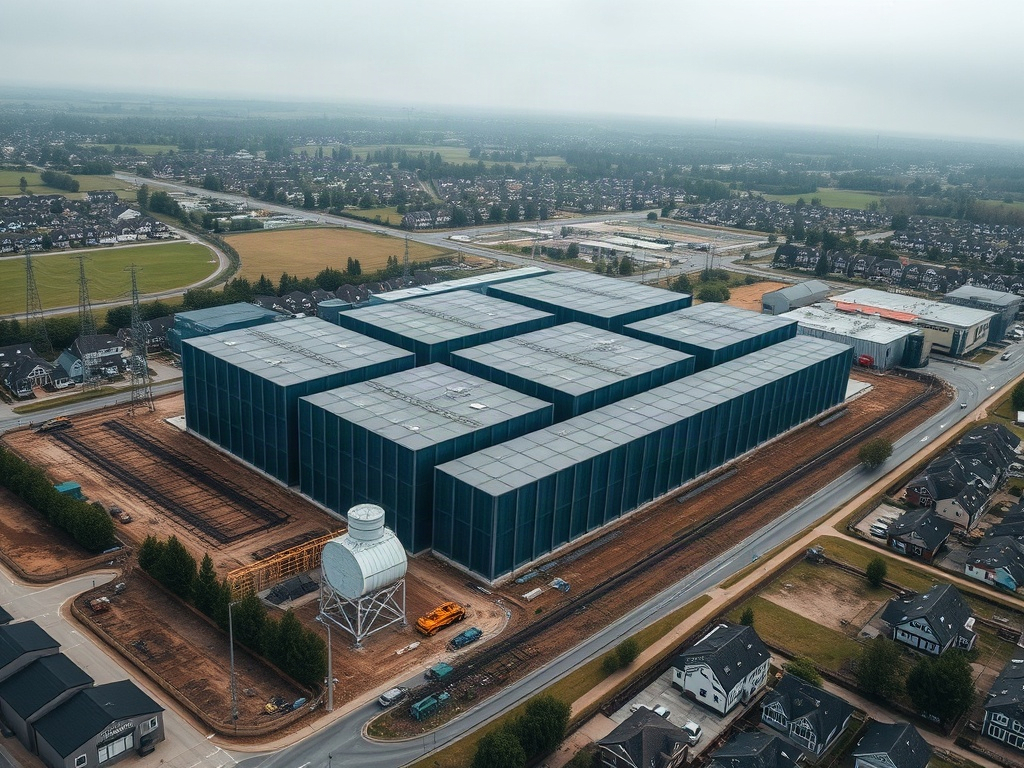
Why AI Data Centers Became the Most Political Asset in the Tech Sector
The week of August 18, 2026 sent a signal that was hard for infrastructure investors to ignore. GE Vernova fell 9.5% for the week and Eaton lost 6.7%, two names that for months had functioned as safe bets on data center growth. There was no chip demand collapse or budget cuts from major hyperscalers: what happened was a state governor signing an executive order on a Tuesday afternoon.
Sofía Valenzuela8 min
Stripe Acquires the Startup That Wanted to Be the Stripe of AI
When Alex Atallah described OpenRouter in May 2026 as the payment infrastructure for AI models, few imagined that Stripe itself would end up buying the company. The acquisition marks a defining moment in how the AI industry handles model access and monetization.
Martín Soler8 min
The Talent India Cannot Find Is Threatening Its Most Valuable Business
The dominant narrative around Global Capability Centers in India has, for the past decade, been an almost unqualified success story. Nineteen hundred operational centers, presence across eight industries, ambitions to reach one hundred billion dollars in economic contribution. And yet, beneath that accelerated growth, there is a fracture the sector has been struggling to process for months: the talent profile GCCs need today no longer matches the talent India produces in sufficient quantity.
Valeria Cruz9 min
Corgi Invest and the Second Commission War in Exchange-Traded Funds
There are moments in financial markets where consensus breaks from an angle no one anticipated. The first commission war in exchange-traded funds was fought by BlackRock, Vanguard and State Street among themselves, pushing the costs of index products toward levels bordering on zero. What no one had calculated was that the next front would not come from another institutional giant, but from a venture capital-backed insurer that used artificial intelligence to industrialize the regulatory process and enter the market with 197 exchange-traded funds launched in less than eight months.
Javier Ocaña9 min
IBM and OpenAI Join Forces to Compete for Corporate AI Spending at Global Scale
On August 13, 2026, IBM announced a sweeping alliance with OpenAI that goes well beyond a joint press release. The company will create a dedicated OpenAI practice within IBM Consulting, integrate models such as GPT-5.6, Codex, and ChatGPT Work into its IBM Consulting Advantage platform, and certify tens of thousands of consultants in OpenAI technologies over the coming months. Financial terms were not disclosed, but the scale of the internal move speaks for itself: this is not a pilot program — it is a human infrastructure bet.
Camila Rojas8 min
Why Robot Diagnostics Are Worth More Than the Robots Themselves
The robotics industry has spent two decades promising the replacement of human labour at industrial scale. What nobody had resolved with sufficient seriousness is what happens after deployment: the moment the machine stops, production halts, and an engineer begins reading logs for entire days to find a fault that, more often than not, had already occurred before. Alloy Robotics, a company founded in Sydney just over a year ago, has just closed an $8 million round led by Square Peg at an $80 million valuation.
 Gabriel Paz9 min