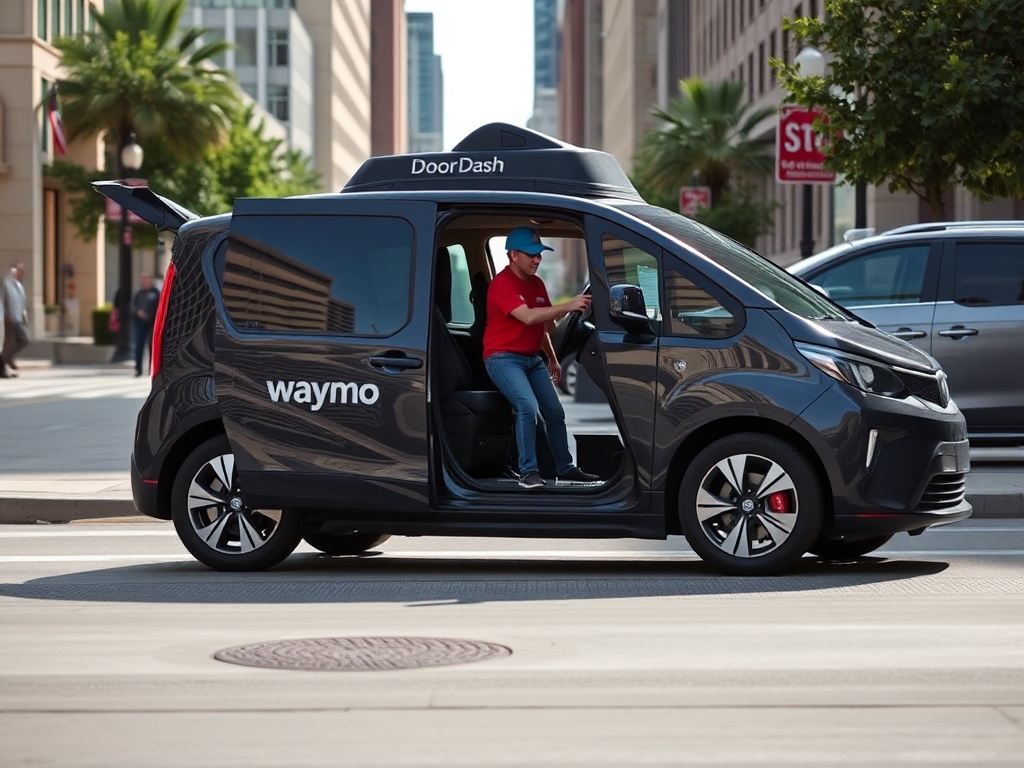

The Context of the Waymo-DoorDash Collaboration
Recently, a curious collaboration between Waymo and DoorDash has come to light, where the latter is paying independent workers up to $24 to close the doors of Waymo's autonomous vehicles. This partnership reveals an underlying problem in the design and implementation of autonomous technologies: a lack of consideration for practical and human aspects that seem obvious but are often overlooked in planning.
This situation not only exemplifies how technological innovations can fail in everyday matters but also reflects a lack of diversity at decision-making and design tables. If the teams responsible for these innovations were more diverse, they might have anticipated these issues from the outset.
The Fragility of Homogeneous Teams
The fact that Waymo did not foresee the need to close the doors of its autonomous vehicles suggests a deeper issue of homogeneity within its development teams. Homogeneous teams tend to share the same blind spots, limiting their ability to foresee and resolve practical problems in implementing new technologies.
When the same profiles repeatedly fill decision-making tables, the opportunity to incorporate diverse perspectives, which could enrich the innovation process, is lost. Diversity is not merely a matter of social justice; it is an essential business strategy for understanding and anticipating the complexities of the market.
Horizontal Networks and Social Capital: Keys to Innovation
The collaboration between Waymo and DoorDash, while seemingly functional, exemplifies a transactional movement that lacks genuine social capital. Rather than building a network of mutual trust and collaboration, this partnership appears to be a temporary solution to a problem that could have been avoided.
Organizations that invest in building horizontal networks and strengthening their social capital are those that adapt better to changes and challenges in the market. Such networks facilitate the flow of information and collaboration, allowing companies to be more agile and resilient.
The Lesson for C-Level Executives
For business leaders, this situation should serve as a reminder of the importance of questioning the makeup of their innovation teams. At the next board meeting, it is crucial to observe who is at the table and ask whether all members share the same backgrounds and perspectives. If so, they are likely sharing the same blind spots as well.
Market disruption doesn't wait, and those who fail to anticipate the needs and problems of their customers will be the first to feel its effects. Diversity in teams is not just a competitive advantage; it is a necessity for long-term survival and success.
Waymo and DoorDash have revealed a flaw that could have been anticipated with a greater variety of thought and background within their teams. This serves as a call to action for companies to reconsider how they structure their teams and strategic partnerships, ensuring they are building robust social capital rather than merely implementing temporary solutions to problems that could have been avoided from the outset.