
The Return of the Model 2 Reveals What Tesla Doesn't Want to Admit About Its Customers
In February 2026, a Tesla program manager gathered the team to announce that a project many had worked on for years was canceled. No official explanations or press releases were provided. Just weeks later, Reuters reported that the same vehicle—a compact SUV priced at around $25,000—was back in development. This sequence is not an operational accident or a sign of internal chaos. It is a clinical symptom of a company that has yet to resolve the most uncomfortable question in its business history: Who does Tesla exist for if it cannot sell to the majority?
The answer provided so far looks good on paper but is costly in the market.
The Trap of Designing for Margin Instead of Designing for the Customer
When Tesla canceled the Model 2, the internal justification pointed to profitability. A $25,000 vehicle, with current manufacturing costs and the weight of investments in the Cybertruck and Semi, threatened unit margins. The financial logic was impeccable. The problem is that this logic completely ignores what was happening on the other side of the sales counter.
Millions of consumers today drive a Honda Civic, a Volkswagen Golf, or a Chevrolet Trax—not because they love gasoline, but because the leap to an electric vehicle still creates a purchase friction that no technical argument has managed to fully dissolve: the entry price, charging anxiety, uncertainty about residual value, and above all, the feeling that they are adopting technology that isn't really ready for them yet. That consumer exists, has enough money for a $25,000 car, and is actively being courted by the MG4, the Volkswagen ID.2, and a fleet of Chinese manufacturers who understand something that Tesla is still processing: accessibility is not a strategic concession, it's the only way to build sustained volume.
Cancelling the Model 2 to protect margins was, in consumer behavior terms, a short-term decision with long-term consequences. Tesla chose to shine its high-margin portfolio rather than reduce entry friction for the segment that represents the majority of the global automotive market. That mistake isn't measured in a single quarter; it’s measured in gradually ceded market share to competitors who do not have the same philosophical inhibitions about volume.
What the Robotaxi Model Doesn't Solve Today
The most compelling internal argument for canceling the Model 2 was the bet on the Robotaxi and the autonomous platform. The idea is seductive: instead of selling a cheap car with thin margins, you build an autonomous fleet that generates recurring revenue. The vehicle ceases to be a product and becomes infrastructure. On paper, this destroys the business model of any traditional manufacturer.
But there is a timing problem that no Investor Day presentation can resolve: that autonomous future does not yet exist for the average consumer in 2026. It exists for Tesla engineers, for Deutsche Bank analysts who already talk about a potential "Model Q," and for enthusiasts who follow every FSD update. For the 38-year-old doctor living in Guadalajara or Seville, evaluating whether to switch from a combustion car, the Robotaxi is as abstract a promise as the metaverse was for Facebook users in 2022.
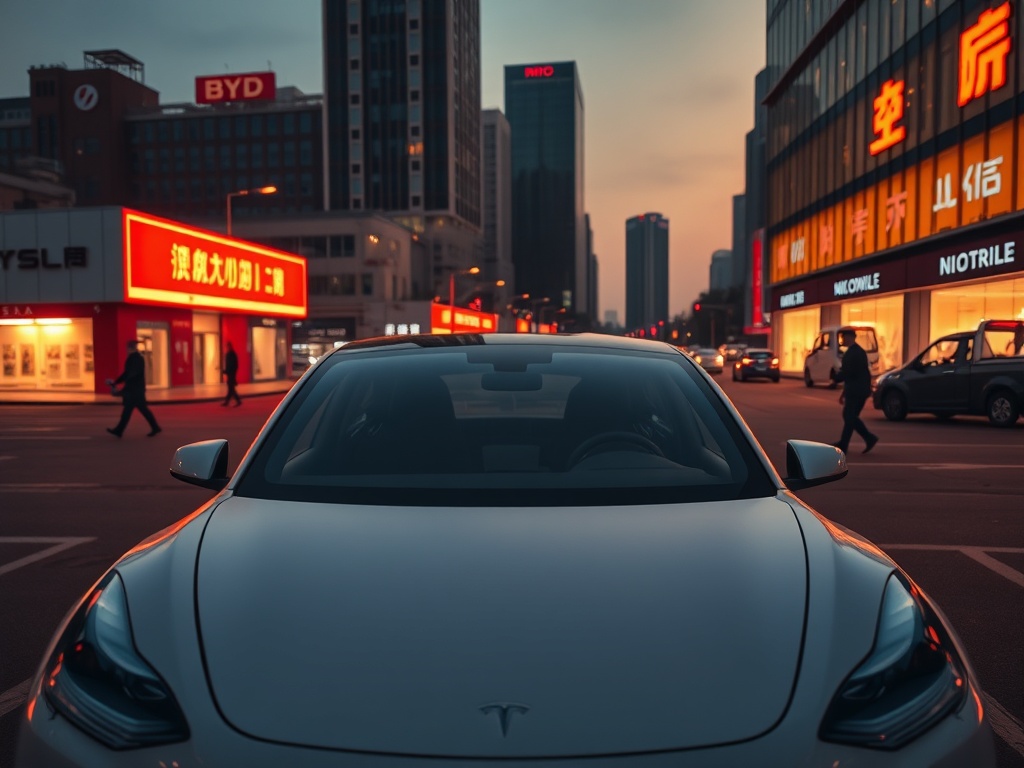
This is the most challenging behavioral knot to untie. Tesla is attempting to make its potential customers leap two adoption curves simultaneously: first, abandoning fossil fuel habits; second, trusting vehicular autonomy. Each curve separately already generates significant resistance. Combining them into a single sales argument does not reduce consumer anxiety; it multiplies it. While Tesla waits for the market to mature towards its autonomous vision, BYD and its derivatives are capturing exactly the buyers that Tesla needs to scale.
The return of the Model 2, or the $25,000 compact SUV, suggests that someone inside Tesla finally articulated this diagnosis with enough political weight to reverse a decision already communicated to the team. That the process took just weeks between cancellation and revival announcement speaks more to the company's decision-making speed than to its strategic clarity.
Giga Mexico and the Economy of Manufacturing for Volume
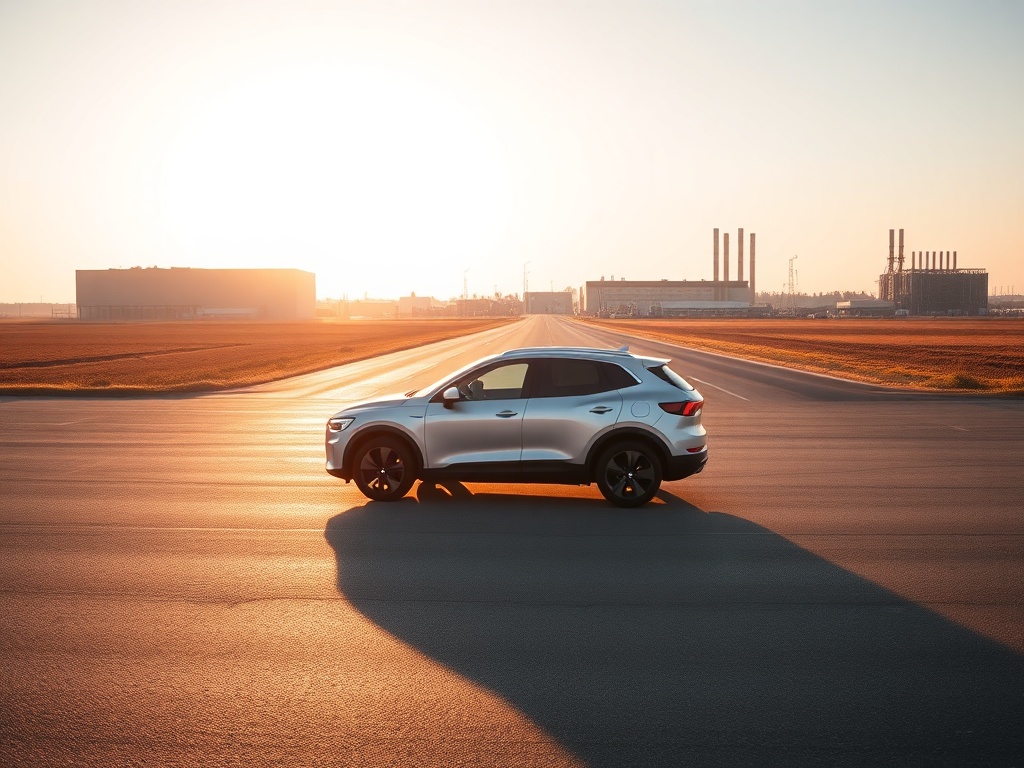
There is one fact that deserves more attention than it is receiving: Governor Samuel García Sepúlveda confirmed that Giga Mexico is preparing a specific production line for the $25,000 compact vehicle. This is not online forum rumor; it is a public statement by an official about physical infrastructure under construction.
What this reveals is that the decision to revive the project was not merely a market response. There were—or are—manufacturing investment commitments that make canceling it definitively carry a different cost than merely pausing it. The bet on the "unboxed" manufacturing process, which according to the engineering team could reduce production costs by up to 50% and the factory size needed by 40%, changes the financial equation that originally killed the project. If those numbers hold up in actual production and not just simulation, the unit margin of a $25,000 vehicle ceases to be the problem it was in 2024.
This is the difference between an idea and its execution. Tesla has been describing the unboxed process in investor presentations for years. The question the market is answering now is whether that manufacturing innovation can translate into real unit costs that justify the sale price without destroying margin. The next few quarters, with Giga Mexico operating data, will be the first empirical test of whether the financial architecture of the project holds up outside of PowerPoint.
Price is the Most Honest Interface Between a Company and Its Market
One lesson that automotive industry leaders have been slow to learn—and that Tesla is learning the hard way—is that the price of a product is not just a financial variable. It is the most direct signal that a company sends to its market about who deserves to use it. When Tesla kept its portfolio above $40,000 for years, it wasn't just protecting its margins. It was telling the majority of the global market that quality electric mobility wasn't for them yet.
That message created a space. BYD filled it. Chinese manufacturers filled it. The MG4 filled it. And now Tesla is trying to recover that ground with a vehicle whose cancellation was publicly communicated to its own engineers, introducing a new layer of friction that doesn’t appear in any financial model: the internal credibility of the project. Teams that build products they do not trust produce results proportional to that distrust.
The return of the Model 2 could be the right decision. It probably is. But its success will not depend on how many technical attributes it can package into $25,000. It will depend on whether Tesla can build a proposal that simultaneously reduces price anxiety, charging anxiety, and anxiety about technology adoption, without asking the buyer to do the cognitive work of understanding why they should trust a product that its own manufacturer cancelled and revived within two months.
Leaders who invest all their capital in making their product shine technically, without investing in easing the fears that prevent their customer from crossing the purchase threshold, end up building impressive catalogs for audiences that never become customers.