
The Move that Salons Didn't See Coming
It's a 10 Haircare built its reputation over years within the professional channel. Their products were distributed in salons, their language was technical, and their positioning targeted stylists who recommended brands to customers willing to pay more. It was a model that worked, but had an evident structural ceiling: it relied on intermediaries to reach the end consumer and competed in a segment where Olaplex, K18, and dozens of salon-quality brands were vying for the same variables.
The decision to place Khloé Kardashian at the forefront of their repositioning campaign is, fundamentally, not a marketing decision. It’s a market architecture decision. The question someone in that boardroom ultimately asked wasn’t how do we gain market share from Olaplex?, but who are the millions of people facing the same hair issues who have never purchased from a professional channel and probably never will?
That’s the difference between defending territory and opening a new one.
Why a Pop Culture Figure is Worth More Than a Thousand Distribution Points
The math behind this move isn’t in the endorsement contract fee, which reasonably can range in the millions of dollars for a figure like Kardashian. It's in the cost of acquiring an audience that otherwise would be unreachable by traditional channels of the professional haircare industry.
Khloé Kardashian doesn’t reach a sophisticated audience that compares active ingredients. She reaches consumers who make purchasing decisions based on cultural identification, perceived accessibility, and trust in a public figure they have followed for years. This consumer profile is exactly the one that It's a 10 did not have in its installed base, and it also represents the largest volume of un-captured spending in the haircare category.
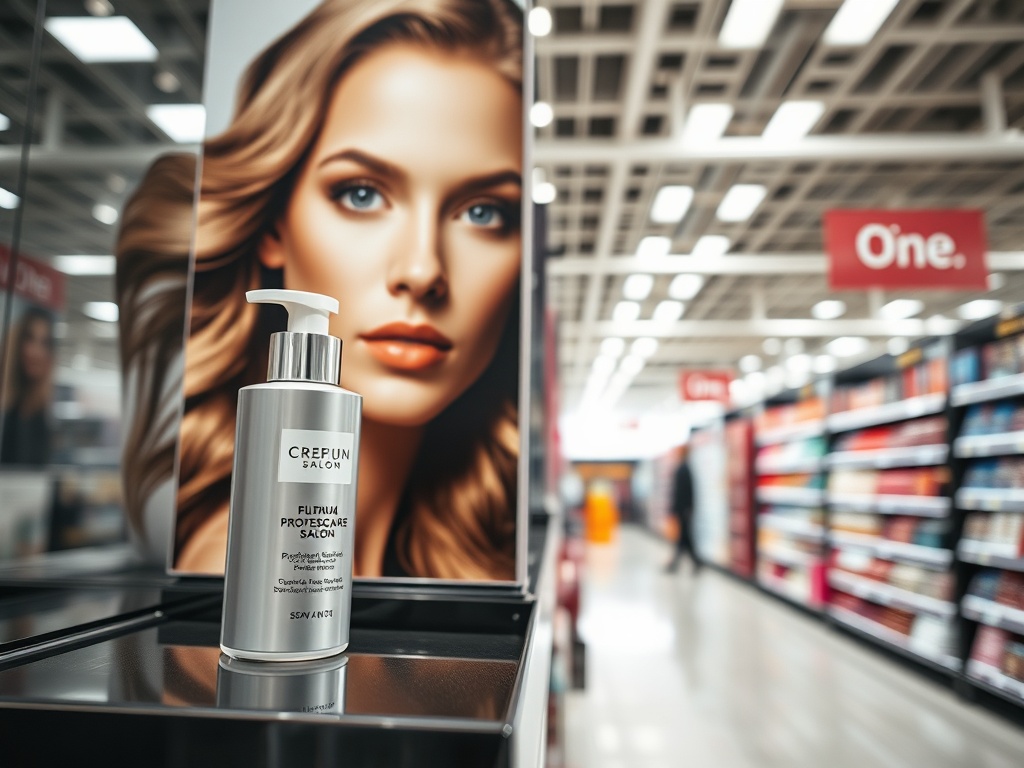
Professional haircare brands often make the same mistake: they optimize their proposal for the customers they already have and up the sophistication of the product to retain them, accumulating complexity that the mass market neither needs nor is willing to pay for. The result is a cost structure that escalates while their customer base remains static. It’s a 10 seems to have identified that their anchor product, Miracle Leave-In, has attributes of simplicity and visible results that work perfectly in the mass consumption segment without needing reformulation. They didn’t have to create a new product for a new market; they just needed to change who presents that product and from what cultural platform.
This isn’t about spending more to provide more value; it’s about redistributing spending so that the same product captures demand that previously was lost to mass-positioned competitors with inferior formulations.
The Repositioning Trap No One Speaks Of
This is where analysis demands sobriety. Celebrity-backed brand repositionings have a very uneven success rate, and the variable that most predicts failure is not the choice of public figure but the absence of demand validation prior to committing capital to execution.
The concrete risk for It's a 10 isn’t that Khloé Kardashian is a bad ambassador; the risk is that the company made a significant investment decision based on the logic of where she goes, the market follows, without first understanding whether the non-customers they wish to reach have a real friction with the professional channel that their product can resolve, or if they simply prefer other brands for reasons that no campaign will modify.
The beauty industry has documented cases in both directions. Some brands achieved genuine mass expansion through figures with loyal audiences, while others bought visibility without conversion because the product reached millions of eyes that had no functional reason to purchase it. The difference wasn’t in the size of the ambassador’s audience, but in whether the brand had listened to that market before investing, or if they assumed attention equated demand.
For It's a 10, the signal that should be closely monitored won’t be the amount of media coverage generated by the campaign, but the speed at which inventory moves in mass retail channels in the first ninety days. That’s the only indicator that separates a successful repositioning from a costly campaign with a low return.
The Long-Term Game This Alliance Reveals
Beyond the specific case, this move exposes a structural tension that various professional haircare brands will need to resolve in the upcoming years. The salon channel is under pressure: operational costs have risen, post-pandemic behavior has solidified direct-to-consumer buying habits, and platforms like TikTok have transformed content creators into the new prescribers who were once stylists.
Brands built on professional recommendations face a decision they cannot indefinitely postpone: either they find a way to reach consumers directly, or they accept that their growth ceiling is defined by the installed capacity of a channel they don’t control and which is contracting.
It's a 10 apparently chose to move. The merit of this decision isn’t in choosing Kardashian, but in recognizing that defending position in the professional channel is no longer enough to justify growth ambitions. True leadership in this category isn’t about spending more on acquisition to fight for the same customer that Olaplex already has loyalized, but having the audacity to remove the variables that tied the brand to the professional channel and creating, from scratch, a direct connection with the majority of the market that never sought them out in a salon.