
Wendy's Bets on Nostalgia Instead of Attracting New Diners
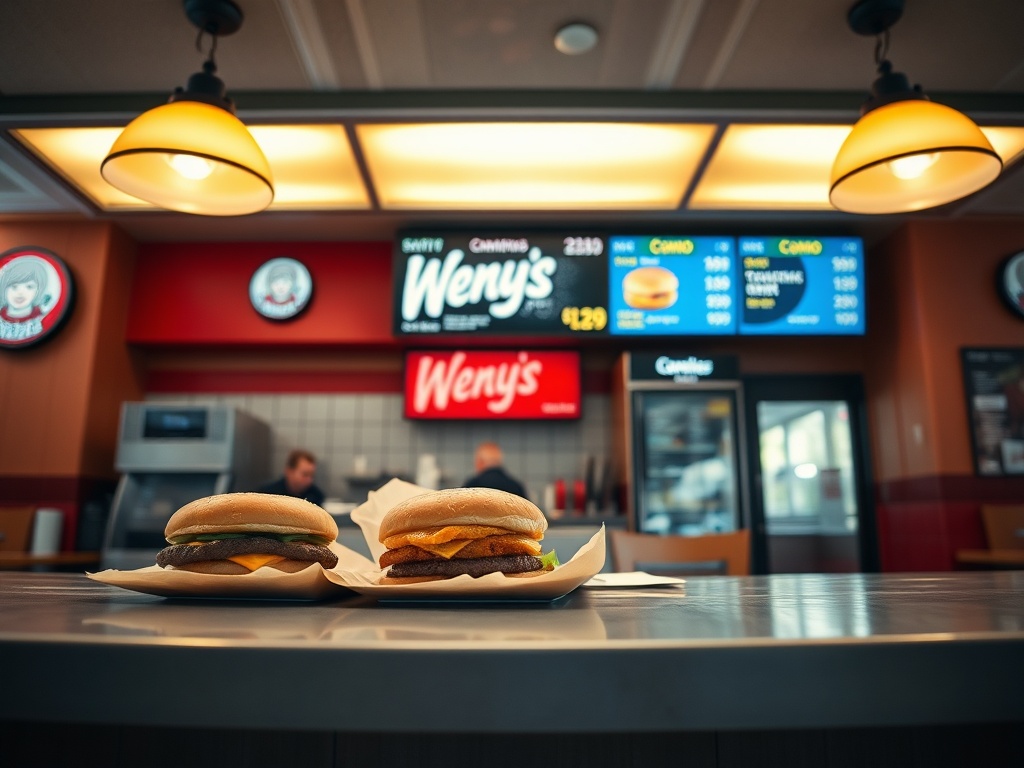
When a fast-food chain announces the return of a popular product, the media applauds, and the brand's fans engage on social media. It’s a predictable, low-risk move that frankly lacks structural impact. Wendy's has just re-launched its Crispy Panko Fish Sandwich for a limited time until April 5, 2026, and simultaneously introduced Biggie Deals at three price points: $4, $6, and $8. Media coverage celebrates this gesture. However, I see something different: a company that perfectly masters the art of winning over those who already know it, yet shows no evidence of building demand among those who do not.
This isn't a critique of execution. It’s a diagnosis of where the strategic compass is pointing.
The Return of Fan Favorites as a Sign of an Idea-Starved Industry
Product relaunches have perfectly valid commercial logic. They generate organic conversation, activate the emotional memory of frequent consumers, and require no investment in product development. From an operational efficiency angle, this makes sense. The problem arises when relaunching becomes a brand's primary strategic argument.
What Wendy's is doing with the Crispy Panko Fish Sandwich is no different from what McDonald's does with the McRib, Taco Bell with its limited-time Quesalupas, or any chain that has discovered how artificial scarcity generates excitement without compromising cost structures. It’s a shared manual. When an entire industry operates under the same manual, no company within it builds a real competitive advantage: they are competing for the same customers with the same arguments at the same time of the year.
The Biggie Deals reinforce this pattern. Three price levels, combinations of sandwiches and nuggets, basic customization available at the $8 level. It’s a direct response to inflationary pressures and the value war defining the fast-food sector right now. McDonald's has its McValue. Burger King adjusts its combos. Wendy's introduces its Biggie Deals. Price-sensitive consumers now have more options than ever within an almost identical proposal perimeter.
The question that none of these brands seem to be answering is: where is the segment of people who stopped visiting burger chains, and why is no one designing offerings specifically to win them back?
Eliminate and Reduce Before Shouting More Value
What strikes me most about the Biggie Deals is not what they include, but what remains unquestioned. The structure of the combos, with a small drink, small fries, and a sandwich, replicates the architecture from twenty years ago. The price has been modernized, and the name refreshed, but the assembly logic is the same.
This matters because the cost structure of a value proposition does not change just because it’s given a new name. If Wendy's wants its Biggie Deals to generate sustainable margins at the $4 entry level, it needs to have surgically examined which variables of the traditional experience it is willing to honestly eliminate or reduce. Sources confirm that the $4 level does not allow for upsizing, which is a sign of awareness about the model's limits. But that is damage control, not redesign.
Real redesign would involve questioning, for example, if the bottled drink makes sense in a world where consumers increasingly arrive with their own hydration. Or whether the small fries format adds perceived value, or simply operational cost. Or if there are entirely new variables, like guaranteed delivery speed, dietary customization at no extra charge, or real-time ingredient transparency that could enhance perceived value without significantly altering the cost structure.
None of those variables appear in Wendy's announcement. Instead, what we see is a chicken blend with a mixture of 9 spices, softer buns, and richer mayonnaise. Incremental improvements that compete along the same axis of attributes as everyone else. More crispy, more flavorful, more convenient. The problem is that when everyone says the same thing, none of them say anything.
The Segment That Wendy's Is Overlooking
There’s a group of consumers who do not appear anywhere in this strategy: those who abandoned burger chains years ago and now consume in adjacent categories. People who have migrated to fast-casual options with a greater perception of freshness, specialized dark kitchens, supermarkets with better nutritional prepared food sections, or simply to delivery apps that include local restaurant options.
These individuals are not coming back for the return of the Crispy Panko Fish Sandwich. They won’t return because the combo now features creamier mayonnaise. Historically, Wendy's has positioned itself as "Home of Fresh, Never Frozen Beef Since 1969", a promise that genuinely has the potential to connect with that segment if a differentiated experience were built around it. However, the current communication uses that attribute as a background tagline rather than the central axis of a proposal that radically changes what the non-customer expects from a burger chain.
This is what distinguishes a brand that grows from one that merely retains. Retaining current customers through relaunches and value combos is a legitimate short-term tactic. But building demand among those who do not currently consider you a relevant option requires something more uncomfortable: admitting that the current proposal has variables that those consumers actively reject, and having the willingness to dismantle them even if it displaces the frequent customer.
The Trap of Easy Applause and What Follows After April 5
On April 5, 2026, the Crispy Panko Fish Sandwich will leave the menu. Fans will lament its departure on social media. There will be a cycle of nostalgia until its return the following year. The Biggie Deals will continue throughout the year, with variable availability by location, which introduces a real operational risk: if the experience is not uniform across locations, the low price becomes a broken promise, and a broken promise in fast food has direct consequences on the brand’s reputation locally.
What Wendy's has in its favor is a solid digital ordering infrastructure, with options to order via app, website, or in-store, and delivery promotions like $3 off orders over $20. That is valuable data architecture if used to understand actual consumption behavior, moments of cart abandonment, combinations that people add and then remove before confirming their order.
But capturing that data and using it to design the next value proposition is long-term strategic work that cannot be solved with a seasonal relaunch.
Leadership that builds markets does not waste resources chasing consumers who already know the brand. It invests in deeply understanding why the consumer who has never entered a Wendy’s still hasn’t, and designs a specific response to that rejection. That’s what separates a brand that dominates its category from a brand that merely survives within it.