
The Real Business Behind Solar Grants in the UK: Who Captures Value When the State Pays for Roofs
The public conversation around solar panels in the UK typically boils down to a simple promise: install photovoltaics and pay less for electricity. By 2026, that promise is less a matter of technological magic and more a matter of financial architecture. An article from The Independent highlights how to apply for public funding schemes and the incentives available, at a time when the word "grant" is synonymous with access, relief, and, for some households, energy survival. The piece serves as a practical guide, but the strategic angle lies elsewhere: specifically, in how these programs redistribute value throughout the chain, which actors gain decision-making power, and what operational risks are accumulating as ECO4 comes to an end.
The landscape of 2026 has two major anchors. First, ECO4, active since April 2022 and set to close in March or April 2026 according to cited sources, which can cover up to 100% of the costs for solar photovoltaic installations for eligible low-income households experiencing energy poverty and low EPC ratings (D–G), financed through obligations on energy suppliers. Second, the Warm Homes Plan (WHP), a commitment of £15 billion to improve 5 million homes by 2030, which includes a £4.4 billion component for low-income households (including £0.5 billion allocated through the Warm Homes Local Grant by February 2026), along with 0% loans and incentives like 0% VAT for solar systems until 2027. Additionally, the Smart Export Guarantee (SEG) allows households to receive payments for exporting excess energy back to the grid.
Thus far, the "official" story centers around access. The business analysis begins when we examine who internalizes the benefits and who absorbs the costs and frictions.
Money Doesn’t Fall from the Sky: It’s Redirected to Bills and Budgets
When a program offers "free panels," the first strategic mistake is to assume it’s truly free. Under ECO4, the cost is shifted: it is financed by energy suppliers under regulatory obligation, not by philanthropy. This alters the burden distribution among actors: the eligible household immediately lowers entry barriers, but the system reallocates the cost within the energy supply economy, which operates under its own margins and regulatory pressures.
In terms of the value chain, ECO4 transforms the household's CAPEX into a combination of regulatory costs for the supplier and billing for approved installers. The household gains immediate access; the installer gains demand; the supplier complies. However, the fine point is in governance: the "client" is no longer solely the household because the entity that pays and audits is the scheme. This often shifts the center of gravity towards eligibility processes, inspection, and compliance, where time and bureaucracy become real currencies.
The WHP introduces a second logic: it broadens the perimeter beyond pure subsidy with 0% loans and a budgetary scale (until 2030) that seeks continuity. This is a crucial difference. Total subsidy maximizes adoption in vulnerable segments but also concentrates demand in temporary windows; the 0% loan aims to sustain adoption without relying on permanent direct transfers. In practice, the risk transforms: from access risk (I can't afford it) to execution risk (I can finance it, but the process, the installer, and the expected performance must be aligned).
There is also a simple yet powerful fiscal component: 0% VAT until 2027 reduces the total installation cost for a wider set of buyers. This incentive does not select by income; it selects by purchasing decision. It is more "horizontal," less focused, and thus can benefit those who were already poised to invest.
The Real Bottleneck: Eligibility, Installation Quality, and Delivery Capacity
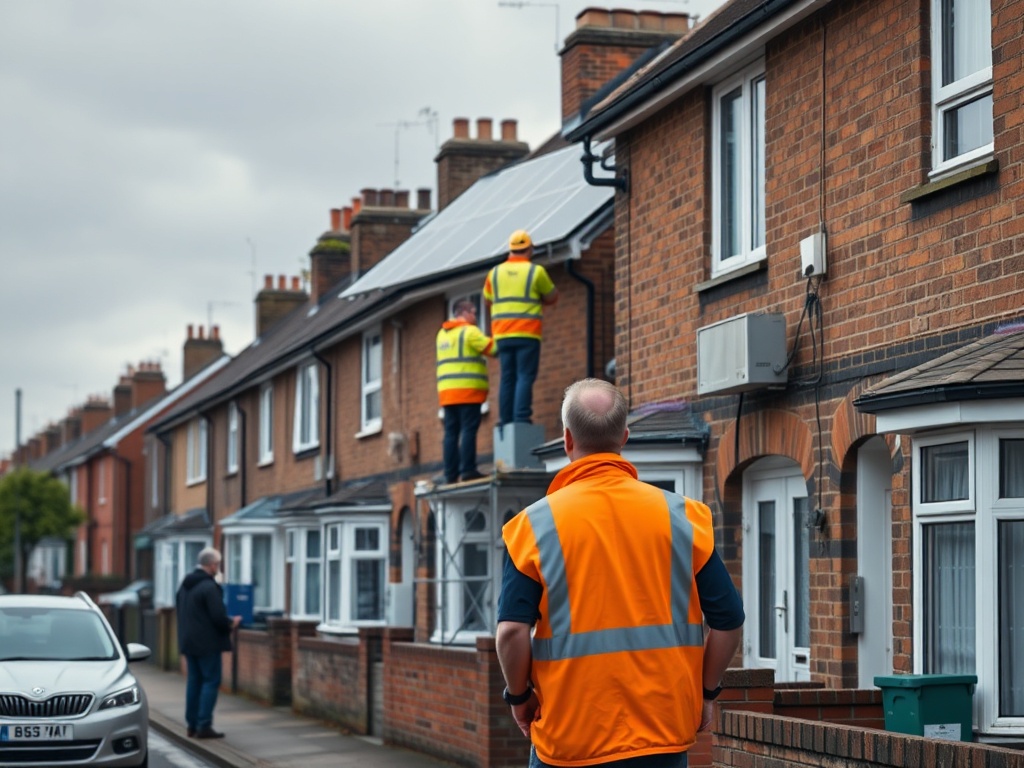
The programs of 2026 promise deployment, but the system's performance is defined in the last mile. In ECO4, the typical journey includes eligibility checks, an energy assessor's evaluation of the home, and then installation by approved suppliers. This flow protects the system from fraud and improper installations but introduces friction. And in markets with spikes in demand driven by subsidies, the friction turns into long lines, delays, and—most delicately—pressure for volume.
When a policy accelerates demand, two predictable operational risks emerge. The first is capacity: enough certified installers, enough assessors, sufficient logistics. The second is quality: if the economic unit of the installer is optimized for throughput, the tacit incentive is to compress time, and the cost later appears as claims, underperformance, electrical integration failures, or misalignment between design and actual home use.
Here, the SEG plays a role as a "value buffer" for the user: even if self-consumption isn’t perfect, exporting excess energy can capture part of the return. However, the SEG does not fix a faulty installation, nor does it eliminate the fact that the highest value of domestic solar typically comes from consuming energy during peak hours, not from exporting at potentially less attractive rates.
The WHP adds another layer: by pushing "complete" packages for low-income households while also offering universal 0% loans, it opens a more sophisticated segmentation. For vulnerable households, the priority is to lower bills and stabilize comfort; for non-vulnerable households, the priority often shifts to return and control. Designing a single delivery channel for such different profiles often fails due to over-standardization or excess personalization costs.
Thus, competitive advantage in this market is not merely about “securing the grant,” but mastering the delivery system: rapid assessment, consistent installation, and post-sale service that preserves trust. This aspect is less visible than the panel on the roof but defines the economic sustainability of the model.
The “Green” Narrative Hides a Battle for Margins and Customer Control
The public discourse tends to celebrate the expansion of subsidies, and rightly so: the focus on energy poverty is an explicit distributive decision. But behind the scenes, value is contested along three lines.
First, who controls demand. If the volume originates from a scheme like ECO4, the installer competes for access to the channel, not just reputation. This often shifts power to intermediaries and project aggregators or to networks of approved suppliers that understand the bureaucracy involved. In that context, "marketing" to the end consumer matters less than the ability to navigate eligibility, audits, and documentation.
Second, who captures the margin. With 0% VAT and subsidies, there’s a temptation for part of the incentive to be capitalized into the price. It’s unnecessary to assume abuse: it’s sufficient to recognize that, when a buyer receives assistance and demand rises, prices may be driven up if supply is inelastic. The outcome can be that a portion of the public budget ends up funding industry capability more than net cost reduction for the household. The political and business key is to expand supply and productivity so that the incentive translates into actual adoption and savings.
Third, who assumes the performance risk. If the household does not pay, its tolerance for failures may be different, but the social cost of a bad experience is high: it erodes trust in the energy transition. For the installer, reputational risk is existential; for the scheme, the risk is political and budgetary.
In this context, the integration of batteries and hybrid systems emerges as a trend in secondary sources of the briefing, but even without delving into unreported figures, the strategic principle is clear: the more value shifts towards managed self-consumption, the more important complete solution design becomes, and the less important the panel functions as a commodity.
2026–2027: The End of ECO4 Forces a Model Shift, Not a Solar Blackout
The regulatory clock is what constrains decisions most. ECO4 ends in March or April 2026, and the WHP promises more detailed information in March 2026, with measures coming into effect in April 2026. Additionally, the policy pipeline includes an expansion of standards for new homes in 2027 and the launch of a consumer loan scheme in 2027 according to the briefing.
For the industry, the end of ECO4 operates as a "mix change" of clients: less total subsidy, more financing. This radically alters the type of sale. With a grant, the bottleneck is eligibility and delivery; with a loan, the bottleneck shifts to trust, expected return, household job stability, and contractual clarity. Companies that only learned to sell "free" often struggle when the market migrates to "financed."
For the state, the risks are twofold. One, that the closure of ECO4 creates a valley of adoption if the WHP does not provide operational continuity. Two, that the mid-segment—non-vulnerable but price-sensitive—cools if the public conversation stays focused on grants and does not transition to financing mechanisms and structural cost reduction.
For vulnerable households, the design is even more delicate: if the policy shifts too quickly from grants to loans, the access barrier can be reinstated. The WHP, as described, attempts to avoid this by maintaining funded packages for low-income individuals, but efficacy will depend on local execution, eligibility criteria, and delivery capacity.
The domestic energy transition is not decided by an announcement, but by the continuity between programs and the ability not to disrupt user experience.
The Strategic Advantage Lies in Fairly Distributing Value or Paying the Cost of Distrust
ECO4 and the Warm Homes Plan are not just climate tools: they are mechanisms of economic redistribution. When they work, they reallocate capital costs away from vulnerable households and turn energy savings into life stability. However, their true success isn’t measured by headlines about "free panels," but by the alignment of incentives throughout the chain: installers who earn from sustained quality, suppliers who comply without degrading service, and a state that prevents subsidies from evaporating in friction and overcosts.
In 2026, the actor that captures the most value legitimately is the household that achieves bill reduction and thermal resilience with complete financing. The actor that stands to lose the most value is the industry that confuses subsidized demand with structural demand and fails to invest in capacity, quality, and trust. In energy policies, the only model that endures is one that ensures every party prefers to keep participating because their net gain exceeds their net cost.