
Energy Ceases to Be a Cost: Trump’s ‘Pledge’ Forces Tech Giants to Build Industrial Muscle
On February 24, 2026, during the State of the Union address, President Donald Trump announced a pivotal shift in the digital economy: the Rate Payer Protection Pledge, a commitment requiring large tech companies to bear the total cost of the additional electricity demanded by their AI data centers. This includes the potential for on-site power generation to avoid straining the public grid or passing on rising costs to consumers.
The staging of this announcement is significant, but the underlying structure is even more critical. The White House is planning a signing event in early March featuring Microsoft, Meta, Anthropic, OpenAI, Amazon, Google, xAI, and Oracle, as confirmed by a White House spokesperson. The political message is clear: yes to leadership in AI, but not at the expense of the average household funding the cloud's energy expansion.
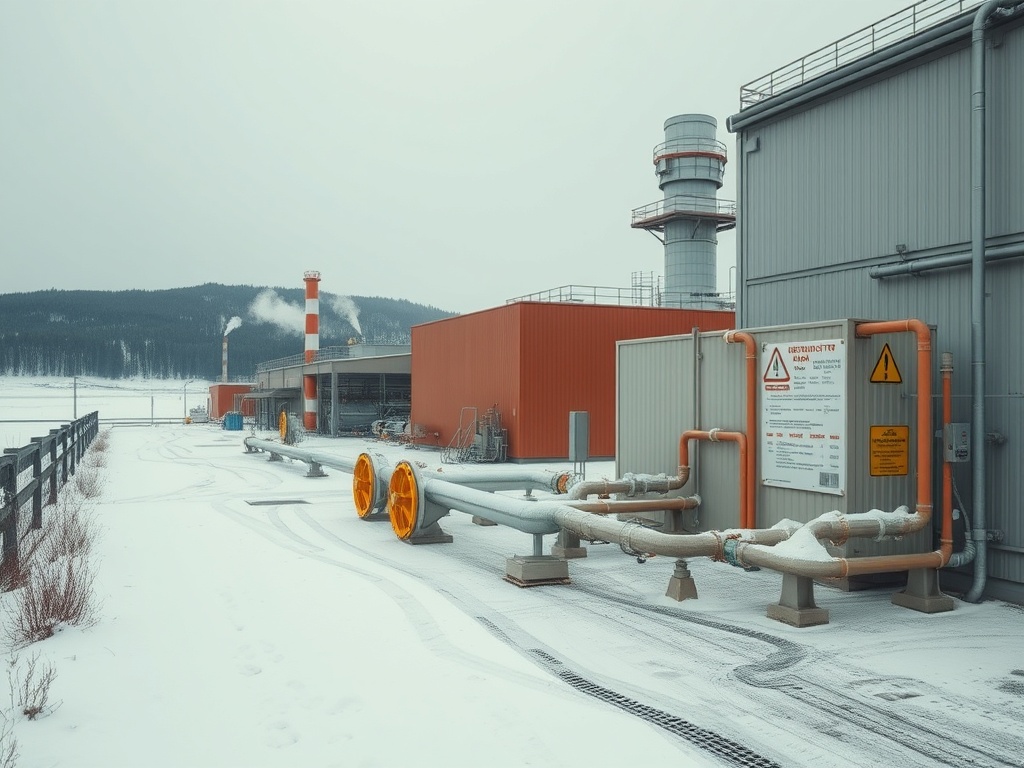
As an analyst of organizational culture and management maturity, I am less interested in the glitz of a presidential promise or the latest headline. What this requirement reveals is that the AI industry is moving away from being “scalable software” and reverting to heavy industry. When this occurs, the type of leadership that succeeds changes. It is no longer the CEO who best narrates the future that wins; it is the executive team that can operate complex systems, negotiate with utilities, finance infrastructure, and account without idealizing their own narrative.
The ‘Rate Payer’ Promise: From Political Narrative to Hard Accounting
The essence of the announcement is simple to state and difficult to implement. Trump asserted that tech companies have “the obligation” to provide their own energy, and that “they can build their own power plants” as part of their facilities, with the explicit aim of ensuring “prices do not rise” for consumers. Furthermore, this promise is set against a backdrop of colossal investment: tech companies are projected to spend $600 billion on AI infrastructure in 2026, including data centers.
The news also highlights an unusual alignment: fiercely competing companies in modeling and computing publicly express, at least in dialogue, the principle of “paying their part.” Anthropic, for instance, stated—through words attributed to its external affairs lead—that American families should not bear the costs of AI. Microsoft publicly supported this stance, declaring it is ready to “cover our costs.” Google, through its leadership in energy market innovation, reaffirmed its intent to pay “a fair share” of the costs associated with serving them.
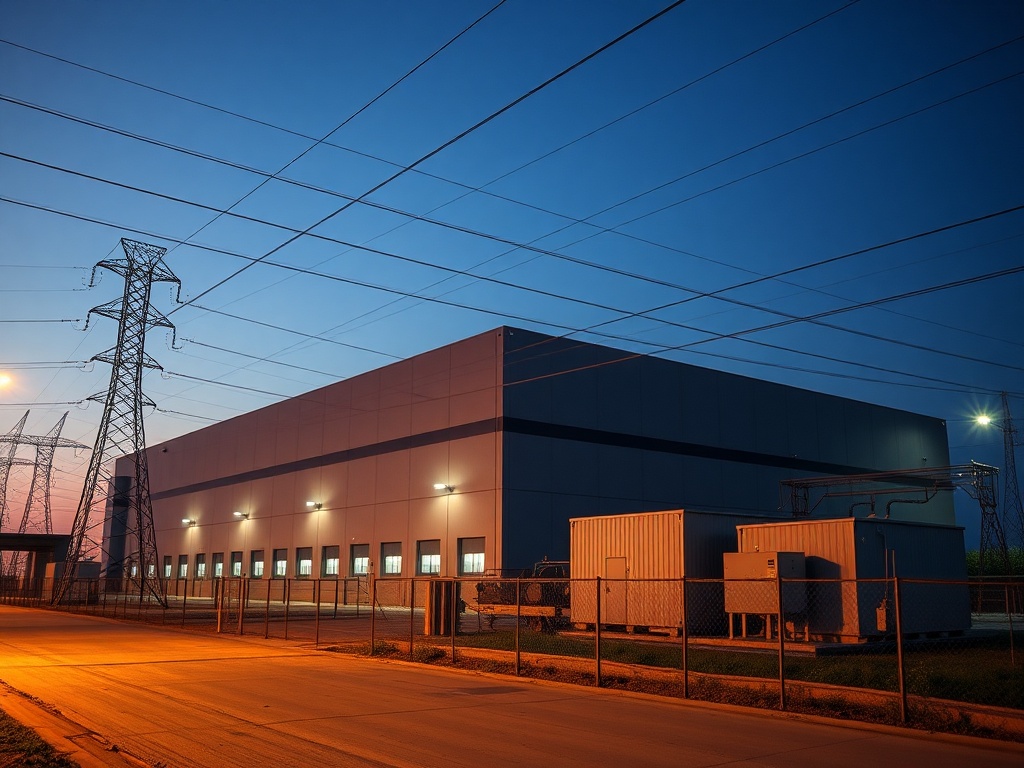
For C-Level executives, the shift in category of the problem is noteworthy. Energy transitions from being an operational line item managed by procurement to becoming a strategic and risk axis. If the commitment is formalized consistently, it reduces the likelihood of socializing costs in residential rates and accelerates a transformation: data centers cease to be mere “intensive tenants” of the grid and become energy developers, or at the very least, explicit payers of premiums and associated investments.
The financial implications are substantial. Covering price increases, financing upgrades, or building on-site generation means shifting costs to the tech companies' balance sheets. This, inevitably, pressures priorities: where to locate capacity, how fast to expand, which services to subsidize, and which projects to delay.
When AI Demands Infrastructure, the Myth of the ‘Visionary’ Leader Ends
There has been a cultural pattern that markets have rewarded for years: the charismatic leader promising infinite scalability. However, energy does not negotiate with narrative. Electricity demands permits, interconnection, safety, 24/7 operation, contracts, backup, and governance. Here, the “pledge” acts as a maturity test.
The first temptation is to treat the promise as a public relations tool: sign, issue press releases, show goodwill. The second temptation is to delegate the problem to a technical team and keep it outside the core of the business. Both are forms of structural immaturity.
What this moment requires is leadership capable of operating without heroism. It means building internal capabilities that were not typically central in software companies: energy management, regulatory negotiation, long-term purchasing, infrastructure engineering, and a cost discipline that links computational consumption with real impacts on the grid and territory. If AI growth is predicated on expanding data centers in energy-limited regions, the bottleneck is no longer research talent or access to GPUs; it becomes industrial execution capability.
This also exposes an uncomfortable reality for the culture of many tech companies: the product is no longer just a model. The product is the entire system that supports it. And when the entire system includes energy, water, permits, and local communities, the organization cannot rely on the indispensable figure who “fixes everything” with a phone call. It needs a distributed leadership architecture, with clear responsibilities and repeatable decisions.
I emphasize this for a practical reason: the expansion of AI has already provoked local reactions, moratoriums, and political pressure. This is not a philosophical debate; it is operational friction that consumes timelines and value.
Costs, Incentives, and Power: The Real Redesign Happens Within the Executive Committee
The announcement creates an explicit incentive: if the company pays the total cost of its incremental demand, its internal calculation changes. Every additional megawatt ceases to be a diluted externality and becomes a line item competing against other investments.
This is where governance becomes destiny. If decision-making remains centralized in a figure who prioritizes speed and image, the company will tend to underestimate risks from permits, social licensing, and energy operation. Conversely, if the company already operates with a robust executive committee, equipped with counterweights and execution capabilities, the new cost can become an advantage: better locations, stronger agreements, greater predictability, and less backlash.
The briefing includes a relevant critique: organizations and lawmakers have pointed out that commitments of this type can be “superficial arrangements” if the underlying problems of an aging grid and the need for market and permitting reforms are not addressed. This objection does not invalidate the pledge; it contextualizes it. The pledge does not modernize the grid on its own, but it does reorder who pays what and accelerates conversations that were previously hidden behind technical complexity.
From a strategic perspective, there is another effect: the promise complicates the landscape for existing plants that sought to co-locate with data centers without clear self-supply plans, according to analysts cited in the context. This point is critical for investors and CFOs: certain energy assets are reassessed and become riskier, depending on whether they enable firm supply and adherence to the commitment.
For me, the most revealing piece of information is not that “no one declined to participate” according to the Secretary of Energy. It is what that suggests: tech companies prefer a framework that allows them to continue scaling, even if it means paying more, rather than facing a reputational and political blockage that ends in disorganized prohibitions.
The New Operational Contract: Data Centers as Corporate Citizenship
There is a reading of sustainability that is notable for its coldness: when a business’s energy consumption begins to impact the household bill, social licensing breaks down. The pledge aims to avert that breaking point.
However, sustainability here is not a values discourse; it is institutional design. The “pledge” pressures companies to behave as industrial corporate citizens: paying full costs, investing in capacity, coordinating with utilities, and bearing public scrutiny regarding impacts.
Culturally, this forces an internal change: the energy area ceases to be a peripheral function and transforms into a power node. Whoever controls that agenda controls the pace of expansion. This often leads to conflicts: product wants to launch, finance wants predictability, operations want resilience, public affairs want to avoid local friction.
Companies that manage this well will do something concrete: they will connect AI growth decisions with their “total energy cost” and integrate it into investment governance. Not as an appendix, but as a capital allocation criterion.
Those that manage it poorly will fall into a pattern already known: they will promise growth without anchoring it to real capacity, and will end up clashing with permits, slow interconnections, local opposition, or costs that appear late. This translates into delays, loss of credibility, and poor execution quality. Not due to a lack of talent, but due to excessive organizational ego in the way of operating.
The Signal for C-Level: Professionalize Expansion Before Politics Forces It
This episode marks a paradigm shift: AI infrastructure is no longer discussed merely in terms of innovation, but of cost distribution, grid resilience, and social legitimacy. The Rate Payer Protection Pledge may ultimately be imperfect in its implementation, but its strategic function is already active: it pushes the industry to internalize what for years it could treat as an externality.
For tech companies, the challenge is not to sign; it is to execute without improvisation. For utilities and regulators, the challenge is to prevent the debate from being reduced to headlines and to achieve clear mechanisms. For the market, the challenge lies in accepting that competitive advantage is shifting toward companies capable of operating energy with discipline, not merely models with creativity.
My final reading is organizational: success at this stage is determined by the quality of the management system, not by the intensity of individual leadership. The C-Level that builds horizontal structures, teams with real autonomy, and repeatable execution can absorb new costs, sustain legitimacy, and continue to scale. Genuine corporate success is only achieved when leaders manage to build a system so resilient, horizontal, and autonomous that the organization can scale into the future without ever depending on the ego or indispensable presence of its creator.