
Geothermal Energy and Lithium from the Same Well: Cornwall's Model Reshaping UK Energy Security
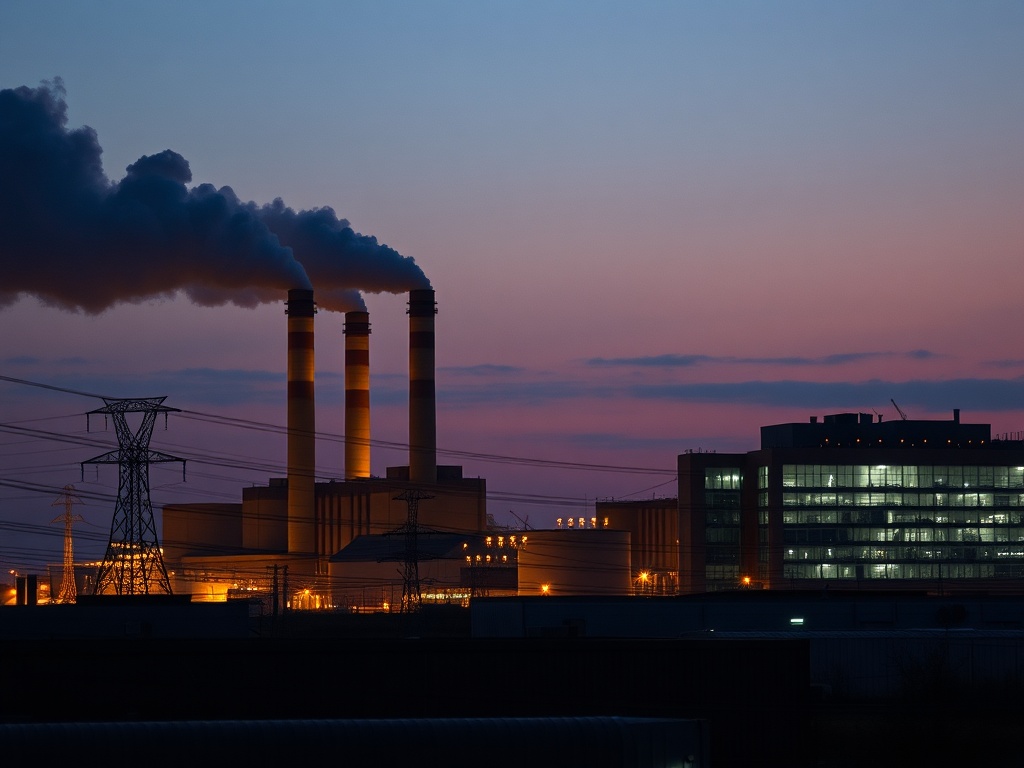
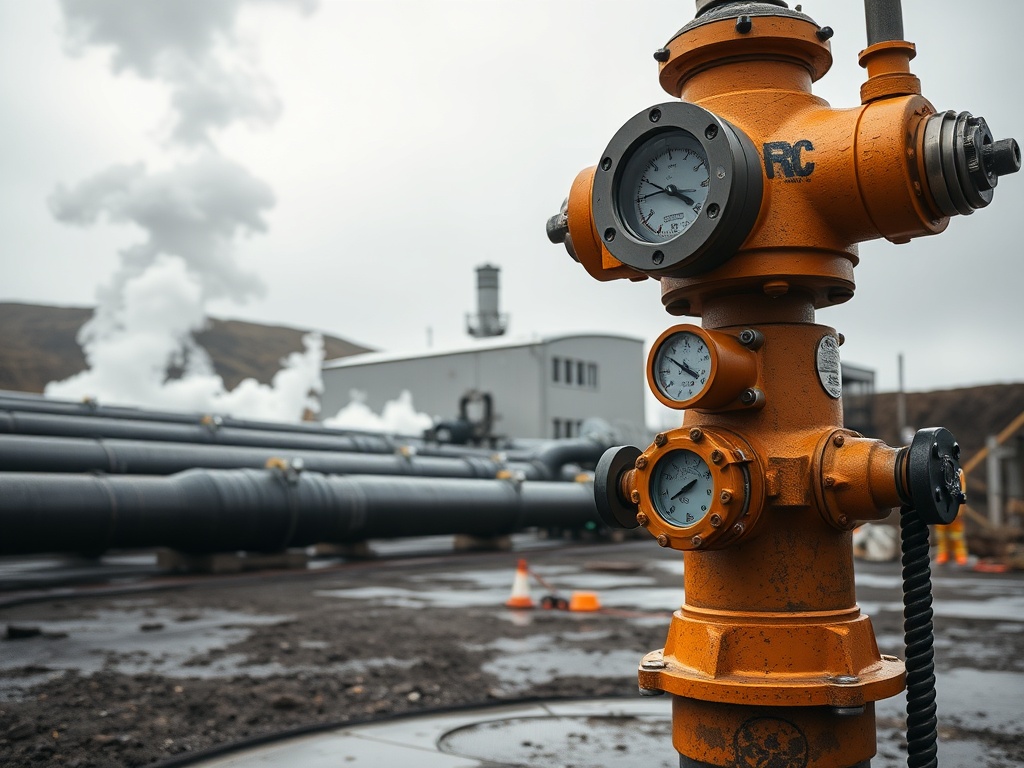
On February 26, 2026, in United Downs (Cornwall), the UK achieved what had been nearly two decades in the making: commercial geothermal electricity. Geothermal Engineering Limited (GEL) powered up a plant capable of delivering 3 MW of renewable electricity 24/7, sufficient for 10,000 homes, backed by a long-term purchase agreement with Octopus Energy. This energy does not rely on wind or sunlight; it is based on a more stable physical fact: water heated above 190°C, drawn from over 5 kilometers deep, making it the deepest well drilled in British soil with the highest temperature recorded in the country.
On a national scale, 3 MW is nearly symbolic. However, the event is not just a “technological milestone” to applaud and move on from. It represents a structural shift: the project combines electricity production with lithium extraction in a single industrial flow. The geothermal fluid contains over 340 ppm of lithium, and GEL aims to produce 100 tons per year of zero-carbon lithium carbonate equivalent, with a declared ambition to scale up to 18,000 tons annually within a decade. This volume is what the company associates with batteries for approximately 250,000 electric vehicles per year. The reported development cost is around £50 million.
The macroeconomic thesis behind United Downs is not romantic; it’s financial: when a country can combine firm energy with critical minerals in the same underground investment, it begins to reduce two structural vulnerabilities simultaneously.
The True Product Is Not 3 MW, But Firmness as a Financial Asset
Deep geothermal energy possesses a quality that the electricity market values with a mix of desire and scarcity: constant delivery. United Downs operates with a base load plant logic: 24 hours a day, seven days a week, without meteorological variables as external factors. In a system that has grown reliant on intermittent renewables, firmness is not merely a technical detail; it’s a financial asset because it decreases the need for balance and backup purchases.
The contract with Octopus Energy crystallizes this understanding: it’s not just about “selling electrons,” but about selling predictability. Predictability enhances the bankability of capital-intensive assets, especially when the core risk lies at the start of the project: drilling over 5 kilometers does not forgive improvisation.
Here we see the anatomy of a serious bet. GEL and its partners deployed a closed-loop binary cycle with Organic Rankine Cycle, integrating equipment and expertise from Exergy International, a firm with globally implemented technology for over 500 MW of geothermal capacity, per shared coverage data. This industrial layer is crucial because it reduces the risk of an “eternal prototype,” the number one enemy of capital.
A complementary fact places potential in context: the British Geological Survey estimates a land potential of over 200 GW of base load electricity in the UK, equivalent to more than 100 nuclear power plants. This figure is not a promise of immediate deployment; it’s a reminder that the bottleneck is not theoretical but one of execution, permitting, patient capital, and contract design.
Lithium as a Secondary Revenue Stream Changes Subsurface Unit Economics
If geothermal energy were just about electricity, the project would still be relevant due to its firmness. However, the more disruptive design is another: monetizing the same fluid twice. In United Downs, hot water drives the turbine, goes through processing to recover lithium, and then is re-injected underground in a closed-loop with reported zero operational emissions, minimizing the local footprint.
This coupling alters the well’s economics. The drilling and development costs—£50 million—are not amortized solely through a 3 MW electricity flow, but with a hybrid portfolio: long-term electricity offtake and production of lithium carbonate equivalent, initially 100 tpa, with an explicit plan towards 18,000 tpa in a decade.
The point is not to discuss the price of lithium, as it is not provided in the data, and it would be irresponsible to invent it. The focus is more structural: in a world where the energy transition depends on batteries, lithium shifts from being a distant commodity to a strategic input. When this input can be produced with a “zero carbon” narrative and without opening a traditional mine, the conversation changes on two fronts: local social acceptance and supply resilience.
Additionally, there is a learning effect. Extracting lithium from geothermal brines is not just a revenue stream; it is a risk reduction mechanism for expansion. If GEL can demonstrate operational stability—temperature, flow rates, reinjection, maintenance—and consistency in the reported concentration of 340+ ppm, capital stops treating each well as a leap into the void and begins to view it as a deployment curve.
In energy macroeconomics, this has a practical name: converting an infrastructure bet into a replicable platform.
The Network and Circularity Applied Precisely: Value Lies in the Loop, Not in Extraction
United Downs serves as a lesson in circularity without requiring slogans. The project operates as an industrial loop: it extracts heat and components from the fluid and returns the fluid to the subsurface. This logic reduces environmental friction and regulates the classic conflict between “extracting” and “conserving.” It does not eliminate complexity—deep drilling and reservoir management are demanding—but it shifts the impact from the territory to the system design.
Here, circularity is not marketing; it is risk engineering. The closed-loop reinjection is part of social license and regulatory permission and is also critical to asset stability: if the reservoir is managed with reinjection, thermal continuity is preserved, and resource degradation is minimized.
From a supply chain perspective, geothermal lithium introduces a principle that many sectors are just beginning to internalize: sovereignty is not purchased with rhetoric; it is built with nodes. An energy-mineral node in Cornwall, connected to a buyer like Octopus Energy and supported by private investors and European financing, operates as a prototype network: a point that can multiply and connect with other points.
GEL has already declared two additional sites in Cornwall to reach 10 MW in total by 2030. One of these developments faced initial environmental rejection and is under appeal, according to coverage. That friction is not an accident: the energy transition is not defined solely in laboratories or balances, but in the territory and administrative law. The difference between a scaling sector and one that stagnates often lies in the capacity to design projects that survive the permitting process without becoming financially unviable.
In that sense, United Downs also demonstrates something else: the UK is experimenting with a model where critical infrastructure does not depend exclusively on the State. Here, there is private capital, a clear offtake, and proven engineering. That combination does not guarantee speed but significantly increases probability.
What Cornwall Foresees for the Next Decade of British Energy
The strategic reading is uncomfortable for those who measure everything by immediate scale. 3 MW is 0.01% of the UK's electricity demand, according to the cited coverage analysis. However, era-changing developments are rarely announced with a big percentage; they are announced with designs that change the production function.
Cornwall introduces a dual production function: firm heat converted into electricity plus lithium extraction in the same circuit. If this logic is replicated, the UK could reduce reliance on imports not only for backup energy but also for critical minerals tied to batteries. GEL’s narrative about reaching 18,000 tpa and supplying enough for 250,000 electric vehicles annually should not be taken as certainty but rather as an industrial intention vector.
There is also a subtext about the electrical system: firmness decreases the systemic cost of integrating intermittent renewables. Each constant, low-footprint MW restructures investments in grid, storage, and ancillary services. And when the buyer is a commercial actor capable of structuring long-term contracts, like Octopus Energy, the market signal is direct: there is a willingness to pay for clean stability.
The major limit remains: capital and permits. Deep drilling will continue to be expensive; the subsurface does not become cheap due to political will. But risk may decrease with repetition, equipment standardization, and operational learning. The fact that Exergy has deployed relevant global geothermal capacity and is now participating in the first British case adds a component of industrial transfer that accelerates.
Leaders governing energy, mobility, and advanced manufacturing must treat this milestone as a reconfiguration of priorities: competitiveness in the transition is not defined by who installs more nominal megawatts but by who builds networks of firm assets and critical supply chains with verifiable unit economics and durable permits over time. That combination will determine industrial survival in the next decade.