
OnePlus Exits Physical Stores in India and Reveals Charging Issue
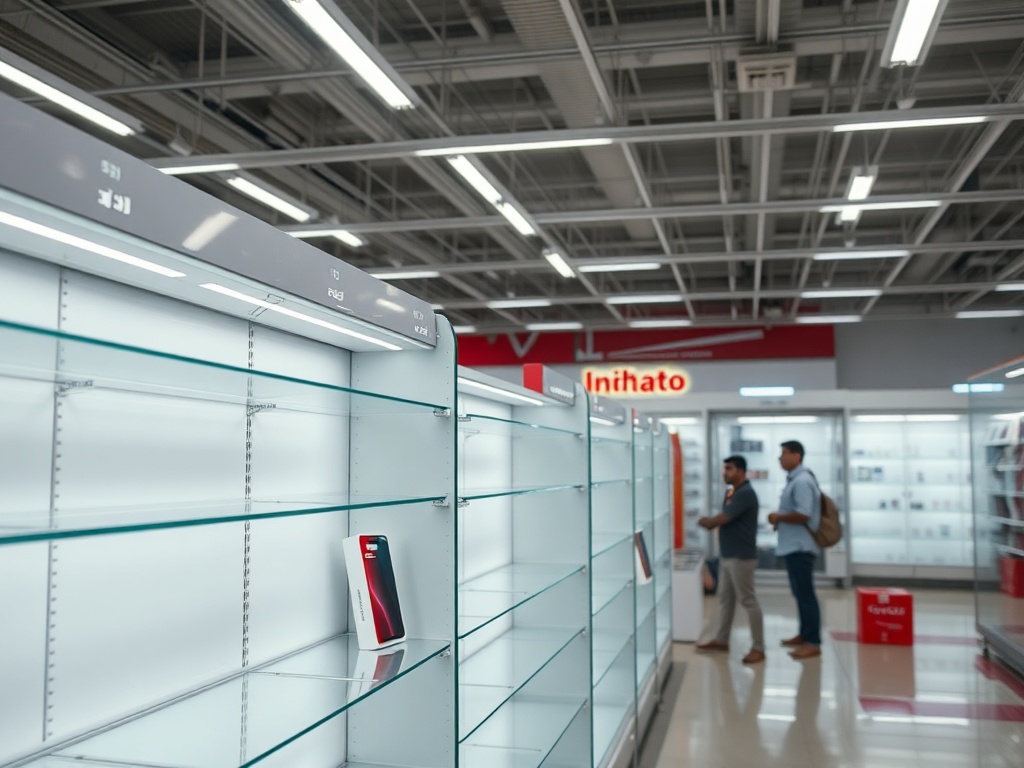
OnePlus is withdrawing its presence from physical retail in India. According to a report by Business Standard, the company is shifting to a model focused exclusively on digital channels while delegating after-sales support to the service network of its sister company, Oppo. This move is part of a broader restructuring that has yet to fully reveal itself publicly.
This news circulates as if it were a tactical distribution decision. However, I interpret it as an X-ray of a building suffering from a structural load issue that no one wanted to diagnose in time.
The Physical Channel is Not a Luxury, It's a Financial Gamble
Maintaining a physical presence in India is not comparable to opening a store in a European shopping mall. The Indian smartphone market is one of the most competitive in the world: compressed margins, extremely price-sensitive consumers, and a distribution logistics system that demands constant working capital. Every physical point of sale incurs fixed costs that do not vanish when sales decline: rent, staff, stagnant inventory, product demonstrations, and merchandising. For a brand competing against Samsung, Xiaomi, and the vast portfolio of BBK brands, this fixed cost structure is not a competitive advantage; it is a lever that can sink you without sufficient volume to support it.
What OnePlus is admitting with this exit is that the sales volume in the physical channel was insufficient to cover the cost structure that this channel demands. This is not a declaration of digital modernity. It is an emergency correction to a model that consumed cash without generating the returns that justified the investment. The operational question is not whether the online channel is better or worse: it’s whether the company managed to build adequate sales density in the physical channel before costs made it unsustainable. The evidence suggests that it did not.
Oppo's Network as Crutch or Pivot?
The second relevant point from the report is that OnePlus is not dismantling its after-sales support but rather transferring it to Oppo’s infrastructure. This decision deserves a deeper reading than it has received.
From an operational architecture standpoint, sharing the service network with Oppo can be interpreted in two completely different ways. The first interpretation is efficient: turning a fixed cost into a shared variable cost, eliminating the need to maintain independent service centers with idle capacity. If OnePlus does not have the volume to justify its own network, outsourcing that capacity to a company within the same group makes rational sense. It reduces cost structure without eliminating customer service.
The second reading is more uncomfortable: it indicates that OnePlus, as an independent business unit, does not have sufficient critical mass to operate its own end-to-end value chain in India. A brand that cannot sustain either distribution or after-sales support autonomously is functioning more as a product line than as a company with its own structure. This has direct consequences for brand perception, negotiation power with alternative channels, and any future scenario where the BBK group decides to reorganize its assets in the Indian market.
Both interpretations can be simultaneously true. But only one is strategically solid in the long term.
The Atomization that OnePlus Never Completed
OnePlus built its original identity on a very precise proposition: high-end smartphones for tech enthusiasts who did not want to pay Samsung or Apple prices. It was an almost perfect fit between proposition, segment, and channel. The exclusively online channel of its early years was not a logistical limitation; it was part of the message. Buying a OnePlus required effort, naturally selecting the buyer.
The problem arose when the brand tried to grow beyond that segment. To scale in India, it needed massive volume, and that massive volume in India goes through the physical channel, through regional distributors, and through consumers who are not seeking a cult smartphone, but the best phone possible within their budget. This expansion diluted the original proposition without building a sufficiently specific new proposal for the mass segment. The result was a brand caught between two worlds: too expensive to compete with Xiaomi on price, and lacking the prestige to justify a premium against Samsung in the physical channel.
Exiting the physical channel now does not solve that fit problem. It freezes it. OnePlus returns to a more reduced segment and a more efficient channel, but it has not redefined what specific proposition it delivers to what specific buyer in 2025. Without that clarity, the efficiency of the online channel does not generate growth; it merely slows the pace of deterioration.
Operating on Borrowed Blueprints Comes at a Cost
What OnePlus’s restructuring in India most clearly reveals is the inherent risk of operating under a brand architecture that depends on the infrastructure of another company within the group. The short-term efficiency of using Oppo's network for after-sales support comes at the cost of progressive loss of operational autonomy. When the blueprints of your building are drawn by someone else, any decision for renovation requires negotiation with those who control the structure.
Companies do not collapse due to a lack of product ideas or by choosing the wrong channel at a given time; they collapse when the pieces of their model—the segment they target, the proposition they deliver, the channel they use, and the cost structure supporting all that—stop functioning as a coherent system that generates cash sustainably. Today, OnePlus has a lighter channel and lower service costs. What it lacks, at least not visibly, is a clear answer as to what fit that lightweight channel must serve to generate measurable value in India over the next three years.