
Memories That Survive Space and What This Means for Their Industry
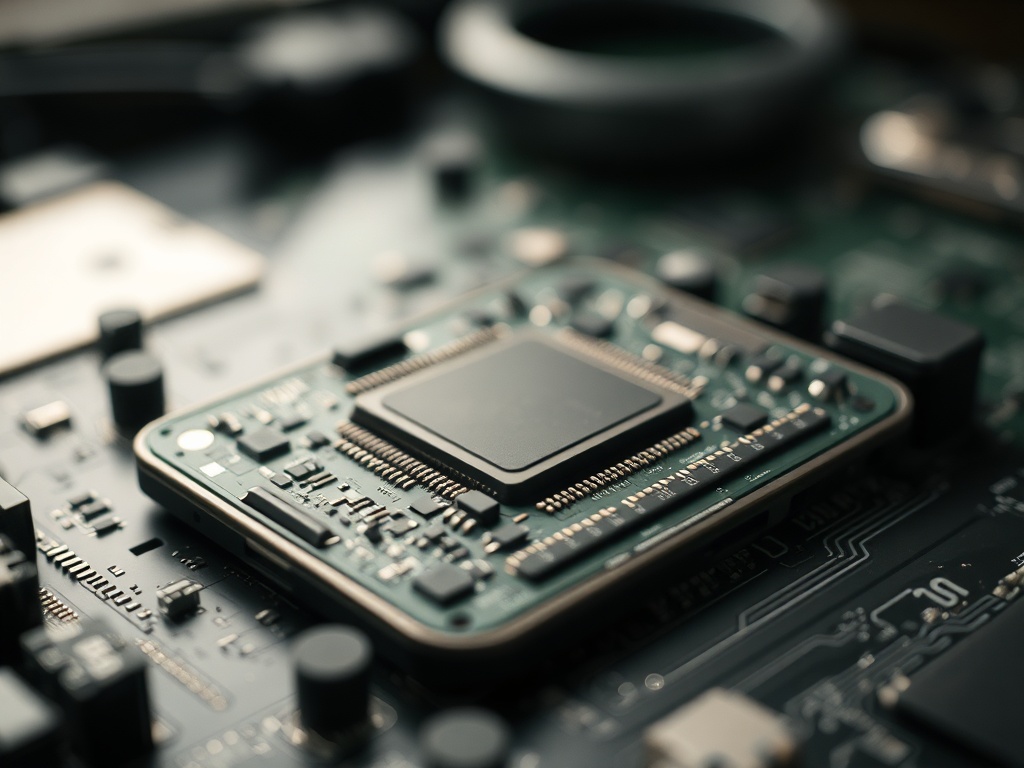
The aerospace industry has grappled with a persistent problem for decades, one that conventional semiconductor companies have curiously failed to address with sufficient ambition: the memory used in embedded systems within satellites and spacecraft primarily relies on technology designed for environments devoid of cosmic radiation. The outcome is predictable. Bit errors, write failures, and degradation from solar particles are accepted as unavoidable operational costs—a silent tribute paid each time a system is launched into space.
Avalanche Technology and Infineon have decided that this resignation is, in fact, an underserved market.
In late 2024, Avalanche announced the development of its Persistent DRAM, a solution based on third-generation STT-MRAM architecture with DDR4 interface, capable of delivering up to 8 gigabits of density with real-time error correction and virtually unlimited write endurance. The important fact is not the capacity, but the compatibility. By building on the DDR4 standard, the company eliminates the need to redesign systems that integrate this memory. A defense contractor does not need to rewrite its hardware architecture; they can replace the problematic component without altering the rest of the system. This transforms a profound technical innovation into a straightforward purchasing decision.
The Market Nobody Wanted Because It Seemed Too Difficult
To understand the strategic move behind this bet, one must first look at what the semiconductor industry had done for years: ignore the aerospace and defense segment as if it were too small, too regulated, or too costly to certify. Companies that did participate offered modified products or legacy solutions that barely met minimum requirements. The market functioned, but no one had built something designed from the ground up for its actual operating conditions.
Avalanche identified this gap and approached it methodically. The company has accumulated over 300 patents in STT-MRAM technology and built its positioning on a claim that few competitors can support: its products are space-tested, not just certified in labs. This distinction matters in a sector where qualification cycles take years, and a new supplier without orbital history does not make it onto any approved components list.
What they did was eliminate the risk variable that paralyzes purchasing decisions in defense. By offering DDR4 compatibility, they reduced adoption friction. By documenting radiation resistance with real data, they removed the central technical objection. By explicitly targeting platforms like AMD's Versal FPGAs, Vorago's VA7230, and Lattice Semiconductor's Nexus and Avant series, they turned their offering into something that systems engineers can specify today, not a pilot project for 2030.
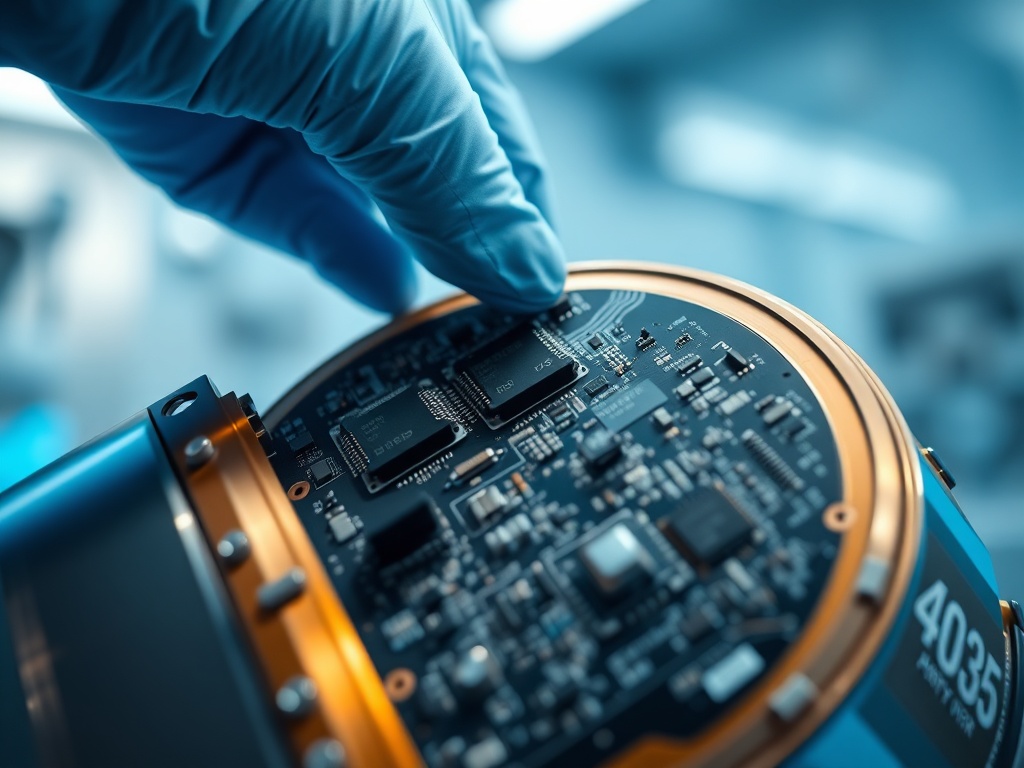
Infineon, for its part, operates in this space from the perspective of an infrastructure provider: its radiation-hardened synchronous SRAMs in 72 and 144 megabit configurations are already part of the approved supply chain for companies like AMD Xilinx and Microchip. Their role in the architecture of extraterrestrial storage solutions is not that of an innovator breaking molds, but rather that of a trusted integrator ensuring that system blocks function together under extreme conditions.
Why Compatibility Is the Real Product
There is a cognitive trap that product teams in industrial sectors frequently fall into: they assume that the deepest innovation is the one that requires the most significant reconfiguration of the customer's system. In defense and aerospace, this logic destroys sales. Qualification processes are so costly and lengthy that any component requiring the redesign of the adjacent system multiplies the total adoption cost by a factor that no acquisition budget can easily absorb.
Avalanche resolved this with an architectural decision that seems technical but is fundamentally commercial: the DDR4 interface is not a feature; it is the distribution strategy. By speaking the same language as existing hardware, the company turns its MRAM into a direct replacement component. The systems engineer does not justify a technological migration to their acquisition committee; they justify an improvement in reliability for a standard component. These are two entirely different conversations, and only one of them has a real chance of closing in a reasonable fiscal cycle.
This principle has implications that extend far beyond the space sector. The question few companies ask themselves before defining their product architecture is how much integration friction they are transferring to the customer. Every differentiation feature that requires changing something in the buyer's environment is an invisible cost added to the nominal price. Companies that understand this—and have built products that adapt to the customer's system rather than demanding the system adapt to them—tend to capture market share more quickly than their competitors can explain by looking solely at technical specifications.
Repressed Demand as a Market Signal, Not a Marketing Promise
Paul Chopelas, head of aerospace and defense products at Avalanche Technology, described the state of the sector with a phrase that deserves attention: the defense industrial base is urgently seeking alternatives to legacy memories. This description of urgency is not sales rhetoric. It is the diagnosis of a market that has continued buying unsatisfactory solutions because qualified alternatives did not exist, not because existing solutions were good.
When a segment has tolerated a deficient solution for years, the accumulated demand can be substantial. The challenge of capturing it is not technical at first; it is about credibility and process. In defense, credibility is built with flight history, certifications, and references within the industrial base. Avalanche built that history with its earlier generations of MRAM for boot and storage before targeting the working memory segment. This sequence was not accidental. It was a deliberate construction of the intangible assets that make sales possible.
The projected availability in mid-2026 of high-density DDR4 solutions marks the moment when this long-term strategy enters its monetization phase. If technical execution and qualification timelines hold, Avalanche will have turned years of patient development into a market position that is difficult to replicate in the short term.
Leadership That Does Not Seek to Fight for What Already Exists
What Avalanche and Infineon are executing in the space storage segment illustrates something that strategy teams in many industries continue to resist: well-directed capital does not seek to capture existing demand; it builds the conditions for new demand to emerge. The defense industrial base was not asking for DDR4 MRAM five years ago because they did not know it was possible. Today, they are asking for it because someone invested in making it possible and in reducing adoption costs until the decision became obvious.
The executive who continues to allocate their R&D budget to improve their position in existing markets by tenths of a percentage point is competing for the space left by others. Avalanche’s bet is not about having better marketing or lowering the price of their memories by five percent. It is about having identified that the most attractive market was one that nobody had built yet and having the discipline to qualify that market with real evidence—flight history, adoption in the industrial base, compatibility with active platforms—before scaling the commercial investment. That sequence, validation before capital, is the difference between building one's own market and burning resources fighting for someone else's.