
Rivian R2: Transitioning from Luxury to Volume
Rivian has just unveiled crucial figures and specifications for its R2, the SUV essential for moving beyond the premium niche and into the mass market. The standout figure dominating the discussion is the price of the R2 Dual-Motor AWD Performance: $57,990, featuring 656 hp, 609 lb-ft of torque, acceleration from 0 to 60 mph in 3.6 seconds, and an estimated EPA range of 330 miles. At the lower end of the spectrum, Rivian promises an entry price of $45,000 for the Single-Motor RWD Long Range, though this variant won't be available until late 2027.
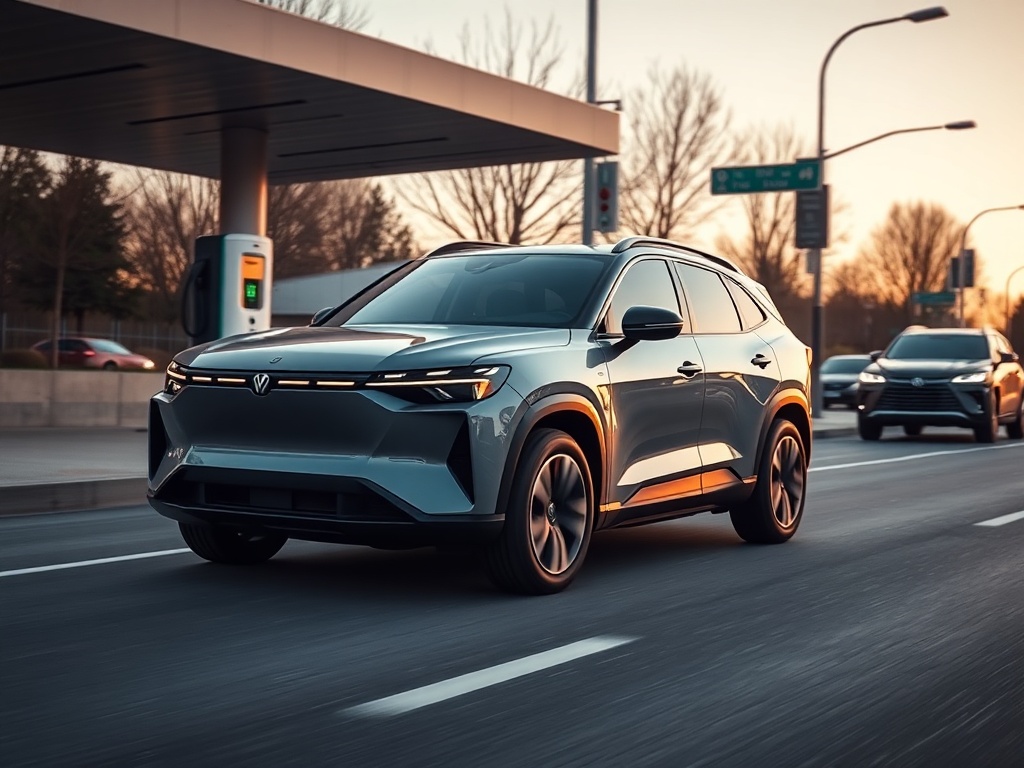
On the product side, the announcement reflects a meticulously calculated mix: high-impact specifications, dimensions close to a compact mid-size SUV (185.9 inches long), and design choices prioritizing everyday use, storage (90.1 cubic feet total), and interior flexibility, including a 40/20/40 folding configuration to create a flat surface. Viewed as a company strategy, the R2 represents a structural examination: Rivian's shift from selling few expensive vehicles to producing many with slimmer margins.
My interest is not in whether the R2 accelerates like a sports car, but rather whether Rivian is constructing the right organization and portfolio so that this acceleration doesn’t remain a flashy launch but leads to sustainable operational success.
The R2 is More of a Cash Strategy Than a Design Strategy
The pricing structure and arrival timeline tell a more revealing story than any render. Rivian is creating a ladder whereby the most lucrative configurations appear first: Performance ($57,990), followed by a Dual-Motor AWD Premium estimated at $55,000, with the promise of volume at $45,000 coming afterward. This order signals financial discipline. In an industry where fixed costs are high and the learning curve is expensive, prioritizing higher-ticket variants first helps absorb launch costs and stabilize production.The key is that Rivian is attempting a play for "volume without losing the brand," but with a distinction from its earlier phase: the R2 is designed to be more producible. The brief discusses simplified option packages and a philosophy of durable, easy-to-clean interiors, anchored by a central 15.9-inch display in the cabin. This isn’t merely an aesthetic detail; it represents a reduction in combinatorial complexity. Fewer configurations mean fewer errors, less parts inventory, reduced factory friction, and a more manageable supply chain.
The paradox is that even with simplification, the strategy of “many versions” still carries complexity: single motor, dual motor, performance variations, different driver assistance packages, and a bet on features such as semi-active suspension in Performance. The company is compelled to execute a transition where the central metric is not the applause of a launch but the repeatable performance of operations.
There is also a competitive message: the estimated EPA range of 330 miles in the Performance variant and the specs of 0 to 60 mph in 3.6 seconds place the vehicle in conversations with category leaders. This combination aims to break a psychological barrier: that a family electric SUV isn’t just a “luxury indulgence,” but rather a defensible purchase compared to gas-powered SUVs in the mid-size segment.
The Product Engineering Reveals an Obsession with Usability and Less Friction
The R2 is designed as a two-row, five-seat SUV, more akin to a daily tool than an aspirational object. Dimensions (185.9 inches long, 115.6 inches wheelbase) and a height that promises less intimidating urban handling cater to volume: the average customer thinks about parking at the grocery store and weekend trips, not racing tracks.Operational choices are embedded in some “domestic” details. A locking frunk to store valuables or dirty gear reduces user stress. A squared-off rear cargo area optimized for strollers, bags, and coolers signifies a prioritization of daily usability. The 40/20/40 folding and level surface target modularity without necessitating accessories. All this transforms the vehicle into a product that defends itself through functionality rather than storytelling.
In terms of technology, Rivian announces a new suite of cameras and radar aimed at more capable driver assistance, with ambitions for hands-free operation on mapped highways. The implication here is platform-related: driver assistance isn’t an isolated “feature” but a system that demands quality sensors, calibration, software, and after-sales support. When an automaker chooses to focus on this, it ties itself to a cost curve of service and upgrades.
Even the list of drive modes (rally, snow, soft sand, in addition to standard modes) signals the “utility adventure” positioning Rivian wants to maintain while lowering prices. Keeping that DNA without escalating costs poses a component portfolio design challenge. If each mode requires distinct hardware, the promise becomes costly. If resolved through software and calibration on a common basis, the promise can scale.
Warranty also plays into the adoption argument: five years or 60,000 miles of basic coverage and eight years or 175,000 miles for the high-voltage system. In a market where buyers still fear battery costs and degradation, the warranty acts as a reduction of perceived risk, albeit pushing internal demands for quality and failure control.
The Crucial Tension for Rivian Lies in the Order of Operations
Rivian isn’t merely “introducing a new model.” It’s shifting the center of gravity within its company. Its previous vehicles aimed at premium buyers serve as revenue drivers but have natural volume limitations. The R2 aims to open the market, and this demands a system-wide change.I see three fronts that define success.
First, governing manufacturing complexity. Scaling in automotive punishes those who underestimate execution. Rivian is trying to learn from past experience with simpler packages, yet simultaneously commits to variants (RWD, AWD, Performance) and costly features such as semi-active suspension and Matrix LED optics with adaptive high beams in Performance. If the company doesn’t manage the introduction of variants with rigorous discipline, the unit cost becomes a silent enemy.
Second, differentiating exploration vs. exploitation metrics within the same portfolio. The R2, due to its volume role, cannot be evaluated like a bespoke line. It must operate under industrial metrics: plant performance, rework rates, supplier consistency, cycle times. At the same time, the driver assistance system and software experience require learning metrics: incident rates, perception quality, improvement speed, and release stability. Mixing these dashboards into a single bureaucratic governance often produces two outcomes: either the software slows down due to operational fears, or operations degrade through excessive experimentation.
Third, protecting the timeline and credibility. The $45,000 variant arriving by late 2027 is an implicit acknowledgment: the “accessible EV” isn't immediate. This may be correct if the launch order maximizes revenue and industrial learning. But it also opens a competitive window. In highly competitive segments, timing is not just a commercial factor; it’s a cost factor because the market learns quickly and suppliers reprice accordingly.
At this juncture, Rivian's ambition must translate into an organization capable of operating at two speeds: one that optimizes manufacturing and cost, and another that enhances product and software without compromising operations. This ability cannot be acquired through marketing; it is designed into processes, platform decisions, and governance that avoids endless committees.
A Healthy Portfolio Demands Less Epic and More Industrial Sequence
The R2 announcement showcases a company attempting to build a reasonable sequence: capturing revenue with high-end versions, introducing a more “usable” and less luxurious SUV, and reserving the entry price for when manufacturing and supply chains are ready. The published numbers make the product defensible: 330 miles of estimated EPA range in Performance, 0 to 60 mph in 3.6 seconds, compact mid-size SUV dimensions, and a storage and interior flexibility offering that fits with families.The risk isn't in the business proposal. It lies in the internal mechanics: every package, every variant, and every technological promise push complexity. Rivian appears to be responding with simplified bundles and a design philosophy centered on durability. If they maintain that discipline when pressures for customization arise, the platform could scale.
The viability of the R2 as a lever for the future depends on Rivian protecting the cash of its current business while industrializing a volume model with controlled complexity and distinct metrics between mature operations and technological learning.