
The Cocoa of Puerto Rico and the Geometry of an Unignorable Offer
In 2009, Puerto Rico was importing the chocolate it consumed while its lands remained uncultivated. It wasn’t a climate or soil issue; the island has nearly perfect temperature, humidity, and latitude for cocoa cultivation. The problem lay in the commercial architecture. No one had built the right offer.
What has happened since is not merely an agricultural story but a case study on designing a value proposition that makes price competition irrelevant.
The Trap Puerto Rico Chose Not to Fall Into
Côte d'Ivoire and Ghana together control over 60% of the global cocoa production. Competing with them in volume from the Caribbean is an unsolvable equation: labor costs, scale, and infrastructure simply do not align. Any Puerto Rican producer attempting that path is not building a business but financing their own extinction.
The documented strategic decision within the local industry was the opposite: reject the commodities market and position themselves in the luxury segment. That choice is not philosophical; it has direct mathematical consequences on who sets the price and who accepts it.
In a commodities market, the buyer sets the price, and the producer competes to avoid being left out. In a premium market with a differentiated offer, the dynamic reverses. The producer controlling the narrative of quality, origin, and process has negotiating power, translating that power into margins that finance operations without relying on subsidies or external capital.
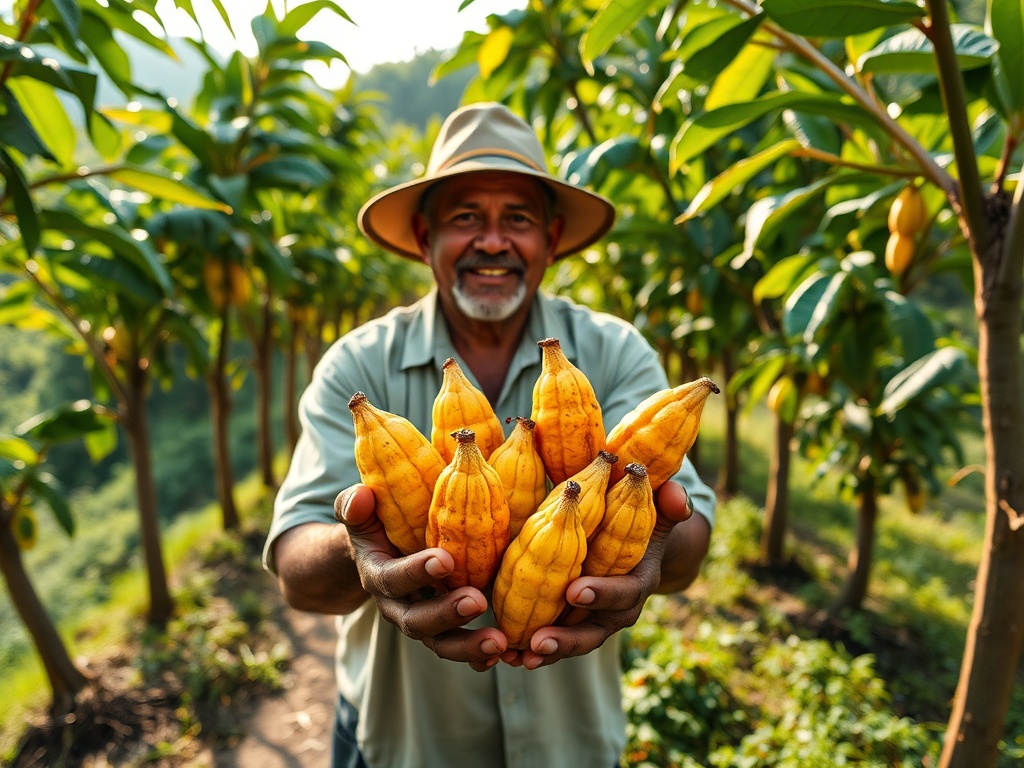
Juan Echevarria, head of Hacienda Jeanmarie, has planted over a million cocoa trees with plans to add 1.5 million more. What distinguishes his model is not the planting scale, but that he transforms cocoa into finished chocolate under his own brand, Jeanmarie Chocolat, selling directly in Puerto Rican supermarkets. He controls the process from seed to bar. This is not just vertical integration; it is the difference between conceding the margin or retaining it.
Why the Bean-to-Bar Model is a Price Lever, Not a Trend
Chocolate Cortés has invested approximately $925,000 since 2020 in improving its manufacturing facilities. This figure is not just marketing; it signals a company that understands that value lies not in raw materials but in the process and the promise surrounding the finished product.
Local producers transforming their cocoa into chocolate—rather than selling the beans to large processors—are making a technically sound move: eliminating links in the chain that capture value without adding it. Each intermediary removed from the process returns margin to the producer. Each origin story communicated directly to the end consumer increases willingness to pay without raising production costs.
The global chocolate market is projected to reach $198.4 billion by 2036, growing at an annual rate of 3.9%. Within that growth, the fastest expanding segment is, in fact, the premium and clean-label market: consumers paying more not for chocolate itself but for the assurance of knowing what is inside and where it comes from. Puerto Rico can provide that certainty in a way that Ecuador, Ghana, or Indonesia cannot: it has U.S. territorial status, simplifying distribution to the North American market and reducing logistical friction for institutional buyers and retailers.
The integration of tourism into the chain—chocolate tours, tasting rooms, on-farm cafés—is not a decorative accessory. It is a mechanism that shortens the time it takes for a consumer to go from being unaware of the product to buying it with conviction. When someone visits the estate, harvests a pod, toasts the beans, and eats the chocolate right there, the trust-building process that typically takes years of advertising occurs in just 90 minutes. This has measurable economic value directly affecting conversion rates and subsequent loyalty.
The Risk Nobody is Naming
The narrative of resurgence is solid. Planting numbers, investment in manufacturing, and growing domestic demand are real data points. However, one variable could jeopardize the entire model if not managed precisely.
Mike Albertini of Uncommon Cacao visited Hacienda Jeanmarie in January 2025 and noted something few reports have emphasized: Echevarria uses the vast majority of his cocoa to produce his own chocolate. This means the availability of raw material for export directly depends on how much he sells locally first. If domestic demand does not absorb production at the pace of planting, the model faces a surplus with no clear destination. If local demand grows faster than cocoa production capacity, the model faces pressure to choose between scaling cultivation or slowing sales.
This tension does not invalidate the strategy but does require planning discipline that cannot be resolved with enthusiasm alone. It demands market absorption forecasts, advance distribution agreements, and an inventory policy that does not sacrifice the scarcity narrative that supports premium pricing.
Parallel to this, the infrastructure and pest prevention protocols required by the sector partly depend on institutional support. The USDA and the Tropical Agricultural Research Station are key players in the model's viability at scale. When an industry's growth relies on federal budget allocation decisions, there exists a bottleneck that no private entrepreneur can unilaterally control.
Cocoa as Proof That Price is Set by Those Who Build Certainty
A pattern systematically emerges in businesses that manage to sustain high margins regardless of the economic cycle: they do not sell a product; they sell the elimination of doubt. The premium chocolate consumer is not purchasing fermented and processed cocoa; they are buying the certainty that what they eat was produced under specific criteria, in a traceable location, by identifiable people.
Puerto Rico has all the ingredients to sell that certainty better than almost any other origin. It has documented climate, agronomic research supporting the superior quality of its varieties, a genuine narrative of resurgence, and a legal status that facilitates distribution in the world's most valuable market for premium chocolate.
The emerging industry doesn’t need to compete in tons. It needs to be relentlessly consistent in delivering what it promises and in building the channels that bring that promise directly to the consumer who is already seeking exactly that. Sustainable growth for this model won’t come from planting more trees: it will come from reducing the distance between the certainty that the product can offer and the perception the target market has of it today.
Businesses that endure and scale profitably from year one are not those with the cheapest product or those that shout the loudest. They are the ones that design every customer touchpoint so the value is so evident and the effort to purchase so minimal that the decision becomes automatic. Puerto Rico has the product. The remaining task is to build the commercial architecture that makes it inevitable.