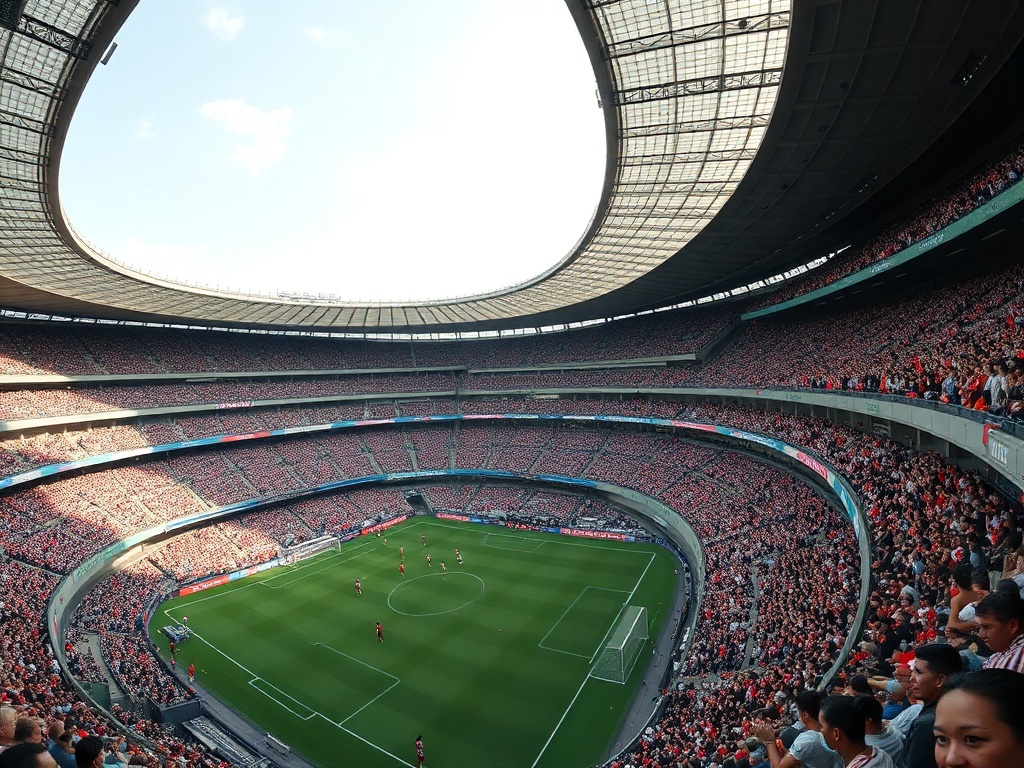

25,000 People Aren't Coming to See a Star; They're Coming to See a System
On March 14, 2026, Gillette Stadium welcomed approximately 25,000 spectators for the inaugural match of Boston Legacy FC against Gotham FC, the reigning NWSL champions. This figure is double the league's average attendance from the previous season. For any financial analyst, this data is promising. For me, it signals an organizational development worthy of more attention than the final score.
Boston had no professional women’s soccer since 2018, when the Boston Breakers ceased operations due to years of financial instability. Eight years of emptiness in a sports-hungry market. The return came not with a legendary figure on the field or a sentimental nostalgia campaign, but with a franchise that paid $53 million for a spot in the NWSL, hired a Portuguese coach from Benfica, signed a goalkeeper with five seasons at another club, and had to navigate their own branding misstep before playing a single competitive minute.
Structurally, that’s much more interesting than any goal.
The Branding Misstep That Revealed Management Maturity
In October 2024, the franchise launched its identity under the name Bos Nation FC, paired with a campaign titled "No More Balls," which generated immediate backlash from fans. The organization apologized and in March 2025 announced its new name: Boston Legacy. The rebrand was completed in less than five months.
Many media outlets perceived this as a stumble. I see it as a sign of managerial health. An organization with fragile or ego-driven leadership would have defended the original decision to protect the ego of the individual who proposed it. Instead, President Jennifer Van Dijk and her team processed the market signal, absorbed the reputational cost, and pivoted without delay. There’s no evidence that anyone was publicly scapegoated or that the crisis paralyzed operations. The team continued building infrastructure while managing the controversy.
That’s not luck. It's a decision-making architecture that functions under pressure. And in an expansion sports franchise, where deadlines are fixed and mistakes are amplified in real-time, this capability carries direct operational value.
The ownership structure also deserves attention. Boston Legacy was founded and led by female investors, with profiles ranging from entertainment to elite university sports. This composition is not just a positioning argument. Diversifying frames of reference at the top reduces the likelihood that a single dominant logic captures all decisions. The initial campaign error, in that context, wasn’t a failure of the system: it was the system functioning, detecting dissonance, and correcting it.
What $53 Million Buys and What It Doesn’t
The $53 million expansion fee positions Boston Legacy as a considerable institutional bet. For context: the NWSL was founded in 2013 with eight teams and expansion fees that didn’t exceed $2 million in its early rounds. The jump to $53 million reflects a revaluation of the franchise asset that no rational investor pays without projections of sustainable revenues.
Revenue sources are multiple and already active. Broadcasting rights are distributed among ABC, CBS Sports Network, Victory+, and Amazon Prime Video, meaning the franchise doesn’t rely on a single platform for visibility. The inaugural attendance of 25,000 creates a pricing argument that the business team can use in future sponsorship negotiations. The White Stadium project, although wrapped in litigation currently before the Massachusetts Supreme Judicial Court, represents a long-term asset that, if solidified, would transform the club's cost structure by eliminating reliance on Gillette Stadium as a temporary venue.
However, the $53 million doesn’t buy cultural cohesion, guarantee that the hired individuals share the same model of working under pressure, or solve the most costly problem of any new sports organization: building a decision-making system that doesn't collapse when results on the field don’t follow suit.
Filipa Patão, the coach hired from Benfica, articulated it precisely in her pre-season statement: "We’re not here to avoid losing; we’re here to try to win." That distinction isn’t rhetorical. It defines how authority is distributed within the coaching staff, what type of tactical risks are approved, and how a streak of adverse results is processed. A coach with that mentality builds teams that generate their own intensity, independent of constant instructions from the bench.
The Trap Boston Legacy Must Still Avoid
The success of the opening day creates its own risk. When an expansion franchise starts with record attendance, national coverage, and a triumphant return narrative, the institutional temptation is to centralize the credit in the most visible figures. It’s the moment when the media constructs the narrative of charismatic leadership and high-profile investors become the story.
That can precisely erode what was built well. The organizational strength that allowed them to survive the branding error, hire a defined-profile coaching staff, and launch a complex operation in a compressed timeline does not reside in any singular person. It resides in the processes, in who has the authority to make decisions, and in the culture established before ABC’s camera turned on.
Jennifer Van Dijk stated plainly in an interview with WBUR: "It’s a surprisingly short time to think about launching all the infrastructure, the necessary people, and the fan base to bring a level of professionalism and quality to a city as passionate about sports as Boston." That statement describes an organization aware of the speed at which it operates, not a celebration of its own narrative.
The measure of Boston Legacy’s managerial maturity won’t be the outcome of the first game nor the attendance figure of the inaugural season. It will be whether, when adverse results arrive — the inevitable streak of losses in any first season — the decision-making system remains horizontal and the processes support the team without any individual becoming the savior of the narrative.
Organizations that sustain growth are those where leadership has had the discipline to build structures that operate independently of the charisma of their creators. Boston Legacy has the initial ingredients. The work that determines whether this lasts a season or a decade starts now, when the stadium is already empty and the cameras have left.