
The Chip That Turns a Fiber Cable into Eight Simultaneous Highways
There’s an unsung challenge at the heart of artificial intelligence data centers — one rarely highlighted in press releases: the world’s most advanced graphic processors are left waiting. They await data that fails to arrive on time because the optical infrastructure connecting them was designed for a previous generation of workloads. Each millisecond of latency in the internal network of a GPU cluster equates to computing capacity that is paid for but not utilized.
This dilemma is what Tower Semiconductor and Scintil Photonics aim to address, as revealed on February 17, 2026: the first mass-produced single-chip laser engine with dense wavelength multiplexing (DWDM) tailored for AI data centers. The product, named LEAF Light™, can transmit up to 1.6 terabits per second over a single fiber, distributing that capacity across eight or sixteen 50-gigabit channels. The difference between this and existing technology is not marginal: it’s akin to the difference between a single-lane road and a sixteen-lane highway.
Why the Previous Model No Longer Suffices
Until now, co-packaged optical solutions deployed by manufacturers like Nvidia and Broadcom operated with one laser per fiber — a single wavelength channel. This model works well for horizontally scaled networks (connecting clusters) but fails when the demand is to directly connect processors within the same rack. There, the constraint is not the speed of an individual channel but the volume of information that can be transferred simultaneously between chips.
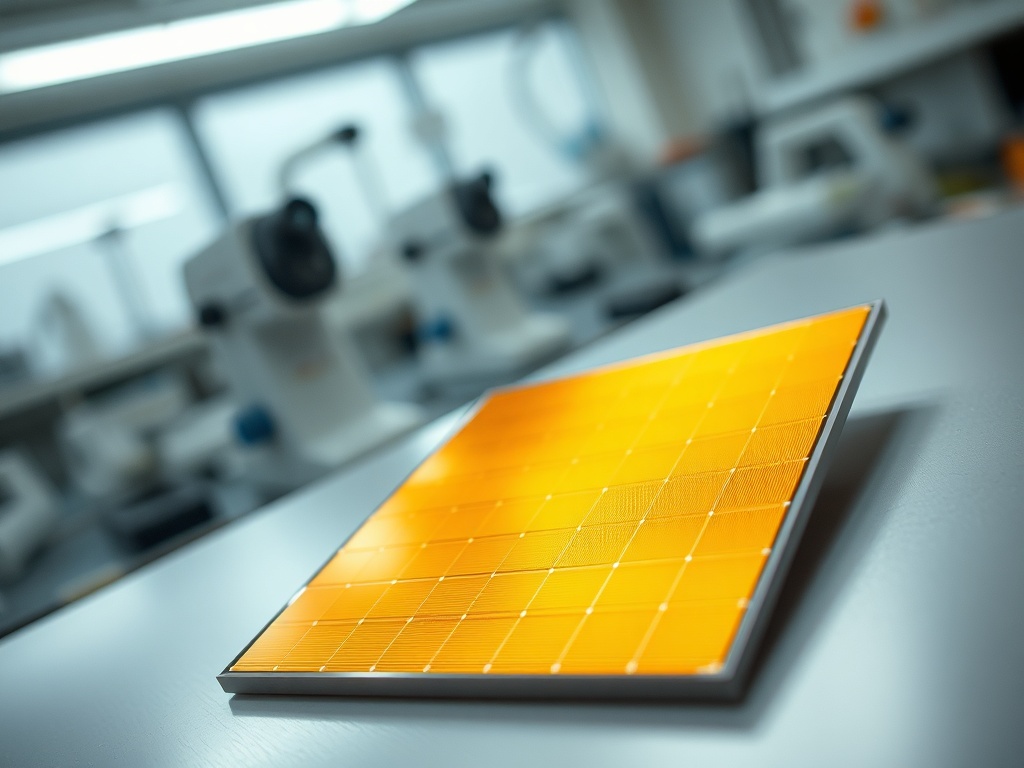
Scintil’s SHIP™ technology tackles this challenge by integrating distributed feedback lasers, photodiodes, modulators, and passive components into a single 300-millimeter silicon wafer. The process combines indium phosphide semiconductor materials — which provide the necessary optical gain — onto Tower’s silicon platform using a heterogeneous bonding method. The result is a chip that emits eight distinct wavelengths with a precise spacing of 100 or 200 gigahertz, stable enough to operate within a rack environment without the thermal tolerances typically demanded for long-range telecommunications.
The "slow and wide" architecture enabled by this chip — eight channels of 50 Gb/s instead of one of 400 Gb/s — has a direct operational impact: it reduces queue latency, that critical 99th percentile that hampers the efficiency of GPU clusters when a single packet takes too long and forces the others to wait. Scintil’s CEO, Matt Crowley, articulated this clearly: wavelength multiplexing can effectively double processor utilization simply by eliminating wait times in the internal network.
The Distributive Logic Behind the Alliance
What fascinates me most about this announcement is not the chip itself, but the architecture of the relationship between the two companies. Scintil is fabless — it doesn’t own its own factory — while Tower is an analog semiconductor foundry with multiple global production sites. On the surface, this appears to be an asymmetric dependency: the designer relies on the manufacturer more than the manufacturer relies on the designer.
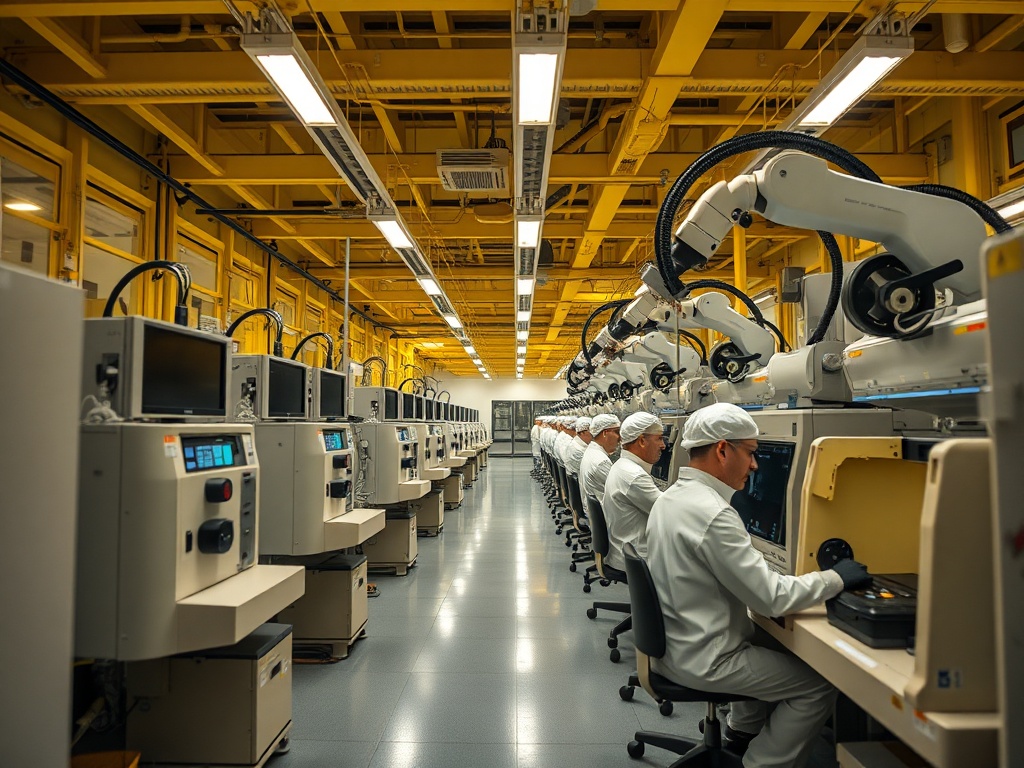
However, the actual structure reverses this interpretation. Tower validated the SHIP™ technology within its existing production lines, meaning it didn’t need to build new capacity for this product. For Tower, every LEAF Light™ wafer produced in its plant translates to incremental income on already amortized infrastructure. For Scintil, validation through a foundry capable of scaling to millions of units monthly is an asset no investor can easily replicate: proven manufacturability at scale.
The production plan backs this up with concrete numbers: tens of thousands of units by late 2026, an order of magnitude more in 2027, and readiness for mass production in 2028. This ramp-up is not possible if either party extracts too much value from the other. If Tower were to aggressively raise prices in 2027, Scintil would be unable to fulfill contracts with hyperscalers. If Scintil failed to guarantee sufficient volume, Tower would not justify reserving wafer capacity for this process. The incentives are aligned because the collapse of one would devastate the other’s business.
This contrasts with the typical semiconductor pattern, where foundries often wield the negotiating power conferred by capacity shortages to squeeze fabless clients’ margins during high-demand cycles. Here, the technical differentiation of SHIP™ — which no other process can instantaneously replicate — provides Scintil enough negotiating leverage to sustain a long-term relationship without being exposed to extraction.
What Nvidia’s Two Billion Dollars Reveal
Nvidia invested approximately $2 billion in Lumentum and Coherent Corp., two of the largest laser manufacturers globally. This figure is not merely a strategic public relations gesture: it’s an explicit recognition that the supply chain for optical components serves as a bottleneck that could constrain the growth pace of AI data centers.
The co-packaged optical market is growing at a compound annual rate of 30%, and the primary factor stymying that growth is not demand — hyperscalers are willing to pay whatever it takes to increase bandwidth density — but the ability to manufacture integrated lasers at scale. When Nvidia pours capital into its laser suppliers, it’s attempting to solve the same problem that Tower and Scintil addressed through technology: converting a discrete, costly, and hard-to-scale component into a monolithic, volume-manufacturable element on standard silicon.
The difference between these two approaches is significant for understanding who captures long-term value. Nvidia’s investment in Lumentum and Coherent guarantees supply but does not structurally reduce the unit cost of the laser: it remains a separate component that must be integrated externally. LEAF Light™, by integrating sixteen lasers into a single chip manufactured on a 300-millimeter wafer, follows a very different cost trajectory. Each time Tower doubles production volume, the cost per unit drops along the same curve as any semiconductor manufacturing process. Discrete lasers do not follow that curve.
The Value That Stays in the Chain vs. What is Distributed
The operational question for hyperscalers — Google, Microsoft, Amazon, Meta — is how much of that cost differential translates to their infrastructure bills versus how much remains in the margins of Tower and Scintil. The answer largely depends on whether credible competitors emerge before 2028.
For now, Scintil positions itself as the sole supplier with monolithically integrated DWDM laser sources in production. That is genuine pricing power, but with a limit: hyperscalers are large enough to fund technological alternatives if they perceive the supplier is extracting monopoly rents. The history of major silicon buyers shows they tolerate high margins when the supplier solves an issue they cannot resolve in-house, but they invest in alternatives as soon as the solution matures sufficiently.
Scintil’s goal should be to ensure its ecosystem of clients prefers to stay for technical and integration reasons, not because they have no other options. An installed base of hyperscalers with design tools, drivers, and qualifications completed on LEAF Light™ is much harder to displace than an advantage based solely on being the only product available in the market.
In that distinction lies the difference between building a durable business and capturing a temporary rent while scarcity lasts. Tower has operated as an analog foundry for decades precisely because it learned that growing clients are more valuable than those that leave. The Scintil chip may be the product; the architecture of shared incentives is the advantage no competitor can photocopy in eighteen months.