
The LG Rollable and the Cost of Corporate Ego
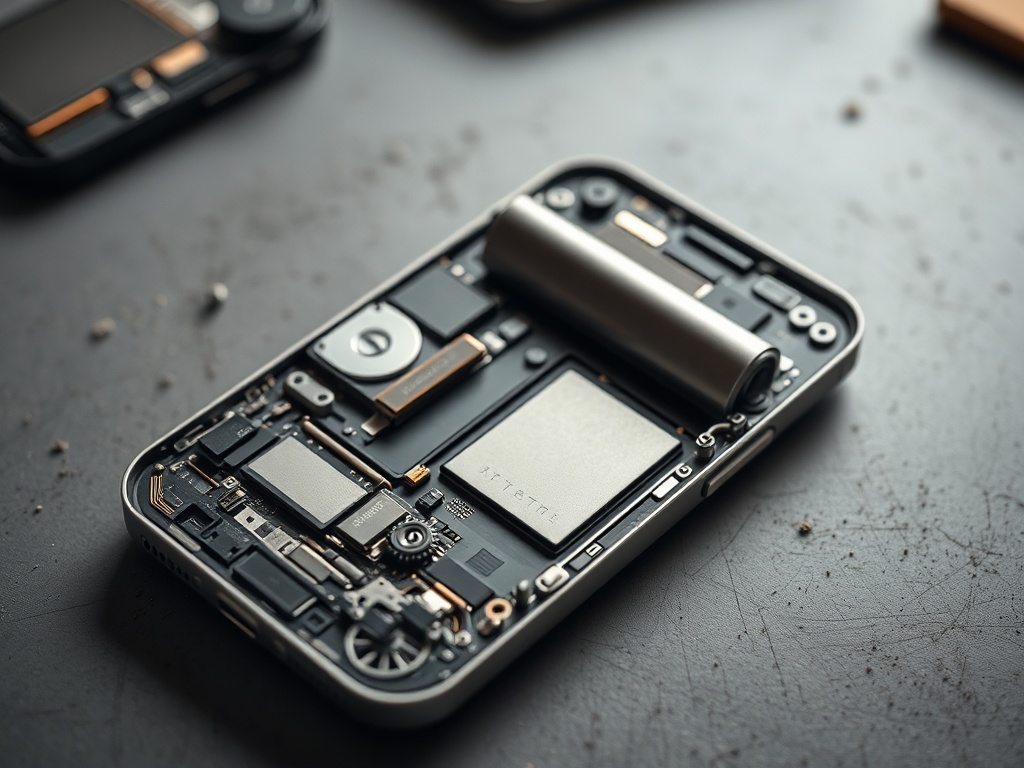
Four years ago, LG Electronics shut down its smartphone production lines without ever launching what, given what we know today, would have been the most sophisticated device in the mobile industry in years. A recently published teardown video by a specialized channel showcases the inner workings of a functional prototype of the LG Rollable: a phone with an expandable screen that, instead of folding like Samsung or Motorola models, unfurled by rolling onto itself with a precision mechanism that no company has managed to commercialize to date. The device existed. It worked. And the world never saw it.
What makes this story strategically disturbing is not just the ingenuity of the device but the temporal gap it exposes. In 2025, the segment of foldable phones remains an expensive niche with modest adoption rates, screens that crack with everyday use, and form factors that largely have not resolved the utility issues they were meant to address. Samsung, the undisputed leader in the segment, will present its next foldables in 2026. Yet, according to the teardown analysis, the deployment mechanism of the LG Rollable was structurally superior to any hinge or fold currently in production. Five years after its cancellation, the prototype remains bolder than the state of the art.
When Cancelling is Easier than Commitment
LG's decision to exit the smartphone business in 2021 was publicly framed as a rational move: a division that had reported years of accumulated losses, plummeting global market share, and a brand that had lost relevance to Apple, Samsung, and Chinese manufacturers. From a quarterly financial logic, the closure seemed inevitable. What the teardown puts on the table is an uncomfortable question that the official narrative does not address: if the division had a technology ready that would have repositioned LG as a pioneer in the next hardware cycle, why did the company choose to exit right then?
The answer does not lie in the balance sheets. It lives in the decision-making architecture of an organization that, after years of negative results, likely no longer had the internal tolerance to take a risk on a high-stakes, long-term product. The accumulated losses of LG's mobile division exceeded four billion dollars at the time of the closure. That number, repeatedly brought up in every presentation to the board, creates an organizational climate where caution masquerades as strategy, and the courage to launch something genuinely new is perceived as fiscal recklessness. The true cost of that decision does not appear in any financial statement: it is the opportunity cost of a category LG could have defined.
What I am interested in analyzing here is not whether the exit decision was right or wrong in terms of short-term profitability. It is perfectly arguable that it was. What I care about is the pattern: an organization that develops a differential technology for years and then abandons it at the threshold of launch is not executing a clean exit strategy. It is revealing that its internal conversations about the future of the business never reached the necessary depth to sustain the uncertainty that all long-term bets require.
Engineering as Organizational Symptom
The teardown does not merely show an elegant mechanism. It showcases accumulated work: layers of iteration, solutions to mechanical stress issues, thermal management adapted to variable geometry, and battery integration into an expanding chassis. That level of development does not come from a team working without conviction. It comes from engineers who believed in the product long enough to solve each of its technical problems, bringing it to a functional and presentable state.
There lies the harshest paradox of this case: the technical organization delivered. The management organization did not sustain what the technical organization built. This is not unusual. It is, in fact, one of the most recurrent patterns in the history of industrial innovation. Xerox developed the graphical user interface before Apple. Kodak patented the digital camera before anyone else. Nokia had a touchscreen smartphone prototype before the iPhone. In all those cases, the technology existed. What failed was not the lab; it was the chain of commitments between those who invented and those who decided.
What differentiates organizations that transform those prototypes into market categories from those that archive them is not the quality of technical talent. It is the willingness of leadership to keep the conversation about the future alive, even when current numbers advise against it. This willingness is neither romantic nor irrational. It is the hardest, least glamorous work of high-level management: sustaining ambiguity without prematurely resolving it through a decision that simplifies the issue by eliminating it.
Samsung has been the benchmark of the foldable segment for years precisely because at some point in its leadership history, someone decided that the initial losses on the Galaxy Fold were the learning cost of a category worth building. That decision also had both advocates and challengers internally. The difference is that in that case, the conversation reached a different outcome.
The Most Expensive Archive in Recent Hardware History
When technology is archived, it rarely disappears forever. Its engineers disperse, bringing knowledge to other projects, or simply waiting for another company to traverse the same path five years late. The LG Rollable, in that sense, is less a story about LG and more a story about how industries waste accumulated advantages when decision-making structures are not designed to sustain the long term.
What the teardown starkly reveals is that innovation did not die from a lack of technical capability: it died from a lack of organizational architecture capable of converting that capability into sustained market commitment. Today, four years later, no manufacturer has launched a rollable phone. The space LG would have occupied in 2021 remains empty. And as Samsung prepares its next iterations of foldable devices for 2026, images from the interior of that prototype circulate as a reminder that technical advantage without the leadership will to support it has a very short shelf life.
The culture of any organization is the natural result of pursuing a purpose that leadership has the courage to defend when the numbers suggest otherwise, or the inevitable symptom of all conversations about the future that the ego of institutional survival did not allow to happen in time.