
Anthropic Charges Its Own Users for Future Prospects
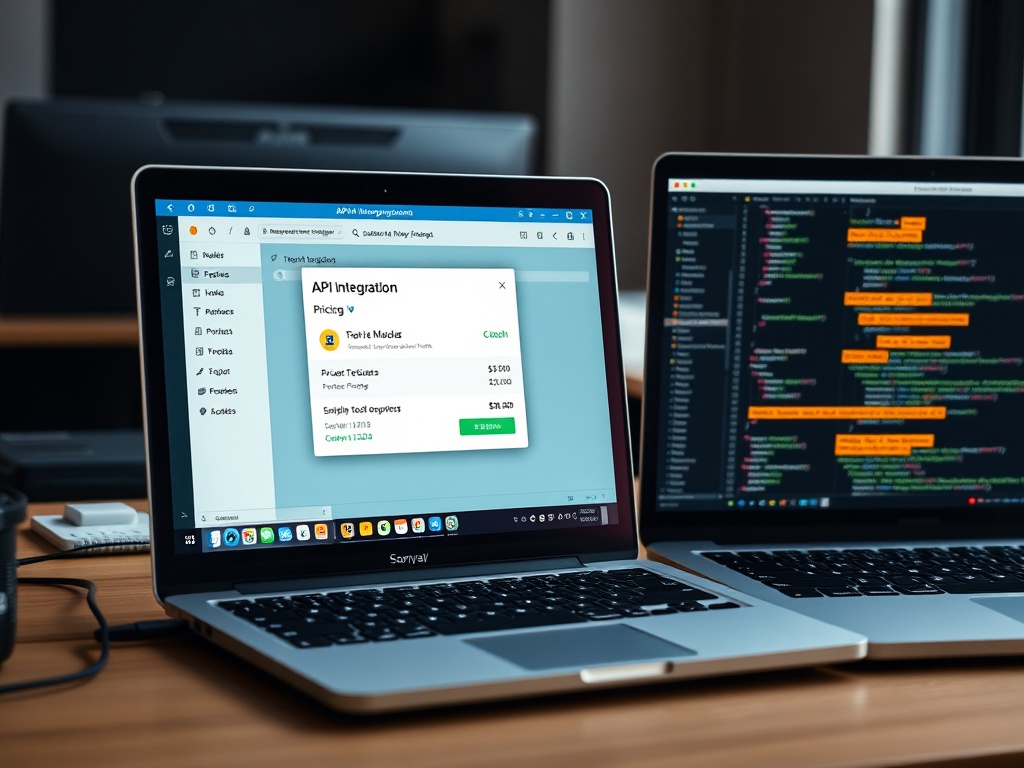
Anthropic has just announced that subscribers of Claude Code, its programming assistant, will need to pay an extra cost to connect it with OpenClaw and other external tools. The operational message is clear: using Claude within your workflow is no longer covered under the basic subscription.
At first glance, this may seem like a minor pricing adjustment. However, looking at the company’s portfolio design, it signals how Anthropic is trying to scale its revenue engine without sacrificing its technical positioning in the developer market—two objectives that, in this instance, visibly clash.
The Extra Charge as a Revenue Architecture Decision
Any company selling subscription software faces the same structural problem at some point: high-use customers are not always the ones who pay proportionally more. In the case of Claude Code, users who integrate the assistant with third-party tools like OpenClaw are likely generating a significantly higher volume of inferences compared to users who interact directly with the native interface. The language model does not distinguish between a human-generated prompt and one generated by an external agent; in both cases, it consumes computation, and this computation incurs a real cost.
From this perspective, Anthropic’s move makes sense under a unit economics lens. If the service cost per user integrated with external tools exceeds what the flat fee covers, the subscription ceases to be a revenue driver and becomes a hidden subsidy. This isn’t sustainable at scale, and Anthropic knows it. The decision to disaggregate pricing based on usage type is, in this regard, a correction in the monetization model, not a whim.
The analysis becomes complicated when we consider the strategic timing. Anthropic competes in a market where developer adoption is the hardest asset to build and the easiest to lose. Developers penalize pricing friction heavily, especially when there are alternatives available with more lenient integration models. Introducing an additional cost just as the market for coding agent tools is expanding poses a substitution risk that cannot be overlooked.
Monetizing the Integration Layer Comes with Political Costs
The real risk that Anthropic faces with this decision isn’t financial; it's about positioning. Claude Code exists in a segment where developers not only choose a tool based on technical performance but also on the economics offered by its integration ecosystem. Charging for third-party connections is, in essence, charging for connectivity, and that shifts product perception.
From my take on the portfolio, this reflects a classic tension between the two functions that any company must manage simultaneously. On one hand, Anthropic must protect the profitability of its core business, which operates under constant pressure from the computational costs of its models. On the other, it has a long-term bet that depends on developers building on its platform, adopting its APIs, and turning Claude into the intelligence layer of their own products. Both functions are legitimate. The problem arises when the first begins making decisions that erode the conditions making the second possible.
An extra charge for third-party integrations could be reasonable if accompanied by a clear differential value: better performance in integration contexts, specific technical support, latency guarantees, or priority access to advanced capabilities. If the additional charge is just that—an extra fee for the same disaggregated service—the proposition weakens considerably against any developer with alternatives on the table.
The Trap of Monetizing Before Consolidation
What this news reveals, beyond the specific case of OpenClaw, is the typical pattern of a company trying to transition from rapid adoption to sustained monetization without fully securing its competitive advantage in the developer tools segment. This transition is one of the most delicate phases in any platform business, and mistakes at this stage have consequences that aren't immediately visible but accumulate over time.
In the adoption phase, low prices or the absence of pricing friction are instruments of market expansion. In the monetization phase, pricing reflects perceived value. The problem arises when a company attempts to jump to the next phase before perceived value justifies the new price. In such a scenario, pricing does not capture value but destroys it, as it expels users who were still evaluating whether the platform was their long-term bet.
Anthropic is not the first artificial intelligence infrastructure company to face this tension. The market for language models as a service is learning in real-time that competition is not won solely through technical benchmarks. It is won through the architecture of incentives surrounding the product, which includes pricing, integration conditions, and the perception that the platform grows with you, not at your expense.
Anthropic’s Portfolio Needs Clarity on Its Incubation Strategy
From an outside perspective, Anthropic’s business has at least two layers operating under different logics. Its API model for enterprises is a revenue engine with increasingly relevant profitability metrics. Claude Code, on the other hand, is a positioning bet within the developer segment, which is still defining which tool it prefers and why. Treating both layers with the same aggressive monetization logic applies metrics of a mature business to a project still in the market validation phase.
If Anthropic manages Claude Code as a business unit that must justify itself financially each quarter, the decision to charge for integrations makes accounting sense. If it treats it as a strategic bet prioritized on consolidating market share among developers before monetizing, the timing of the additional charge likely arrives too soon.
Companies building development platforms need to choose precisely when to make that phase shift. Anthropic has just revealed what point it believes it’s at. The market will respond with more concrete data than any external analysis: developer retention, active integration volume, and the speed of adoption of new accounts within the tools segment. If those indicators remain stable, the decision was correct. If they deteriorate, the cost of having accelerated monetization will be higher than the captured revenues.