
Anthropic Rises, OpenAI Falls, and SpaceX Threatens to Reshape the Private Sector
The secondary market for private stakes in technology companies has been operating at an unprecedented pace for months. Glen Anderson, president of Rainmaker Securities, put it bluntly: he has never seen so much activity in this segment. In this heated market, there is a signal that deserves sustained attention: Anthropic is now the most sought-after asset, while OpenAI—once an unavoidable name in any discussion about artificial intelligence—is losing ground as the object of desire among buyers of secondary shares.
This alone describes a narrative shift. But there is an added variable that Anderson clearly points out: the anticipated IPO of SpaceX has the potential to suck liquidity from the private market and redistribute the priorities of institutional investors currently positioned in companies like Anthropic or OpenAI.
The Rotation Nobody Expected
During 2023 and a good part of 2024, OpenAI operated as the unmissable benchmark of the sector. Each funding round, each product announcement, and every statement from Sam Altman generated immediate movement in the secondary market. This magnetism attracted speculative capital that paid high premiums for shares at a time when the company's valuation was rapidly escalating.
The displacement of OpenAI as the favorite asset in the secondary market is not necessarily explained by operational decline. It is explained by something more structural: when a company has already captured the dominant narrative, more sophisticated investors migrate to the next bet before the price reflects the asset's maturity. Anthropic arrived at the right moment to receive this flow. It has a differentiated technical profile, has built a narrative around AI safety that resonates with certain institutional segments, and its valuation—still lower than OpenAI's in absolute terms—offers the appreciation margin that secondary buyers need to justify the risk.
What I find most revealing about this rotation is what it implies about how private markets evaluate the value proposition in AI. They are not buying technology. They are buying narrative positioning and the potential for differentiation. Anthropic has smartly worked this variable: while its competitors compete for model capabilities, they have built a unique language around safety and alignment. This, at least for now, reduces the number of companies with which they are directly compared.
The Risk from Space
This is where the dynamic becomes more interesting and less comfortable for current holders of secondary shares in AI companies.
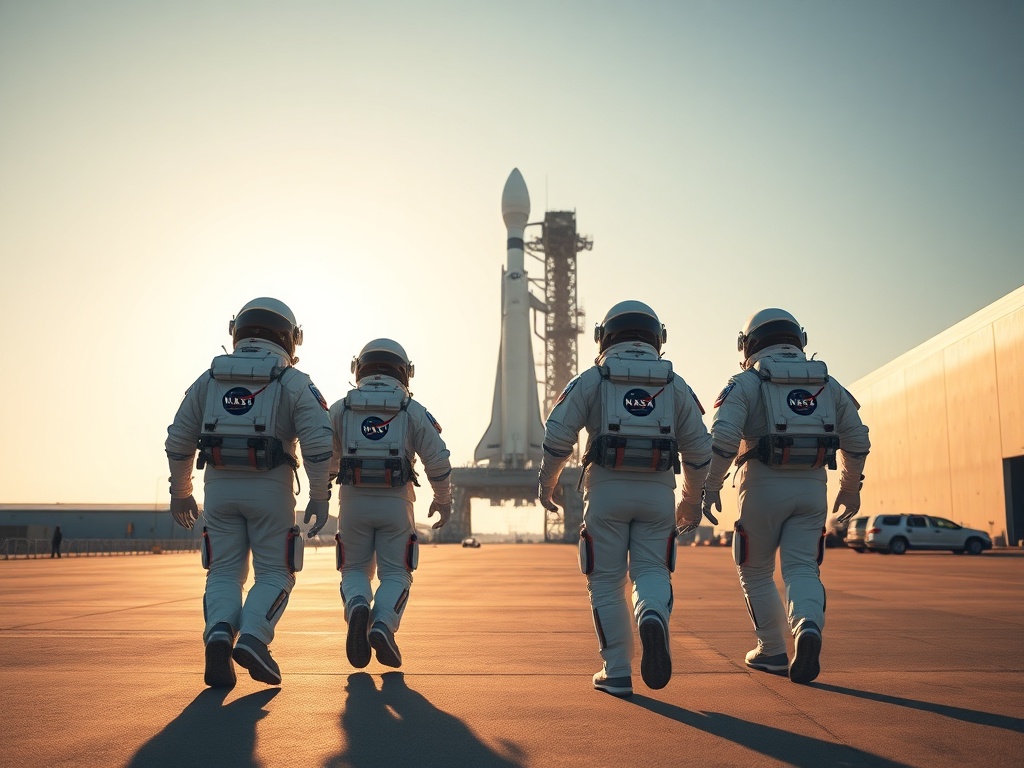
A SpaceX IPO is not just any event. According to estimates circulating in the market, SpaceX could be one of the largest public offerings in recent history. This means that institutional investors who currently have liquidity tied up in secondary positions of Anthropic or OpenAI will have to make capital allocation decisions: participating in the SpaceX IPO means freeing up capital from somewhere, and the most illiquid assets—the private shares—are the natural candidates to be liquidated.
This is the mechanism that Anderson warns about and which deserves careful dissection. The private secondary market does not operate in a vacuum. It competes for the same institutional capital that public markets do. When a high-visibility asset appears in the public market, the pressure on private assets is not automatic, but it is real. Those who bought Anthropic at high valuations in the secondary market will have to assess whether that asset can compete in relative attractiveness against a publicly listed SpaceX with daily liquidity.
This does not make Anthropic a poor bet. It makes the timing of a potential IPO for Anthropic—or a primary round that resets valuation—a critical variable. Companies that do not control their liquidity calendar are at the mercy of the calendar of their competitors. And SpaceX, with its scale and ability to capture attention, is a formidable liquidity competitor, even though it operates in a completely different sector.
Winning Without Competing for the Same Capital
What this dynamic reveals is a lesson that goes beyond the secondary market for tech stocks.
When a company builds its value proposition based on being perceived as "the alternative" to an established leader, it is choosing a battle that it does not control. OpenAI established the parameters for comparison: model capability, speed of adoption, scale of agreements. Any company that accepts those parameters as the only valid ones is competing on ground where the rules are already written. Anthropic made a different decision: it chose a variable—safety and interpretability—that the market had not established as a primary metric and developed it into its central axis. This is not just a public relations strategy. It is a competitive architecture decision.
The problem is that this architecture must withstand the test of committed capital, not just speculative capital. Buyers in the secondary market who are paying a premium for Anthropic today are betting that this differentiation will translate into recurring revenue, corporate contracts, and eventually an exit with multiples that justify the entry price. If the differentiation does not translate into the unit economics of the business—in real contracts, in customer retention, in margins that can withstand the weight of AI infrastructure costs—narrative alone is not enough to sustain the valuation.
True strategic leadership in such an environment does not consist of chasing capital where it is already concentrated but in creating conditions that compel capital to go where you are already present. Anthropic has a window. SpaceX defines the urgency of that window. And executives who wait to validate their value proposition after capital has been redistributed will learn, at a considerable cost, that eliminating reliance on the competitor's narrative is the only way to build a position that the market cannot compare.