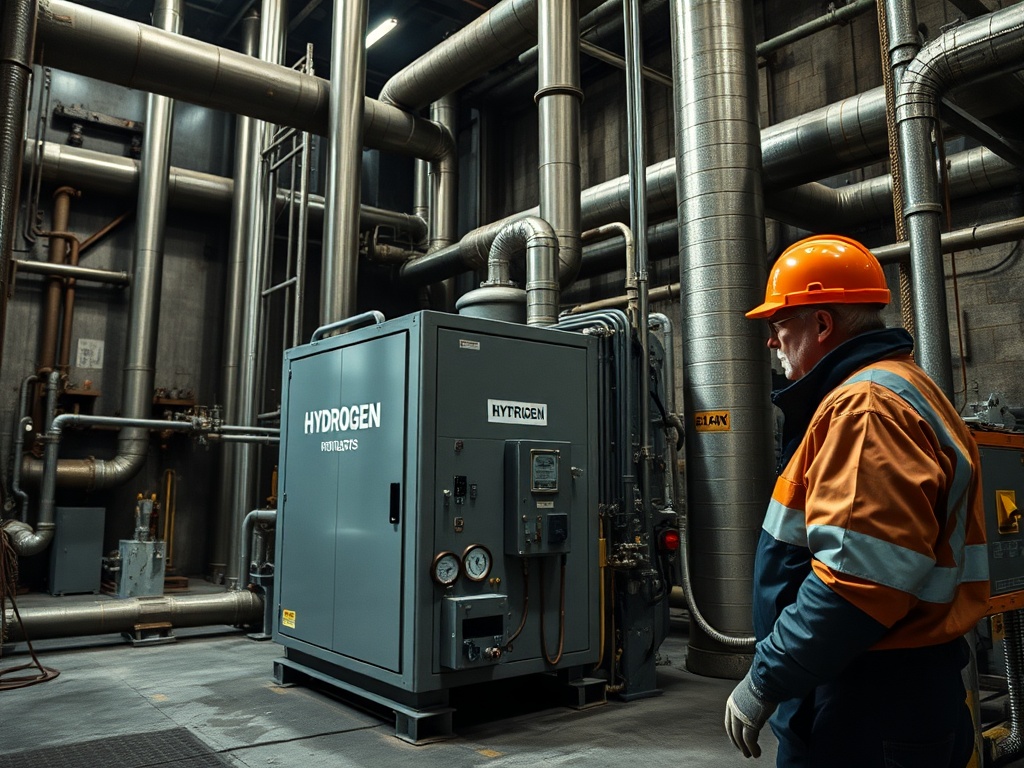

Hydrogen Without the Power Grid: It's a Bet on Execution and Governance
Utility Global has recently announced the first closing of $100 million in its Series D funding round, led by Ara Partners, with APG Asset Management joining as a new institutional participant. The capital is earmarked explicitly for manufacturing expansion, enhancing project delivery teams, and commercial deployments of its H2Gen® technology across the Americas, Europe, and Asia. This is not just a laboratory announcement; it’s a statement of operational readiness. CEO Parker Meeks leaves no room for interpretation: industrial clients are no longer buying pilots; they are purchasing deployable solutions that function with existing assets, delivering decarbonization with real economic impact and operational reliability.
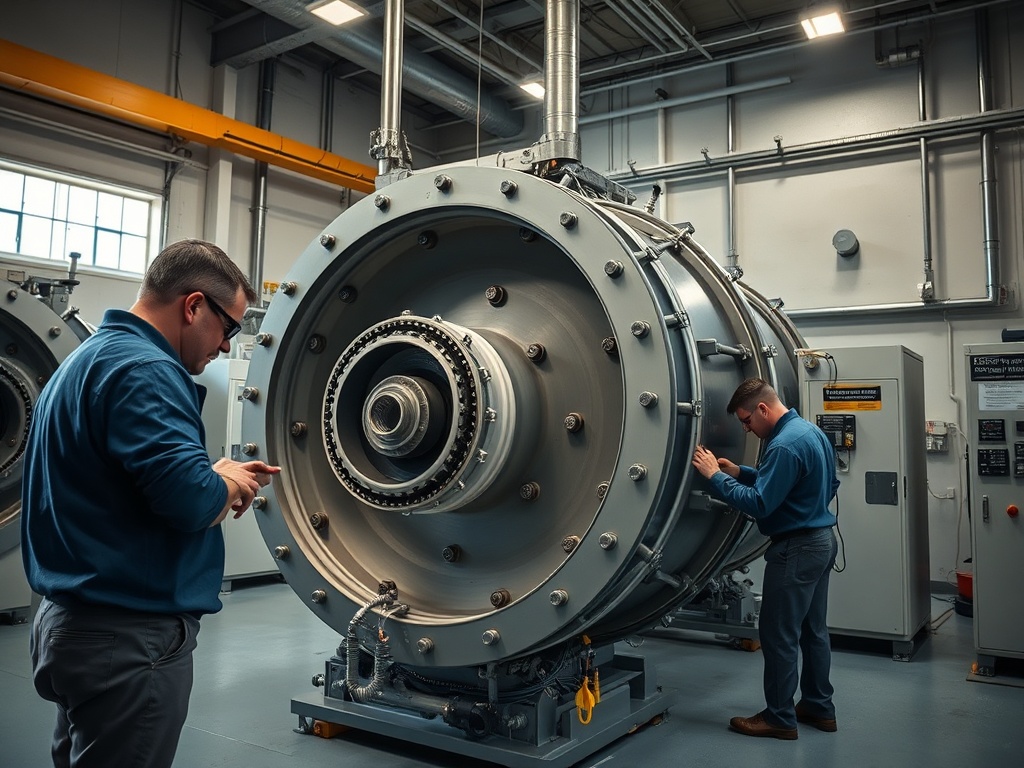
The technical piece that the market values is H2Gen® as an electrochemical platform capable of converting water into clean hydrogen while simultaneously producing a high-purity CO₂ stream from industrial waste gases or biogas, without relying on grid electricity. Strategically, the differentiator is not just the term “hydrogen,” but the thesis of integration: entering existing plants with small footprints, modularity, and a CO₂ capture process that is less complex than that associated with more diluted combustion gases.
For corporate leadership, this milestone is a case study of what type of innovation successfully crosses the valley of death: the kind that converts structural constraints—limited electrical grids, legacy assets, retrofit costs—into design parameters. However, the real test lies not in electrochemistry, but in the ability to build an organization that can scale complex projects without breaking along the way.
Series D as a Signal: The Market Has Shifted from Financing Promises to Financing Deployment
The fact that this is a first closing of Series D for $100 million matters for two reasons: the money and the corporate moment it represents. Series D, by practical definition, tends to mark the transition from technological validation to commercial repeatability. The briefing available lacks revenue figures or a timeline for total closing, and such gaps are commonplace in advanced-stage rounds tied to infrastructure components and projects. What is present is the explicit intention to use the funds for manufacturing and delivery teams, two areas rarely prioritized while a company remains in “demo” mode.
The leadership of Ara Partners and the entry of APG Asset Management provide a complementary message. Ara, as the majority investor specializing in industrial decarbonization, brings strategic continuity and tolerance for industrial cycles. APG, as a pension fund manager, typically represents long-horizon capital that is comfortable with contracted assets and cash flows when technology transitions from prototype to execution line. This combination suggests that Utility Global aims to be perceived less as a “hydrogen startup” and more as an industrial platform that installs, operates, and delivers results.
An operational detail worth noting coolly is the company’s focus on hard-to-abate sectors—steel, refining, chemicals, petrochemicals, mobility, low-carbon fuels, and upstream oil & gas. This means enterprise sales, long cycles, safety and reliability demands, integration with existing plants, and above all, dependence on investment decisions within highly hierarchical organizations. Execution is not won by a good press release; it is secured through a project discipline that withstands technical audits, regulatory pressure, and internal client tensions.
H2Gen® and the Bottleneck Economy: When the Electric Grid is No Longer Central
The H2Gen® proposal stands out with a statement that cuts through the typical hydrogen debate: producing hydrogen using water and waste gases without grid electricity. In markets where the bottleneck is the available electrical capacity or where the marginal cost of "clean" electricity is uncertain, this reorders the conversation. It does not eliminate the total hydrogen cost challenge, but shifts the problem from “I can get competitive electricity” to “I have a usable waste gas and a site to integrate modularly.”
The second output of the process—a high-purity CO₂ stream—is more than a byproduct. In carbon capture, concentration and purity determine cost and complexity. Producing a more concentrated CO₂ stream simplifies subsequent capture, utilization, or sequestration stages. In other words, Utility Global proposes a design where decarbonization becomes an architecture of flows: industrial waste that transforms from liabilities into inputs.
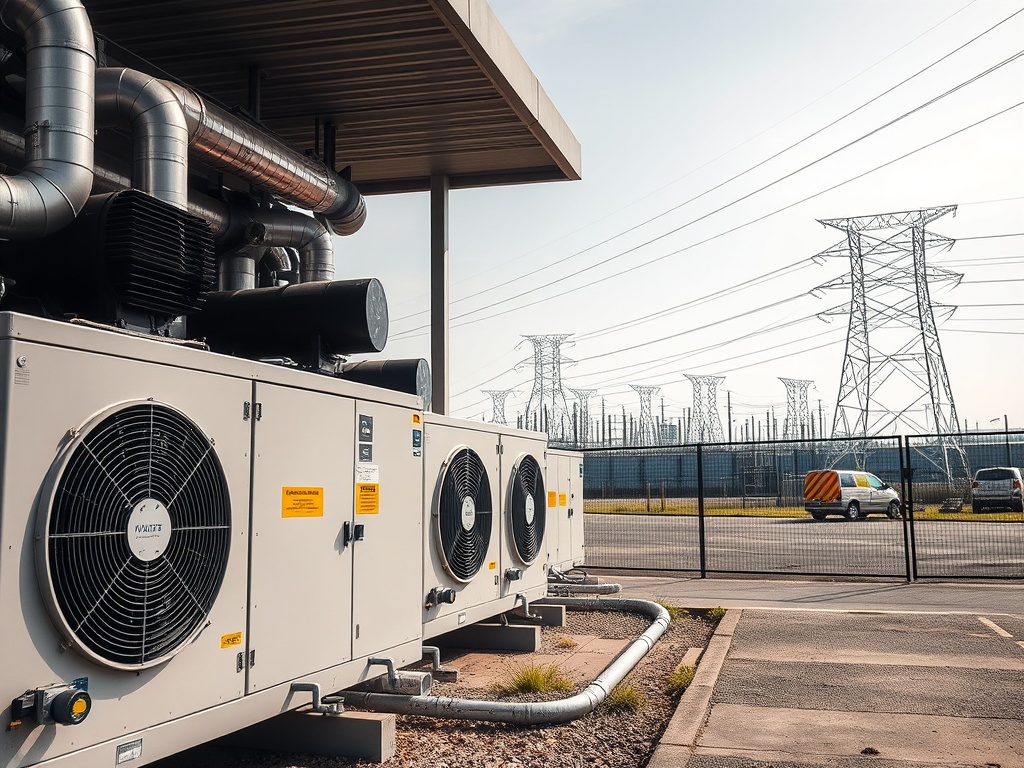
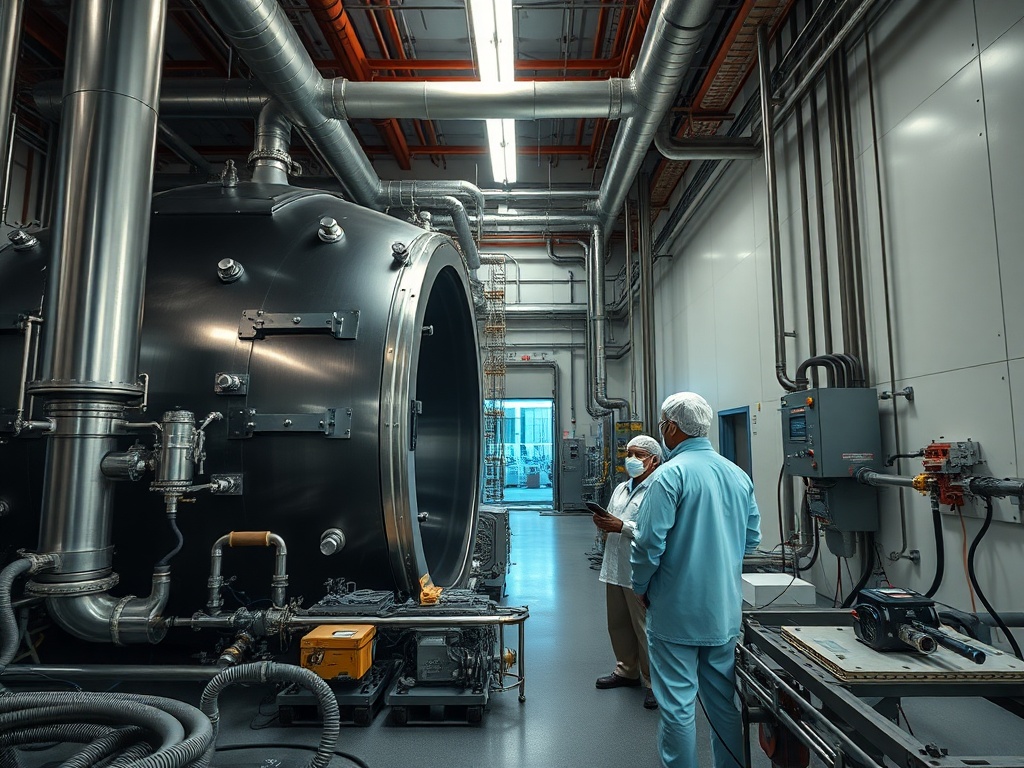
Here lies the critical nuance for C-level executives: the promise of “integration with existing assets” and “small footprint” sounds appealing, but the real challenge lies in site engineering, permitting, operation, and reliability. While modularity helps reduce friction, it does not eliminate the challenge of operating in industrial environments with a zero-tolerance policy for failures. The briefing mentions that capital will be used to expand delivery teams; this is the right line of focus. In industrial technologies, the sustainable competitive differential tends to be the organization that installs, maintains, and enhances in the field, not just the one that patents.
Furthermore, the competitive context remains alive: there are suppliers of electrolysis and other hydrogen routes. Utility Global seeks to differentiate itself by avoiding dependence on the grid. This thesis may be particularly attractive in regions with infrastructure limitations or where electrical upgrades are slow. The bet is clear: turning a systemic constraint into a commercial advantage. What the market still lacks from available sources are performance and cost metrics at scale; thus, success will depend on the operational evidence provided by the first commercial deployments.
The Invisible Risk: Industrial Scale Requires Real Social Capital, Not Just Financial Capital
The news reads as financing, but the scarcest asset in industrial deployment is something else: distributed operational trust. When a technology promises to integrate into existing plants, the risk is managed at the periphery: operational teams, maintenance, safety, procurement, shift supervision, local integrators. If the deploying organization is too centralized, the bottleneck shifts internally: slow decisions, vertical communication, learning that does not circulate.
From my perspective on diversity, equity, and social capital, the critical point is the fragility of homogeneity in executive teams that must execute across multiple geographies. The expansion into “the Americas, Europe, and Asia” is not just a slide; it is a stress test of cultural, regulatory, and supply chain resilience. Typical risks appear quickly: designing from Houston for markedly different operational realities, underestimating unions or local regulations, failing to secure regional procurement, misunderstanding internal client incentives, or not adapting training and safety to specific contexts.
This is why the partnership mentioned with Kyocera to scale manufacturing—using advanced materials and global footprint—and the project with ArcelorMittal in Brazil—leveraging high furnace gas—should be seen as nodes of a network rather than isolated milestones. Each serious industrial partner functions as a multiplier of knowledge and discipline. But it only multiplies if the company knows how to “absorb” that knowledge, distribute it internally, and convert it into standard practices. This requires horizontal work networks: engineering, field, supply chain, and safety communicating without political filters.
Structural equity, here, equals performance. If those executing in the field lack a voice, if lessons learned do not become processes, if safety alerts are silenced under commercial pressure, the model breaks. And it breaks expensively: in heavy industry, an operational event does not just affect one contract; it impacts reputation, permits, and access to new clients. Financial capital buys time; social capital buys repeatability.
The New Competitive Advantage: Transforming Legacy Plants into Platforms Without Rewriting Everything
The most intriguing message from Utility Global is not “hydrogen”; it is “it works within existing assets.” That phrase, well executed, could change the economics of industrial decarbonization: less demolition, less massive CAPEX for replacement, less dependence on public infrastructure. If the product is installed as a module, with a small footprint, and produces two useful streams—hydrogen and CO₂ ready for subsequent management—the customer may see an incremental path rather than a total gamble.
This logic aligns with the political and financial realities of heavy industry: plants do not shut down to reinvent themselves every five years. Companies look for paths that reduce emissions without jeopardizing operational continuity. In that context, technology that integrates and delivers measurable value tends to win.
That said, the briefing also makes clear what is lacking: there are no specific deployment timelines or data on costs or yields. This forces evaluation through indirect signals. One of these is the shift in capital usage toward manufacturing and delivery. Another is the type of investors involved. And another is the nature of the industrial partners. Everything points to the notion that Utility Global is attempting to transition from “interesting technology” to “reliable industrial provider.”
For corporate leaders outside this company, the learnings are replicable: decarbonization transitions from being an ESG program to a redesign of operations, contracts, supply chains, and talent. Anyone who reduces it to PR risks losing social license, regulatory license, and, over time, margins.
Mandate for C-Level: Global Execution is Won with Diverse Tables and Distributed Power
The $100 million first closing for Utility Global is a market signal: capital is rewarding solutions that promise deployment in heavy industry with real economics, without waiting for public infrastructure to catch up. But at this stage, technology is only half the product. The other half is the organization capable of executing across multiple geographies, learning in the field, and standardizing without crushing local intelligence.
The advantage is not captured by having the best slide; it is captured by building internal networks where operations, safety, engineering, and supply chains have real power to correct course. This requires diversity of origin and thought among the deciding teams because homogeneity creates blind spots that only reveal themselves when the system is already deployed.
In the next board meeting, C-level executives must look at their own inner circle and recognize that if everyone is too similar, they inevitably share the same blind spots, making them imminent victims of disruption.