
Customer Satisfaction: An Indicator of Change
The recent news regarding the surge in user satisfaction for electric vehicles (EVs) is more than just a positive statistic. It reflects a profound shift in consumer perception and the structure of the automotive industry. As EVs become a more attractive option, traditional barriers to entry in the automotive market are beginning to crumble.
Customer satisfaction serves as a key indicator that EVs have surpassed the "Disappointment" phase in the 6Ds of technological disruption. They are now in the "Disruption" phase, where the technology is not only viable but preferred. This shift is crucial for understanding how EVs are redefining the industry.
Democratization and the Death of Monopoly
Historically, the automotive industry has been dominated by a handful of large players. However, EV technology is democratizing access to the market. With decreasing production costs and increasing energy efficiency, barriers to entry are dramatically lowering.
Companies like Tesla have shown that it is possible to enter a market dominated by giants and not just survive, but thrive. Their focus has been on continuous innovation and creating an ecosystem that extends beyond merely selling cars. Tesla, for example, has transformed its vehicles into technological platforms, offering software updates that enhance user experience and add long-term value.
Abundant Economy: Zero Replication Costs
The economics of EVs greatly benefits from reduced marginal costs. Once the base technology is developed, the cost of replicating and improving the vehicles is significantly lower than that of traditional cars. This allows companies to offer high-quality products at competitive prices, accelerating mass adoption.
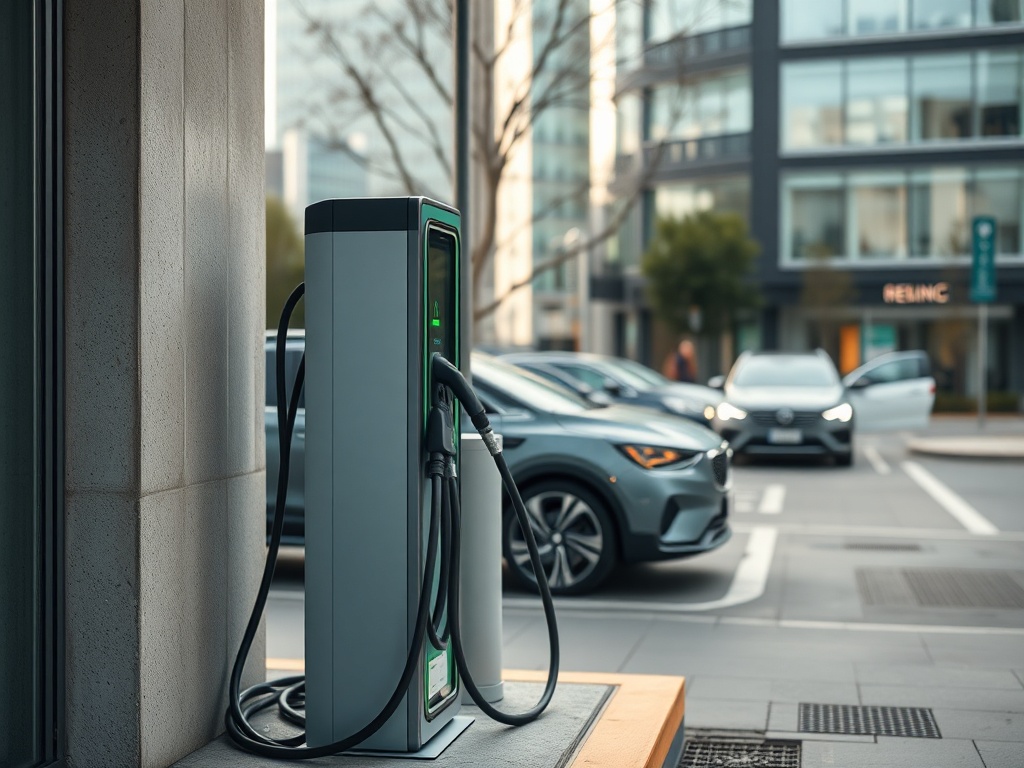
Additionally, charging infrastructure is rapidly expanding, eliminating one of the main barriers to EV adoption. With more charging stations available, the convenience of owning an EV increases, thus driving demand.
The Role of Financing and the Customer as Investor
In this context, it is crucial to analyze how companies are financing their growth. The news regarding Elizabeth Warren's investigations into the automotive lending industry underscores the importance of sustainable financial models. Companies that rely excessively on external financing or risky lending practices may find themselves in trouble when market conditions change.
Conversely, companies that manage to have their customers finance their growth, through subscription models or advance sales, are better positioned to weather economic crises. This approach not only reduces financial risk but also aligns the company's incentives with its customers' needs.
Real Traction and Market Validation
The true test of any technology is its acceptance in the market. EVs have proven their worth not only through customer satisfaction but also in terms of consistent sales and market share growth. This indicates that this is not just a passing trend but rather a lasting transformation.
Companies focused on solving real problems for their customers, such as energy efficiency and sustainability, are in a better position to capture long-term value. The key is to maintain a focus on execution and not just the idea.
Power Dynamics and Governance
The transition to EVs is also altering power dynamics within automotive companies. Boards of directors and shareholders are increasingly interested in strategies that prioritize sustainability and innovation. This is leading to a shift in corporate governance, where decisions are being made with a long-term focus rather than for quick profits.
Conclusion: A Sustainable Future
The electric vehicle revolution is a perfect example of how exponential technologies can transform entire industries. Customer satisfaction is just the beginning. As EVs continue to gain traction, companies must adapt to a new paradigm where the customer is the true investor and sustainability is the key to success.
For business leaders, the challenge is clear: they must adopt business models that prioritize innovation and sustainability, ensuring that each dollar invested yields a positive return not just in financial terms, but also in social and environmental impact.