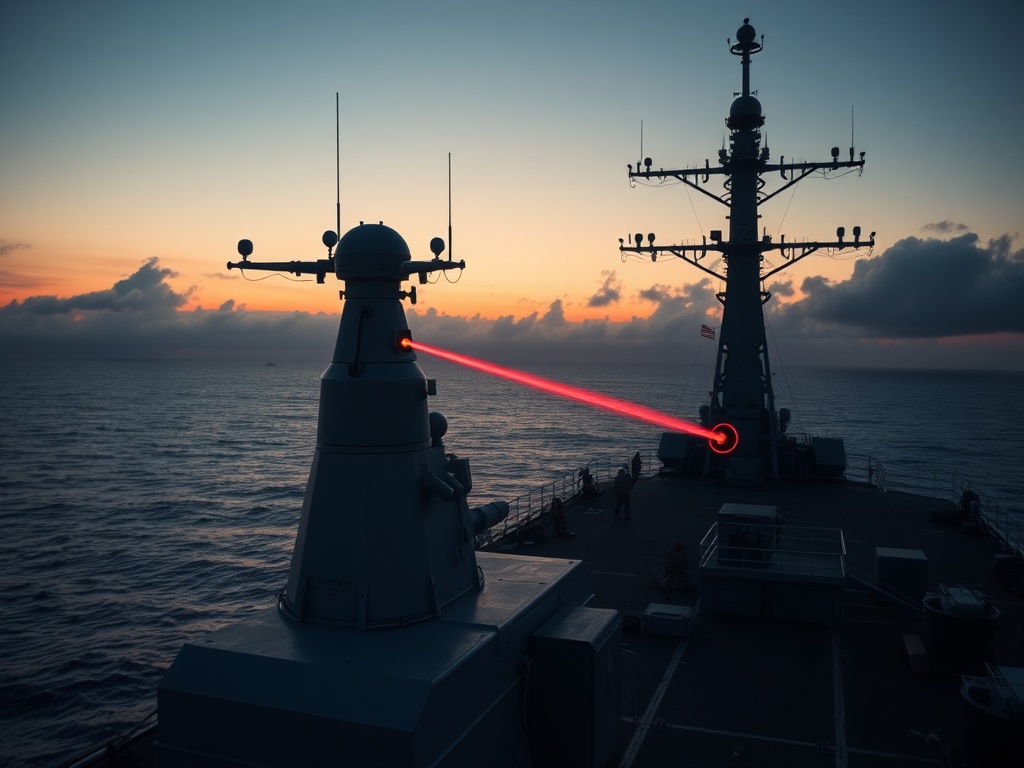

Amazon's New Robotics Center Prices Time in Australia
Amazon has just announced an investment of over AU$750 million in a new fulfillment center featuring robotics in Brisbane, Queensland, with a clear goal: to turn delivery time into a structural advantage that is hard to replicate. According to the company, the site will span 150,000 square meters across four levels and aims to process over 125 million packages per year when fully operational in 2028. The inventory capacity is also intentionally ambitious: able to hold up to 15 million small items, from pantry essentials and beauty products to electronics and toys, including offerings from small and medium-sized enterprises (SMEs) across Queensland.
There is a straightforward tendency to narrate these investments as a race toward automation and efficiency. However, a useful angle for an executive committee is that this is an infrastructure bet aimed at redefining the unit economics of delivery in a market that already moved AU$62.3 billion in online retail sales by 2025. In logistics, the winner is rarely the one with the best ad campaign; it is the one that manages to reduce the marginal cost per package, cut operational variability, and improve predictability during demand spikes. When a company announces annual volume and operational horizon, it is revealing the core of its financial strategy without explicitly stating it.
Amazon frames the project as a human-machine collaboration. Wayne Angus, Director of Operations at Amazon Australia, expressed it like this: “People are at the heart of our operations, and by combining innovative robotics technology with skilled local talent in this state-of-the-art site, we’re building a workplace where people and technology work hand in hand to deliver for our customers. This investment demonstrates Amazon’s commitment to Queensland customers and our confidence in the state’s growing economy.” That sentence, despite its corporate tone, offers a hint: the battle is not robots versus humans, but the capacity to operate with less friction, fewer injuries, and fewer errors, while maintaining flexibility in product assortment.
An Investment That Turns Square Meters Into Financial Advantage
The figure of AU$750 million matters less for its size than for its intent. A center of 150,000 m², designed from the ground up for robotics, is not just a real estate asset; it is a performance machine. The promise of 125 million packages annually suggests a design oriented toward throughput, not merely storage. In mature markets, the difference between growing and stagnating often hinges on percentage points of productivity per hour and minutes of cycle time per order. If the center delivers on its promises, Brisbane becomes a node that reduces preparation and dispatch times, translating into two financial effects: lower cost per unit and higher conversion rates through customer experience.
For Australia, where geography often penalizes logistics and where traditional players dominate some aspects of the last mile, this type of asset seeks to alter the service curve. The blow is not only against e-commerce competitors. It also targets any operator whose model relies on manual capacity and seasonal staffing peaks to absorb fluctuating demand. Well-integrated automation tends to shift costs from high-volume variable labor to a more stable mix: maintenance, energy, software, and technical personnel. This transition does not guarantee better margins on its own, but it does create a barrier: learning to operate the system without degrading quality.
The other financial indicator is the assortment: 15 million items. That number aims to reduce stockouts and expand the “long tail” of products available for quick delivery. In e-commerce, the breadth of the catalog is not just marketing; it is demand capture. In practice, more items available close to the end customer elevate compliance rates and reduce costs from reshipments or substitutions. The warehouse becomes a lever for revenue as much as a cost lever.
Robotics With Operational Considerations, Not Just Technological Showcase
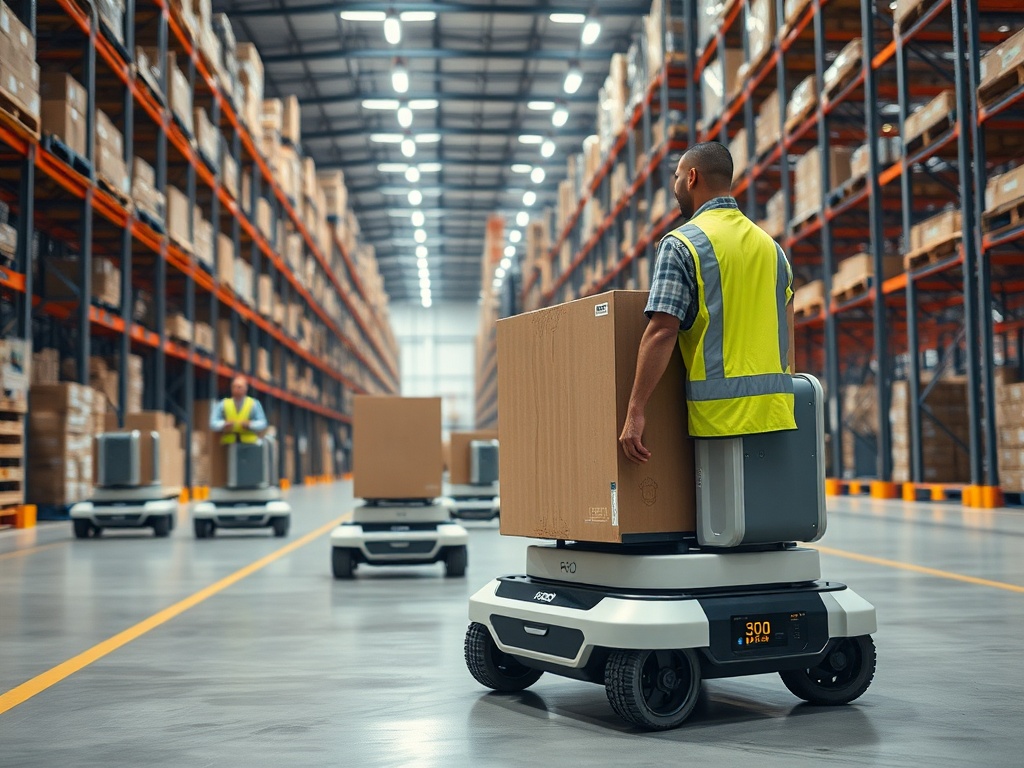
Amazon has detailed that the center will include specific robots: Hercules, capable of moving shelves weighing up to 500 kg with 3D cameras and tech vests equipped with Wi-Fi for safety; Sparrow, a robotic arm with AI designed to select and group items through computer vision; and Vulcan, Amazon’s first robot with tactile capabilities. It is significant that the company mentions concrete capabilities rather than just “automation.” In fulfillment, the value lies in solving difficult tasks: handling varied objects, moving efficiently, and ensuring interaction safety in a mixed environment.
The strategic reading is that Amazon is standardizing a language of modular components for its warehouses. When a company can deploy robots with defined roles (move, select, manipulate) and connect them to a system for inventory and demand management, it reduces the cost of replicating the model in new geographies. That replicability is what often separates a standalone investment from a platform. However, there is an operational risk: integration. Highly automated centers fail when the software is not aligned with the reality of the assortment, when flows do not account for exceptions, or when human training is treated as a formality.
That’s why the phrase “people at the center” should be read coldly: it is not a moral argument, but a performance requirement. In robotic operations, the human factor sustains incident resolution, order prioritization, and quality management when data is incomplete. If the job design turns people into mere extensions of the system, errors become automated: incorrect decisions speed up, failures propagate, and the customer experience deteriorates. Conversely, when technology amplifies human judgment, the typical outcome is less rework, lower return rates from erroneous picking, and improved safety control.
Amazon also anticipates labor impact: over 1,000 direct jobs upon operation, and 2,000 jobs in construction and setup. Such figures are often used to balance the public debate on automation. From an executive perspective, what’s relevant is the composition of jobs: sustained robotic operations demand technical profiles, process oversight, maintenance, inventory management, and analytics. The company is buying productivity, but it is also investing in a skills transition.
The Competitive Move in a AU$62.3 Billion Market
Australia is not a neutral field. Online commerce has grown rapidly, and the logistics sector operates under cost pressures and delivery expectations. In this context, building a center of this scale in Queensland is a way to secure future capacity without relying on third parties. Amazon, which entered the country in 2017, has yet to replicate the dominance it enjoys in North America or Europe, according to the context provided by sources, and competes with local players and the infrastructure of Australia Post. The underlying message from Brisbane is that Amazon is not just seeking market share; it aims to control bottlenecks.
This is the power dimension of infrastructure: whoever controls fulfillment can impose service standards, condition sellers, and negotiate better transport conditions. The promise to include products from Queensland SMEs within the center's inventory is also strategic. For a small seller, proximity to the logistics node that speeds up deliveries can equate to buying visibility and conversion rates without the expense of physical stores. This redistributes opportunities toward those who can integrate into the fulfillment machine.
Simultaneously, this move raises the bar for competitors. If the market becomes accustomed to shorter delivery times and increased availability of catalogs, companies with manual operations face an uncomfortable decision: invest to meet the standard or specialize in niches where speed is not the primary differentiator. In both cases, the effect is a reconfiguration of margins. A labor-intensive logistics value chain tends to absorb shocks through overtime and temporary hires; an automation-based chain absorbs shocks through installed capacity, software, and energy. No option is without cost. The first is often more flexible initially; the second may become superior when volume makes repetition the enemy.
What Is Being Dematerialized and What Is Not
From my perspective, this investment fits into a concrete pattern: warehouse digitization transforms physical tasks into flows of data that can be measured, predicted, and adjusted. The warehouse stops being "space" and becomes a "system". When that happens, the typical phases of technological change appear: at first, it seems like an expensive and oversized project; then, as it scales, the cost per package drops, and service becomes the new normal.
Still, there are limits that should not be romanticized. The last mile remains a tough territory: traffic, delivery windows, address failures, returns. A robotics center reduces friction upstream but does not eliminate the complexity of the physical world. There is also a common blind spot: an obsession with throughput can degrade resilience if redundancy is not designed. A hyper-optimized system works well until a critical variable breaks. In logistics, those variables are often energy, connectivity, parts availability, cybersecurity, and technical talent.
What is interesting about Brisbane is that it presents itself as a "living test center" for Amazon's most recent robotics in the Southern Hemisphere. If the company manages to operate the site with stability, the learnings are transferable to other geographies. If it stumbles, the cost is not just financial: it is reputational and competitive, because the promised service standard turns into operational debt.
The impact for the rest of the market is clear: automation on this scale pushes logistics to increasingly resemble software, where the differentiator lies in architecture, data, maintenance, and continuous learning. The dominant phase here is Digitalization Moving Towards Disruption: the marginal cost per package tends to fall when technology amplifies human judgment and democratizes access for more sellers to high-level logistics capabilities.