
Zero Bids in Cook Inlet: When the Market Disconnects from Mandates and Exposes Strategic Fragility
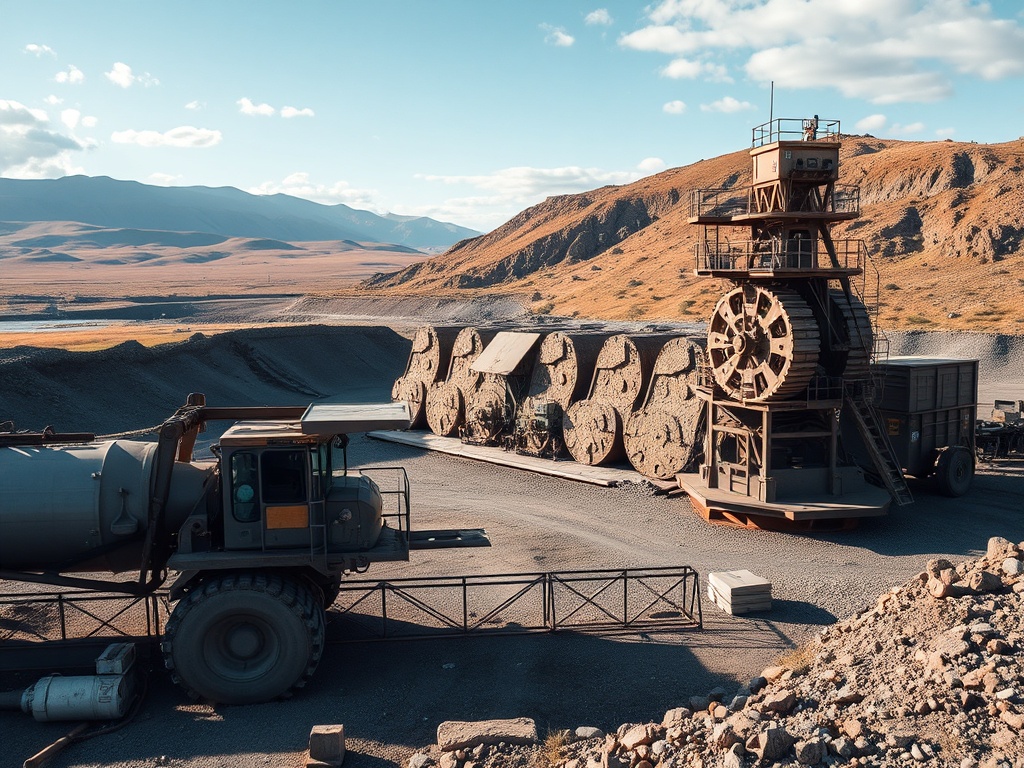
The scene spoke more through its silence than through any statement made. On March 4, 2026, the U.S. Bureau of Ocean Energy Management (BOEM) was set to broadcast live the bids for the federal sale of oil and gas leases in Cook Inlet, Alaska. Instead of names, numbers, and awarded blocks, the official site provided merely a line: no bids received. The perimeter was substantial: over 1 million acres in a maritime corridor stretching 180 miles that connects the Gulf of Alaska with Anchorage and separates the Kenai Peninsula from the mainland.
This outcome was not a minor misstep. It was the first mandatory auction in Cook Inlet under the One Big Beautiful Bill Act (OBBBA), a law signed in 2025 that mandates six auctions by 2032. The political thesis is clear: a "regular and predictable" leasing schedule to bolster an agenda of "energy dominance." This time, the market's thesis was equally clear: zero appetite.
The uncomfortable aspect for those analyzing the sector with purely short-term lenses is that the prevailing price environment did not reflect a narrative of weakness. On that very same day, Brent was trading at $82.38 per barrel, buoyed by tensions in the Middle East, yet no company chose to take exploratory risks in this basin. If capital does not flow in when oil prices are relatively high, the message is not about cycles: it is about risk structure, time horizons, and execution credibility.
What the "Zero" Reveals about Capital Allocation
An auction without bids is not merely a judgment on the asset; it is a judgment on the entire package surrounding the asset: technical uncertainty, costs, permits, reputation, timelines, and above all, risk-adjusted returns. Cook Inlet carries decades of production decline and the label of a complex offshore region in Alaska, where the cost of error is high and timelines tend to stretch. The coverage of the case sums it up with a phrase that weighs like lead in financial terms: projects of this nature require billions and decades to materialize.
The historical contrast amplifies the signal. In the previous federal auction in 2022, there was barely one bid; in 2026, none. This is not a marginal drop in interest; it confirms that the industry is not finding a reasonable path to converting leases into production under these conditions. This impacts two fronts simultaneously.
First, the fiscal and public policy front: a mandatory auction calendar promises predictability, but the predictability of supply does not guarantee demand. The state can insist on the mechanism, but it becomes hollow if private capital does not validate the asset.
Second, the business front: the "zero" is a collective risk decision. Even with macro incentives favoring price, the industry prioritizes other portfolios. This discipline, from the investor's perspective, is rational: projects with better visibility of execution and returns that align with cash mandates and capital costs are favored.
Here, a data point often overlooked emerges: there are currently eight active federal leases in the area, all held by Hilcorp Energy Company, and none produce. This is not a verdict on that particular company; rather, it is a reminder of the friction between ownership and development. Holding options can be a legitimate strategy, but when a basin accumulates non-productive positions, the market interprets this as immobility, not opportunity.
Mandates Without a Safety Net: The Risk of Designing Energy Policy without Operational Social Capital
When a law mandates auctions up to 2032, the strategic question is not how many times the event will repeat, but what real capabilities are being built so that the event has economic consequences. A calendar can be "predictable" and simultaneously deeply fragile if there is no execution network that connects the regulator, operators, supply chain, local communities, and financiers.
In terms of organizational architecture, what failed in Cook Inlet was not the logistics of the auction: it was the conversion of a mandate into sufficient transactional trust to attract capital. That is social capital in its most pragmatic version: the density of relationships, commitments, and operational credibility that reduces uncertainty and enables complex investments.
A recurring error in centralized approaches is assuming that the market will respond simply because the asset has been “opened.” However, in high-risk sectors, the decision does not solely depend on access but on the ability to mobilize a horizontal network of actors that makes the project viable over time.
Cook Inlet exposes a typical issue with vertical models: when the narrative centers on the "agenda" and not on designing incentives and capacities, auctions function as political signals but not as economic instruments. BOEM has indeed reaffirmed that it will continue offering leasing opportunities to sustain the energy dominance agenda. That insistence, without a redesign of the value package for the operator, could lead to a series of formally adhered auctions that are materially barren.
The business consequence is direct: capital-intensive projects require coalitions. Without a coalition, only risk remains. And risk, without visible returns, stays out of the room.
The Real Message for the Sector: Discipline, Focus, and Blind Spots
The "zero bids" also reflects the corporate moment of the oil and gas sector: capital discipline and aversion to developments with extensive timelines and high operational exposure. This behavior aligns with a world where geopolitical volatility can elevate prices in the short term but does not resolve the equation of permits, infrastructure, and costs in the long term.
There is another structural element: concentration. With eight active federal leases in the hands of a single actor and no production from them, the rest of the market perceives that the basin is not "open field" but territory where strategic movement is already partially defined by existing positions. This does not imply anti-competitive behavior; it means that the reading of opportunities changes when ownership maps are narrow and development histories are limited.
From my perspective of diversity of thought applied to strategy, the risk is not merely that the market "doesn’t want" Cook Inlet. The greater risk is that decision-makers—within agencies, companies, and financiers—are operating with overly similar mental frameworks: insisting on the same instrument (repeated auctions) while expecting a different result, or assessing attractiveness only by barrel price without weighing execution frictions.
Homogeneous teams, in governments and corporations, tend to share the same set of assumptions: that capital follows resources, that price resolves risk, that predictable calendars translate to predictable returns. Cook Inlet contradicted those assumptions in a single line: “no bids.”
That is the typical blind spot: confusing regulatory clarity with commercial viability. Regulatory clarity is a necessary condition; it is not a sufficient condition.
What BOEM, Operators, and Investors Should Adjust to Avoid Another Empty Auction
The case offers an operational lesson applicable to any infrastructure industry: if the mechanism fails, the mechanism should be redesigned, not repeated out of inertia.
For the regulator, the goal should not merely be to fulfill six auctions by law but to maximize the probability of converting leases into executable projects. With the publicly available information on this sale, there are no details regarding minimum prices or work commitments, but there is a resounding fact: not a single bid made it to the table. This invites a rigorous technical review of whether the risk-return package has become misaligned with the investment reality of the sector.
For the operators, this episode reinforces that value lies not in accumulating acres but in demonstrating credible development trajectories. If non-productive active leases exist, the market reads them as frozen optionality. Optionality can hold value, but it also carries reputational and strategic costs: it inhibits others, reduces comparability, and feeds the narrative of a "stagnant basin."
For investors and CFOs, Cook Inlet serves as a reminder of portfolio governance: when an asset demands decades and billions, the central question is the organizational and social capacity to execute it, not just the existence of the resource. In that evaluation, social capital is not a soft intangible; it is the practical replacement for uncertainty. Robust networks, prepared suppliers, viable permits, and local legitimacy reduce the cost of capital. Without these, even Brent at $82.38 may not move the needle.
The energy industry is entering a phase where competitiveness will be defined less by access to acreage and more by the ability to build operational networks that transform permits into projects and projects into cash.
The mandate for the C-Level is tangible: in the next board meeting, look around the small table and recognize that if everyone is too similar, they inevitably share the same blind spots, turning them into imminent victims of disruption.