
Why Airlines Can't Protect Themselves
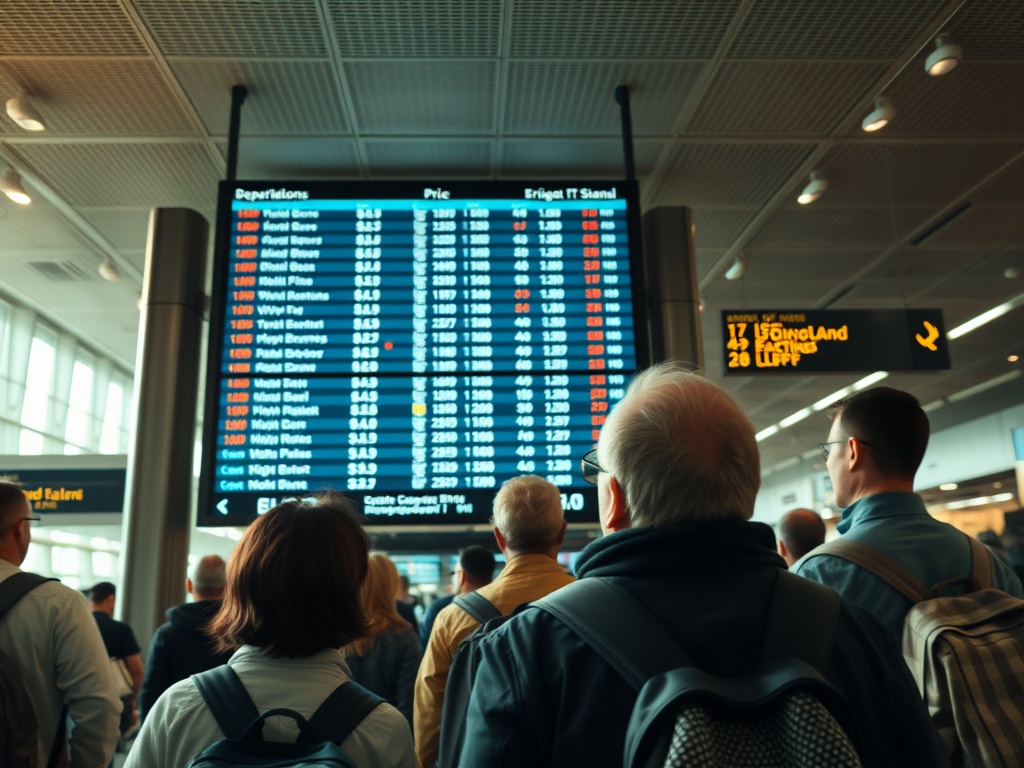
In a matter of weeks, the flight from New York to Los Angeles surged from $167 to $414. The route from Washington to San Francisco jumped from $149 to $502. Even the trip between New York and London on United Airlines hit $846, a 177% increase from the previous week. These are not isolated anomalies: they are the predictable result of a long-standing, unresolved cost structure.
The immediate trigger lies in the Middle East. The escalating tensions around the Strait of Hormuz pushed Brent crude above $101 per barrel, a more than 50% increase in a month. The Argus aviation fuel index rose 72% over the same period, even outpacing crude oil. For U.S. airlines, that figure isn't a warning sign; it’s a bill that’s already due.
Fuel as a Structural Blindspot
Jet fuel accounts for 20% to 30% of the operating costs of a typical airline, depending on the route and fleet model. When that input spikes 72% in four weeks, the pressure on margins is immediate. However, what sets major U.S. airlines apart from many international competitors is that most do not employ systematic financial hedges against fuel price fluctuations. This decision, sensible during periods of cheap oil, turns every geopolitical crisis into a risk transfer event: from the airline's balance sheet to the passenger's wallet.
The CEO of United Airlines noted that the impact on fares would likely begin "probably quickly." This isn't a warning; it’s a description of the mechanism. Without hedging instruments to cushion volatility, the only adjustment available is the price to the consumer. And since the three major carriers—Delta, United, and American—operate under similar conditions, this adjustment does not create competitive disadvantages: all raise fares simultaneously, following the same logic.
This isn't an individual management failure. It's the consequence of a financial architecture that has made variable costs the primary mechanism for transmitting external risk. When BCG published its air travel outlook for 2026, it pointed out that costs per available seat mile were growing faster than revenues at many airlines, with labor pressures ranging from 5% to 7% annually and ground handling costs climbing between 4% and 7%. Fuel was the missing variable to complete the picture.
What Passengers Are Actually Buying
This is where the pricing dynamic reveals something deeper than a mere cost crisis. JetBlue's flight from New York to Santo Domingo jumped from $165 to $566 in a week, quadrupling its price compared to the previous year. Southwest's service between Baltimore and Montego Bay more than doubled. On routes with high concentrations of family visits or pre-existing commitments, demand does not collapse under 200% or 300% price hikes.
This accurately reveals what the passenger is actually purchasing: it’s not generic air transportation. It’s fulfillment of a social or family commitment that already has a date, emotional cost of cancellation, and concrete relational consequences. In that context, pricing elasticity drops drastically. Airlines are aware of this, and revenue management algorithms are calibrated to capture it.
The problem is that this logic works in the short term but deteriorates the perception of service over time. The passenger who pays $566 for a flight that cost $165 just a week before doesn’t forget that number. And when volatility normalizes, that passenger remembers the price, not the brand. Loyalty built over years of frequent flyer programs erodes faster than occupancy data reveals in the immediate quarter.
When Operational Efficiency Becomes Fragility
U.S. airlines spent the last decade aggressively optimizing their cost structures: consolidating routes, reducing excess fleet, renegotiating labor contracts, and calibrating capacity with precision that BCG projected as a 5.8% growth engine for 2026. That same efficiency eliminated the buffers that would have absorbed part of the shock.
Without fuel hedging, no idle capacity to absorb cancellations, and a fare structure that relies on inelastic demand to preserve margins, airlines built a model that performs exceptionally well under stable conditions but visibly fails when the environment changes abruptly. The New York–London route has nearly 4 million seats scheduled annually between JFK and Heathrow. It’s the busiest international corridor in the North Atlantic. That its fares can triple in weeks is not niche volatility: it’s a systemic signal.
What this episode exposes is not just a dependence on oil. It reveals that the U.S. airline industry built its profitability on the assumption that external shocks would be short-lived and manageable. The absence of mitigating instruments was not neglect; it was a deliberate bet that, during years of moderate prices, seemed to pay off. Now that bet has a measurable cost visible on any passenger’s search screen.
The historical success of airlines in passing costs onto consumers demonstrates that what passengers are contracting for is not competitive pricing: it’s certainty of arrival on a committed date. As long as that asymmetry exists, the model will continue to function. But each crisis that activates it diminishes the inventory of customer tolerance that makes the next transfer of costs possible.