
Waymo in London and the Test No Algorithm Can Overcome
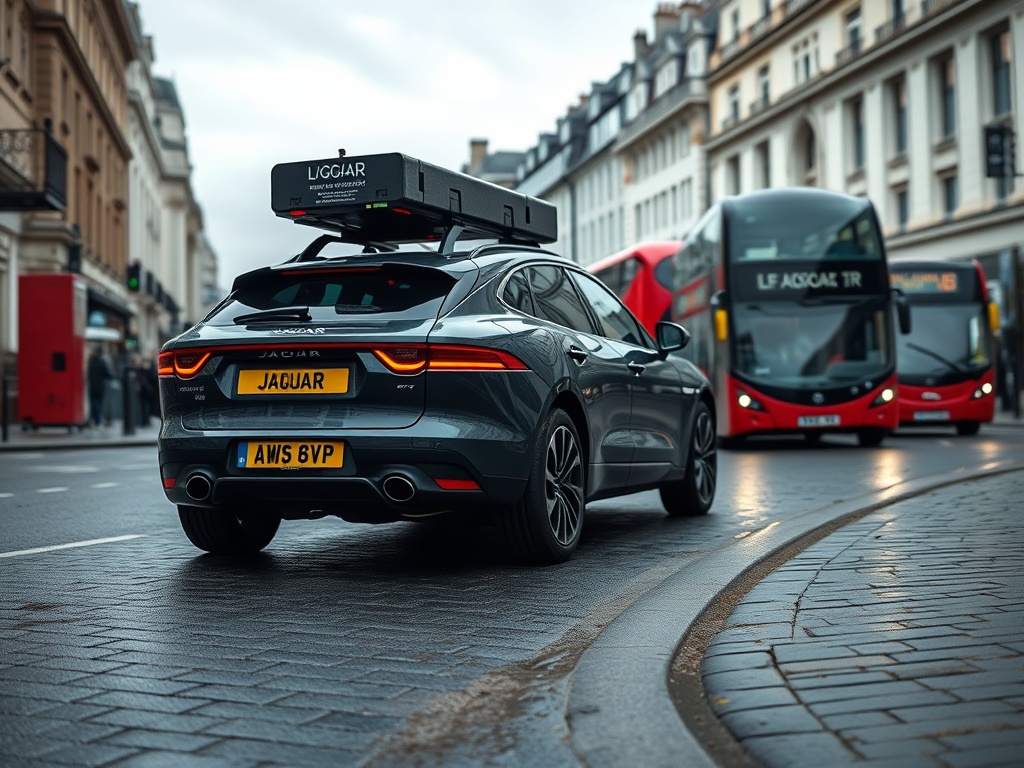
There are moments in a company's history when internal narratives clash starkly with external complexities. Waymo, Alphabet's autonomous driving unit, has just crossed the Atlantic with its lidar-equipped Jaguar I-Paces, cameras, and 360-degree radar, and has started mapping over twenty districts in London. The stated goal: to launch a commercial robotaxi service in the third quarter of 2026, pending regulatory approval. The numbers backing this bet are substantial — over 100 million autonomous miles on public roads in the U.S., more than 10 million paid rides, and a thousand vehicles operating in San Francisco since 2024 — but none of these figures mean much to a cyclist running a red light in Hackney or to a double-decker bus slamming on the brakes in Kensington.
What is happening in London is not just a geographic expansion of a technological product. It is the moment when an organization discovers whether its architecture of commitments can endure outside the territory where it was designed.
The Weight of 100 Million Miles When the Asphalt Changes
Waymo's co-CEO, Tekedra Mawakana, described the arrival in London as bringing "the reliability, safety, and magic of Waymo to Londoners." The phrase is honest in its ambition and revealing in its blind spot. San Francisco has its complexities, but London is a different category of organized chaos: traffic on the left, circular intersections that defy Cartesian logic, pedestrians crossing with the certainty that the world will stop for them, and a network of medieval alleys that no digital map fully captures.
Spokesperson Ethan Teicher was more cautious: "We are not here to replace anybody. We are here to add another option." This phrase, which sounds like corporate diplomacy, actually encapsulates the only feasible entry strategy for a company needing cooperation from regulators, local authorities, and a citizenry that already has established options. London taxi drivers, who have spent decades defending their monopoly with their encyclopedic knowledge of 'The Knowledge' — the world’s most demanding urban memory test — are not mistaken when they say that the streets "are too complex." What they fail to anticipate is that this complexity is precisely the asset that Waymo seeks to acquire with time, data, and regulatory patience.
The underlying bet is this: if the system works in London, it works in any dense city on the planet. And that is worth far more than any fare charged in Southwark or Tower Hamlets.
The Architecture of Commitments Waymo is Building in Real Time
What distinguishes this move from a simple expansion announcement is the network of alliances that Waymo has built before putting a single passenger in the back seat. The fleet operator Moove manages the fieldwork. Jaguar Land Rover supplies the vehicles, the very I-Paces that already accumulate hundreds of thousands of autonomous rides weekly in the U.S. and are being tested in Tokyo. Waymo maintains engineering centers in London and Oxford that work on closed-loop simulation. None of this is improvised.
This chain of distributed commitments is, organizationally, the smartest move a company can make when entering a market where it has no history or local reputation. It is not attempting to flood the streets — Teicher himself emphasized — but rather to build legitimacy incrementally. This involves sacrificing growth speed in exchange for regulatory solidity. An exchange that many organizations lack the maturity to sustain, as their internal incentives reward deployment speed rather than depth of implantation.
Here appears the first relevant organizational diagnosis: companies rushing into new markets are generally fleeing from something, be it investor pressure, a competitor advancing, or internal inability to keep pace in mature markets. Waymo, which has been operating in the U.S. for years with profitability that Alphabet does not publicly break down, seems to have made the opposite decision: it arrives slowly because it can afford to, and that is a competitive advantage no algorithm can replicate overnight.
Its direct competitors in London — Wayve, the British startup using Ford Mustang Mach-E and a map-less artificial intelligence approach, and Baidu with its Apollo Go platform via agreements with Uber and Lyft — are betting on different models. Wayve argues that its system learns in real-time without needing exhaustive mapping, theoretically making it more adaptable to new cities. It’s a technically elegant hypothesis. The problem is that technical elegance does not convince a regulator: track record does.
What C-Level Executives in Any Industry Should See Here
There is a reading of this story that goes far beyond just robotaxis. It is the anatomy of how an organization with a real—albeit unspoken—scale advantage, measured in millions of miles and paid rides, decides to manage it instead of squandering it.
Many leaders, when they have a proven asset, succumb to the temptation to export it quickly and massively, assuming that what worked in the home market will work equally well elsewhere. That is the trap of confusing the product with the context. Waymo is doing something different: it is transferring learning, not the product. The Jaguar I-Paces in London are not the same vehicles operating in San Francisco; they are the same only in hardware. The system that drives them must learn the grammar of London's traffic from scratch, and Waymo seems willing to pay that time price before it starts charging fares.
This demands a very difficult internal conversation for any board of directors: the conversation about when not to scale. About when the discipline of going slow is more valuable than the inertia of going fast. Organizations that do not have this conversation — because institutional ego or shareholder pressure makes it uncomfortable — end up deploying products in markets for which they are not ready, accumulating incidents that erode public trust, and retreating farther than they advanced.
UK national regulation for autonomous vehicles is expected later this decade. This means Waymo is building a position in a market whose rules of engagement are still unwritten. The one that arrives first with the best safety record will not only gain customers but influence how those rules are drafted. That is not an operational advantage; it is a foundational advantage.
The culture of an organization is not what its leaders declare in press releases or what is etched into its corporate values on its website. It is the accumulated result of all the decisions made when no one was applauding them for making them, and all the difficult conversations they had the courage to hold before the market demanded them.