
The Number That Forces a Rethink on Combustion Engines
On April 14, 2026, in Hangzhou, Geely Auto unveiled a hybrid system with a Guinness-certified consumption of 2.22 liters per 100 kilometers and a thermal efficiency of 48.41% in serial production. To put this into context: Toyota has been the absolute benchmark in this metric for three decades, with the Prius as the emblem of energy austerity. That reference has just been technically surpassed by a Chinese manufacturer that, fifteen years ago, was invisible on the global powertrain map.
Jerry Gan, CEO of Geely Auto Group, articulated this calculatedly: "Energy diversification is a strategic foresight for Geely Auto." He did not speak of dominating the electric market or electrifying his entire fleet within five years. Instead, he discussed diversification as an act of lucidity. In an industry narrative that has reduced the future to a single technology—the purely electric vehicle—this stance warrants deeper examination than the headline suggests.
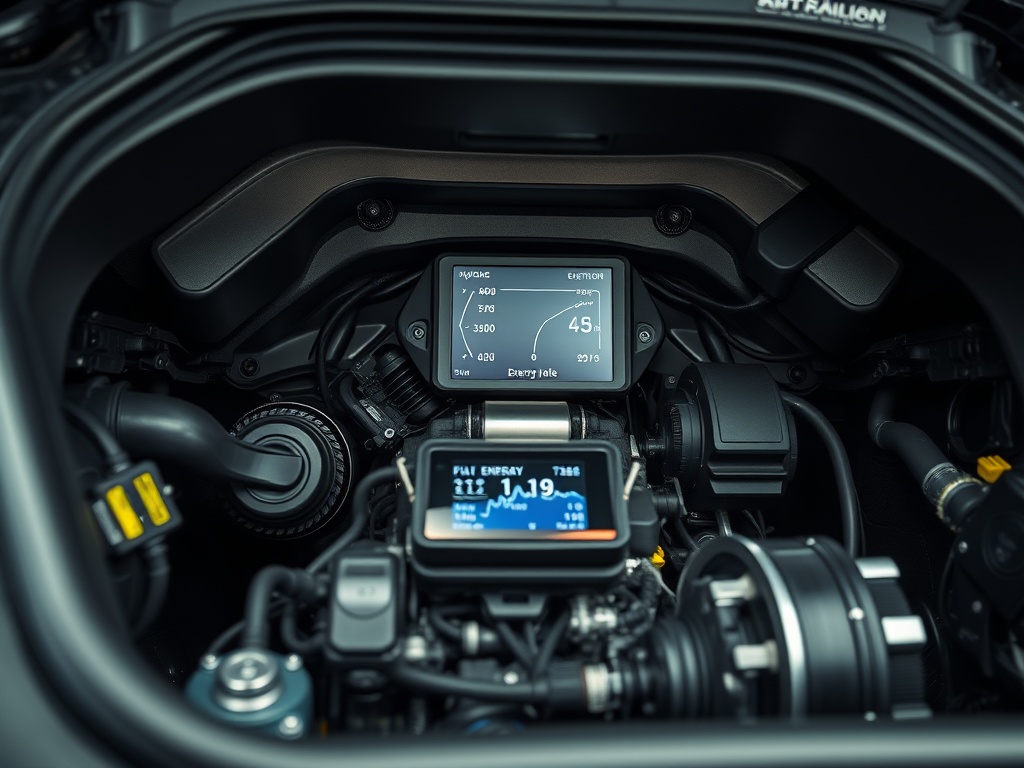
The i-HEV system integrates what Geely calls Full-domain AI 2.0, a layer of artificial intelligence that manages energy flow in real-time, taking into account temperature, humidity, and altitude. The declared result is over a 10% efficiency improvement compared to conventional systems. The electric motor achieves 230 kW of power, operates in electric mode nearly 80% of the time, and the IP68-rated battery monitors over 50 types of failures in real-time. All this is done without a plug, range anxiety, or recharge infrastructure.
What the Industry Has Been Charging for Decades Without Need
This is where my analysis diverges from the press release. Geely has executed something technically remarkable. However, what is most strategically revealing is not what they added, but what they chose not to do.
For years, the automotive industry has assumed that the path to efficiency necessarily involved larger batteries, extended electric ranges, higher-cost dedicated platforms, and, most importantly, shifting the burden of recharge infrastructure onto the consumer. The pure electric vehicle became the gold standard of sophistication, with anyone not following that path labeled conservative or lagging behind.
Geely takes that logic and flips it. The i-HEV operates without needing to plug in, with an electric-only autonomy reaching 66 km/h maximum speed and acceleration from 0 to 30 km/h in 1.84 seconds in EV mode. The value proposition is not to replace electric vehicles; rather, it aims to provide the 80% of urban drivers—who do not charge at night, live in buildings without charging points, and undertake mixed city-highway trips—with the practical benefits of electric driving without its friction.
This eliminates a cost variable the industry has never questioned: mandatory dependence on external infrastructure. By removing it, Geely not only lowers its cost structure compared to pure BEVs—which require higher-capacity batteries and more volatile lithium supply chains—but also opens the market to millions of buyers that pure electric vehicles have systematically failed to convert.
The i-CMA architecture—an evolution of the CMA platform co-developed with Volvo—centralizes driving, cabin, and chassis control in a single computational brain. The models featuring this system in 2026—Preface, Monjaro, Starray, and the fifth-generation Emgrand—maintain sleek lines, boast double screens, Flyme Auto, Huawei HiCar, and HUD. It is not a design revolution. Rather, it is a revolution of invisible engineering that the user experiences as silence, smoothness, and fuel savings.
Why This Move Pressures BYD More Than Toyota
Surface-level analysis positions Geely against Toyota. It has narrative sense: record thermal efficiency, AI applied to the engine, Guinness certification. The obvious reference is the Prius and its three-decade legacy. However, if I observe the real market movements in China in 2026, the most pressured competitor by i-HEV is not Japanese.
BYD built its dominance on the DM-i, a plug-in hybrid system that requires— to tap into its maximum efficiency—access to electric charging. In the urban middle-income segments of China, where Preface and Monjaro compete, that requirement is not always guaranteed. Geely arrives with a system that promises comparable or superior efficiency without that dependency. If the real consumption figures—not just the Guinness data, but the 3.98 L/100km in WLTC cycle from the Preface and 4.75 L/100km from the Monjaro under standard conditions—hold up in everyday use, Geely will have created a segment where BYD has no immediate response and Toyota lacks sufficient volume presence in China to react quickly.
The financial data that warrants attention is not the consumption figure in L/100km. It is that Geely plans to hybridize its entire line of internal combustion engines. This is not a product update; it is a complete reconfiguration of its margin structure. Every ICE unit sold today—with margins squeezed by price wars in the Chinese market—becomes a candidate for i-HEV, with a differentiated value proposition that breaks the pressure of pure price points. Geely’s (00175.HK) shares showed a 16.641% short sale ratio at the time of launch. The markets were betting against the company. The total hybridization of its line, if executed with the speed suggested by the immediate launch in serial production, could be the most robust operational response to that bet.
The Only Risk Geely Cannot Control from Hangzhou
The numbers are verifiable, the certification exists, and production has begun. However, there is one variable that no launch event in Hangzhou can resolve: validation in the real market, outside of China.
Geely has built its technical credibility on platforms co-developed with Volvo, with an EU presence through Polestar and with a track record of acquisitions that afford it global exposure. The i-HEV has evident export logic: the regions where hybrids are growing—Southeast Asia, the Middle East, Latin America, parts of Europe—are precisely those where electric charging infrastructure is insufficient to sustain mass BEV adoption. The proposition of not depending on plugs is, in those markets, a structural advantage, not just a marketing differential.
However, exporting thermal efficiency and energy management AI entails proving that the 2.22 L/100km and 48.41% efficiency are not just lab numbers. Guinness certifications validate controlled conditions. The market validates real asphalt, real traffic, and drivers who do not know there is an AI managing their energy. Until field data from the first quarters of 2026 becomes available—and until Geely announces its first export figures with i-HEV—the most powerful narrative of this launch remains technical, not commercial.
Leaders who can discern this difference are those who do not confuse a product presentation with market validation. Geely has debunked the myth that to surpass Toyota in efficiency, one had to replicate Toyota’s methods. Now it must demonstrate that the AI managing temperature and altitude in Hangzhou can also navigate the streets of Mexico City, Jakarta, or Warsaw. That demonstration does not happen in an auditorium; it happens in sales data, service reports, and second-half income statements. True strategic leadership lies not in certifying a record and defending known territory, but in having the discipline to eliminate what the market never needed to build demand that does not yet exist on the competitors’ maps.