
Non-Dilutive Funding as a Sign of Portfolio Maturity
On April 15, 2026, EMP Metals Corp. announced that Next Generation Manufacturing Canada (NGen) approved up to $3.2 million in funding for the Aurora Project, a demonstration plant for lithium extraction from brine located at its Viewfield asset in Saskatchewan. Along with the $1 million awarded from British Columbia's Integrated Marketplace program in March 2026, the project has already secured more than $4.2 million in external capital without issuing a single new share.
This statement warrants attention. For a junior exploration company listed on the CSE, securing non-dilutive funding from two independent government sources in under six weeks is not just a public relations event; it signals that the project has reached a minimum threshold of technical credibility in the eyes of demanding external evaluators. NGen does not disperse money indiscriminately; its mandate is to finance advanced manufacturing projects with national-scale potential, and its recent federal fund of $35 million sets a high selection standard. When such an institution approves a project, it validates the technical architecture, not just the narrative.
What I find interesting to analyze is not the amount, but what the project design reveals about how EMP Metals is managing the tension between its present operation—a revenue-free exploration company—and its long-term gamble of becoming a lithium producer in Canada.
A Modular Design That Separates Incubation from Operation
The Aurora Project is not simply a pilot plant. It features a hub-and-spoke architecture: EMP's horizontal wells at Viewfield act as peripheral extraction points that convert raw brine into a lithium-rich solution. This solution then gets transported to the nerve center in Richmond, British Columbia, where Saltworks Technologies conducts the final refining to produce battery-grade chemicals.
This model deliberately distributes two types of risks. EMP assumes the subsurface and infrastructure risks in Saskatchewan—its core competency as an exploration company—while Saltworks takes on the technological risk of refining with its second-generation technology, which, according to available data, promises higher purity and recovery rates compared to conventional methods. Neither company is trying to do everything alone.
From the organizational design perspective, this is the exact opposite of what typically happens when a mature company attempts to innovate internally: creating an innovation lab without real autonomy, measuring it with the same profitability metrics as the core business, and suffocating it before it produces useful data. In contrast, EMP has structured Aurora as an operationally separate unit, partnering with a specialized technology provider, securing external funding that does not compromise the parent company's cash flow, and implementing learning metrics—recovery rates, flow continuity, and cost per ton at demo scale—that are appropriate for this stage. Aurora is not being asked to be profitable in 2026; it is expected to generate data.
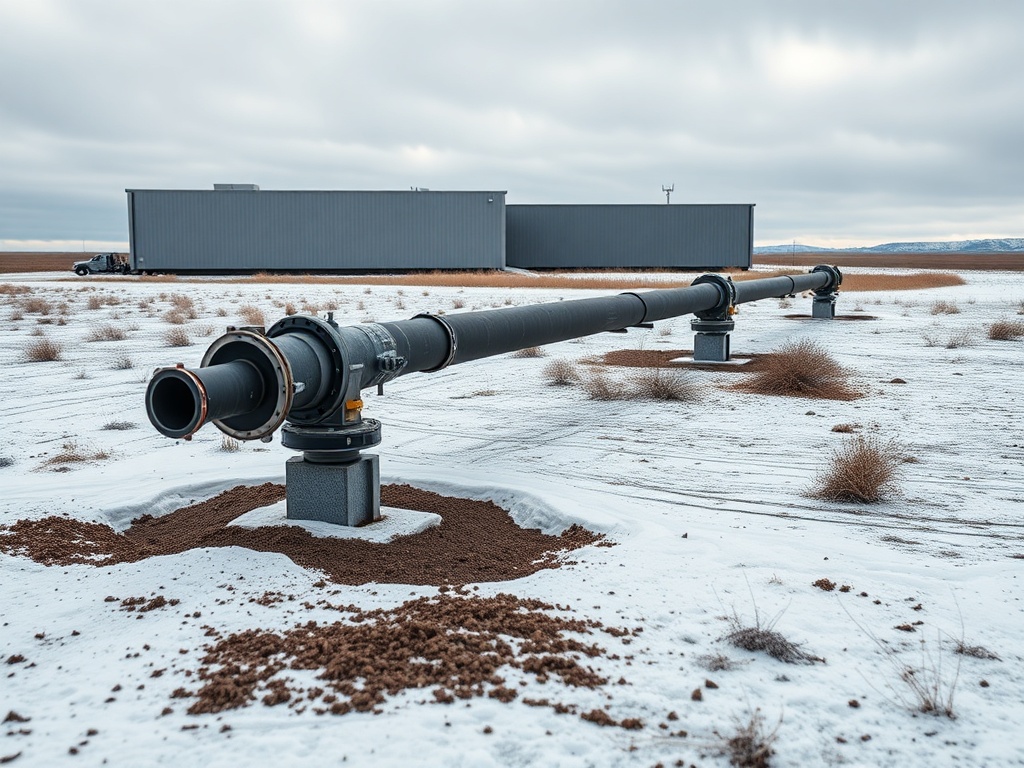
The exterior construction of the building in Viewfield was completed by November 26, 2025, with energy hooked up and climate sealing ready for interior work. The timeline indicates equipment deliveries in May 2026, final connections in June, and operations starting afterward. The commercial plant, aiming for over 3,000 tons annually, will depend on the data generated by this demonstration to justify the next round of funding and expansion permits.
What Public Funding Reveals About Canada’s Competitive Positioning
There is a broader strategic reading that should not be overlooked. Both NGen and British Columbia's Integrated Marketplace program are funding EMP Metals at a time when the U.S. Inflation Reduction Act is pushing Canada to build domestic supply chains for critical minerals or risk being relegated to a mere supplier of unprocessed commodities.
The Duperow Formation in Saskatchewan contains brines with potential for low-impact extraction compared to hard rock mining or evaporation ponds in the South American Lithium Triangle. If the Aurora Project demonstrates that the direct extraction model from wells, in a continuous flow without evaporation, can produce battery-grade lithium at competitive costs, Saskatchewan could become one of the few lithium assets globally with a simultaneously low water and carbon footprint. This is commercially valuable in a market where battery buyers—electric vehicle manufacturers and energy storage operators—are auditing the origins and environmental footprints of their inputs.
However, there is a technical caveat that the project's own timeline incorporates with honesty: the commercial plant is subject to financing and permits, with possible construction starting in Q1 2027 and a construction timeline of 24 months, plus up to 18 months for long-lead equipment. This places potential first commercial production, in the most optimistic scenario, toward late 2029 or early 2030. The lithium market will have gone through several price cycles by then.
This does not invalidate the bet. It means that the right metric for evaluating EMP Metals today is not the lithium price in the spot market, but the quality of the data generated by the demonstration plant between 2026 and 2027 and the speed at which Saltworks delivers commercial-scale designs based on those data. If the project fulfills its purpose of reducing technical and cost uncertainty, it will have done exactly what a well-structured incubation unit should do.
The Risk Lies Not in Technology, but in Governance of the Next Step
The greatest risk the Aurora Project faces at the moment is not technical. Saltworks' technology has a track record in water treatment and is being coherently adapted for mineral refining. The risk lies in portfolio governance: how EMP Metals will manage the transition from a demonstration company to a production company without dismantling the structure that enabled the innovation.
That transition is where most mining demonstration projects collapse. Junior companies that validate technology face brutal pressure to scale quickly, secure debt or capital financing that comes with stricter governance conditions, and begin to operate with corporate structures not designed for managing production plants. The hub-and-spoke model that works well at the demonstration scale requires significant re-engineering to operate at 3,000 tons a year with multiple wells and interprovincial logistics.
CEO Karl Kottmeier has articulated the project clearly in his public statements, positioning Aurora as part of a national solution for critical minerals, not just as a corporate asset. That narrative is helpful for attracting institutional funding, but the real test will be whether the executive team can simultaneously manage the operational demonstration plant, the engineering of the commercial plant, and the necessary funding rounds to construct it, without any of the three dimensions cannibalizing the other.
So far, EMP Metals has built a technically sound and financially efficient incubation structure for its stage. The accumulated non-dilutive funding of $4.2 million preserves the capital structure while generating the data that will justify the next investment of a higher order of magnitude. This is the correct design for this phase of the portfolio, and the operational data of the next 18 months will determine whether the company has what it takes to execute the most challenging transition: moving from being a demonstration project to becoming a production business.