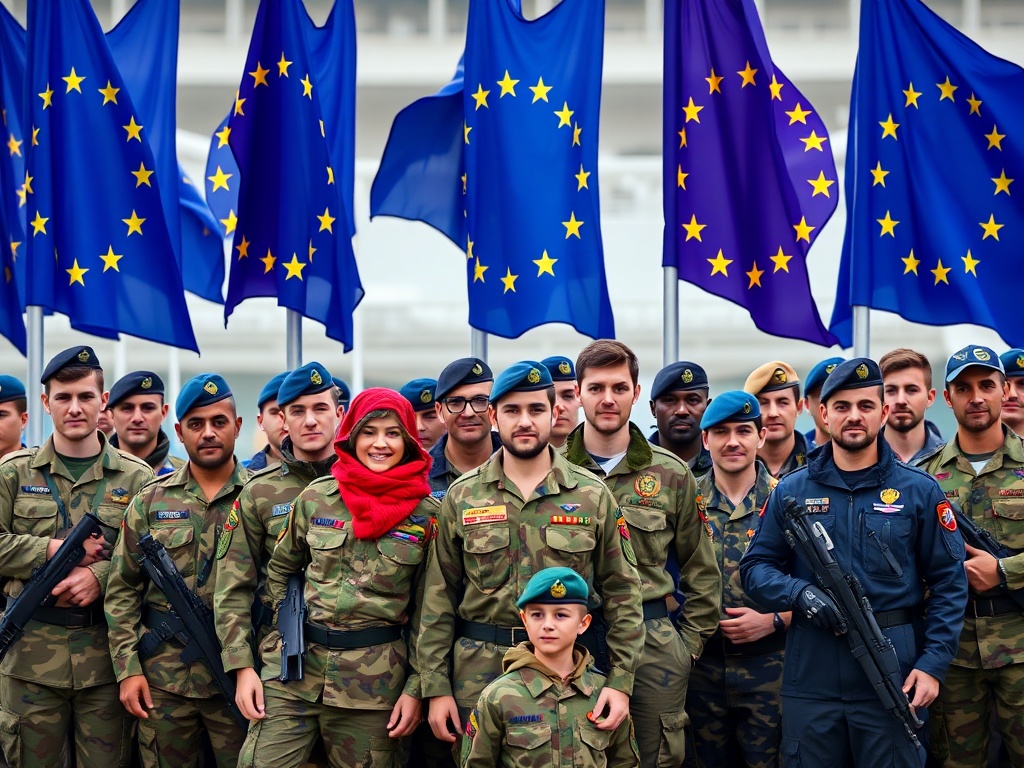

European Strategic Context
The discussion surrounding the creation of a European army has gained traction in recent years, especially in light of conflicts such as the one in Ukraine. The question is not merely whether Europe should assume its own security, but rather how it can do so in a way that benefits all stakeholders involved.
In this context, it is crucial to assess whether the potential project for a European army is designed to generate real value for all participating nations or if it risks becoming an extractive model that could stifle its allies in the long term.
Evaluating the Distributive Logic
A European army could redefine the security landscape of the continent, but its success will hinge on how value is distributed among member states. If the focus is on reducing costs and maximizing short-term gains, it may lead to internal tensions. The real question is whether this initiative will enhance European citizens’ willingness to invest in collective security or if it merely reduces the willingness of defense suppliers to offer their services at sustainable prices.
For this initiative to thrive, it is essential that all countries participate equitably. A design that favors more powerful nations could create economic and political imbalances, undermining the cohesion and effectiveness of the collective effort.
Alliances and Defense Ecosystems
The establishment of a European army must also be viewed within the context of existing alliances, such as NATO. The key will be to integrate these structures in a way that enhances shared value and avoids costly redundancies that do not contribute to the security ecosystem.
A genuine alliance-based approach, where each country sees its interests reflected, could strengthen the continent's security. However, if the model is designed to temporarily subsidize certain countries at the expense of others, the project is destined for failure once political or financial interest wanes.
Economic and Political Sustainability
The viability of a European army lies in its ability to transform fixed costs into variable ones. This would allow countries to adapt quickly to economic and political crises. However, if the model accumulates useless assets, it may become an unsustainable economic burden.
Ultimately, the success of this initiative will depend on governance and power dynamics. An inefficient bureaucratic structure could become a bottleneck that stifles the innovation and adaptability necessary to address future challenges.
A Future of Shared Value
The project of a European army presents an opportunity to reshape the security landscape of the continent, but only if it is designed with a shared value approach. The only inexhaustible competitive advantage is ensuring that all stakeholders prefer to remain within their ecosystem. If Europe can build a model that empowers all its members, the initiative will not only be viable but also sustainable in the long term.