
Cloudlink 2210: When Physical Security Stops Competing with the Cloud and Becomes an Architectural Decision
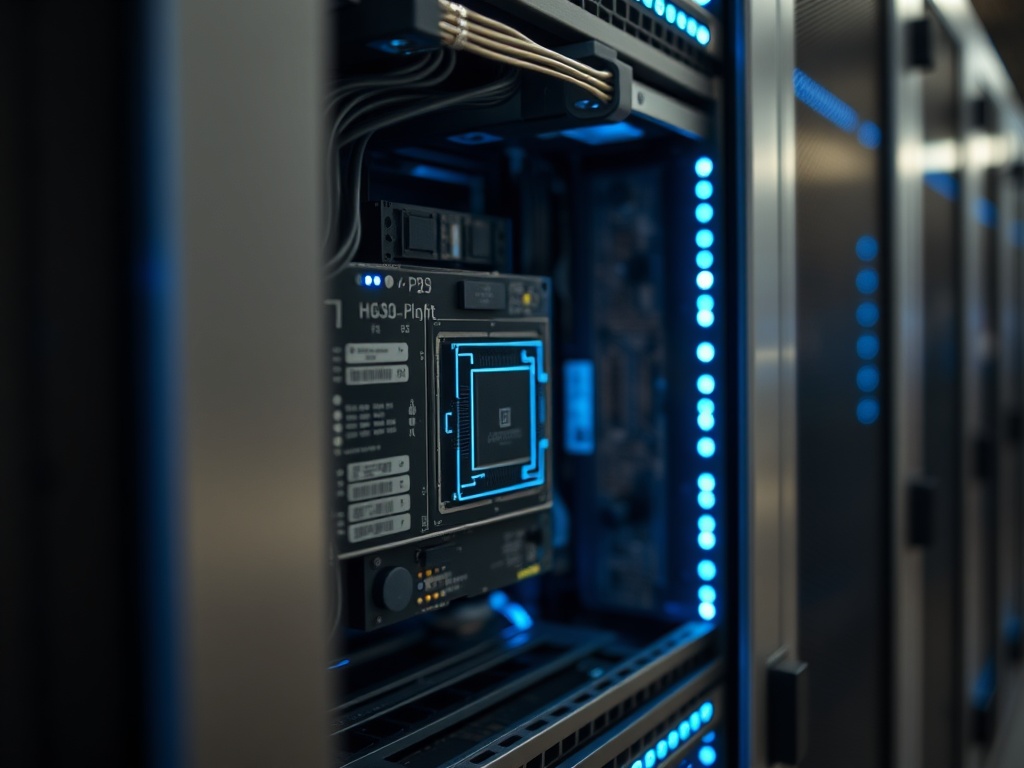
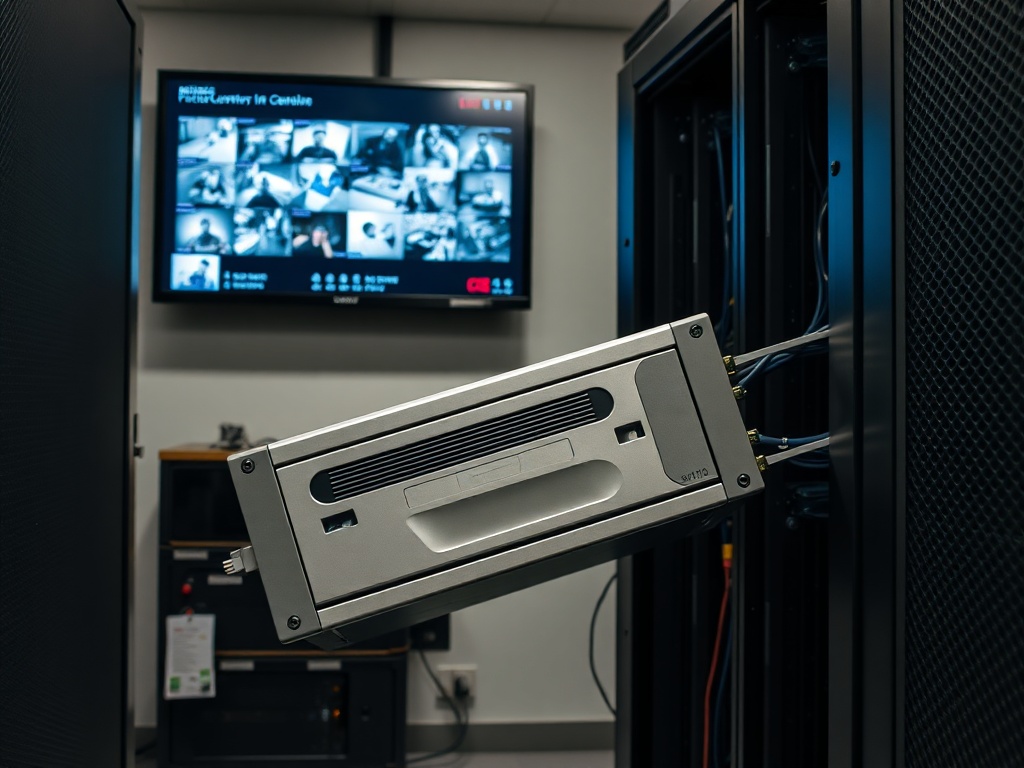
The conversation around corporate physical security has been muddied by a false dilemma: either you move to the cloud and face rising costs and operational dependencies, or you stay on-premises and sacrifice management speed, updates, and visibility. Genetec seeks to break that tension with the Cloudlink 2210, announced on February 26, 2026. This 2U rack-mountable appliance is cloud-managed, stackable, designed for enterprise-scale deployments, and boasts a noteworthy specification: up to 240 TB of local storage per unit with support for hundreds of connected devices. All of this is underpinned by a design premise: to consolidate video, access control, and intrusion into a single piece of infrastructure without forcing a complete legacy overhaul.
The corporate message, delivered by Christian Chenard Lemire, Director of Unified Solutions Product, is straightforward: companies don’t want to choose between innovation and operational certainty. Reading this carefully, it’s not just a slogan; it’s a diagnosis of enterprise buyers who are tired of “modernization” projects that begin as technological upgrades and turn into two-year organizational change programs.
Cloudlink 2210 presents itself as packaged hybrid architecture: it operates locally even if the connectivity to the cloud is lost, includes RAID-protected storage, redundant components, and dual network interfaces for redundancy and isolation. It integrates with Security Center SaaS, with availability beginning with a showcase at ISC West (booth #13062), and global shipments starting in May 2026 through accredited channels. There are no public data on pricing or financial impact in the sources, creating a void that forces an analysis based on mechanics rather than Excel sheets.
The Product as an Answer to a Real Pain Point: Retention, Density, and Operational Continuity
Cloudlink 2210 does not try to win by offering “more cloud.” It aims to succeed by providing total cost control and operational continuity in contexts where video and security events are not merely a “feature,” but a critical record. The promise of up to 240 TB of local data addresses a specific problem: long retention policies, multiple cameras, higher resolutions, and the reality that uploading everything to the cloud can be financially burdensome. Without published savings numbers, the value is inferred through the cost vectors: storage and data egress typically escalate with volume and time, and enterprise video is pure volume.
Operationally, Genetec’s insistence that the equipment continues to function without cloud connectivity indicates a priority statement. In physical security, a network drop is not a nuisance: it’s a loss of visibility, evidence, and, in regulated industries, compliance. This is why redundant components, dual NICs, and RAID appear as central features rather than fine print. What’s relevant is not just their existence, but that they are integrated into a “cloud-managed” appliance, avoiding the typical pattern of solutions that require purchasing redundancy as a separate project.
There’s another layer: density. A stackable 2U appliance ready for mission-critical racks is directed squarely at customers already operating data centers, communication closets, and environments with disciplined infrastructure. Genetec, instead of designing for the “cloud-only” buyer who avoids hardware, designs for the enterprise buyer who tolerates hardware as long as it reduces complexity and avoids re-engineering. This is where stacking matters: scaling by adding units without redesigning infrastructure is a promise of incremental growth, aligned with phased budgeting.
Open Architecture as a Migration Strategy, Not an Ideological Stance
The most underrated point of this launch is the compatibility with third-party devices: cameras, access control systems, and intrusion panels. In corporate discourse, “open architecture” often sounds like an abstract virtue. In practice, it’s a strategy to reduce friction in enterprise sales and, above all, to deactivate the fear of migration.
In large companies, legacy systems are not stubbornness; they’re amortization and risk. Devices are already deployed, integrated into processes, and tied to incident response. Forcing a complete replacement to “modernize” kills the business case, even if the software is superior. This is why Cloudlink 2210 is positioned as a consolidation of workloads in a single appliance: it reduces the “sprawl” of separate proprietary systems and their operational burden, but without demanding a reset.
From a portfolio perspective, Genetec protects its current engine while enabling gradual modernization. The product allows customers to advance toward a hybrid or SaaS model with Security Center SaaS, retaining local control. This combination tends to accelerate purchasing decisions because it transforms a transformation program into a modular deployment. In enterprises, modular is approved; totalizing is debated to death.
This openness is also defensive: in a market where many players attempt to encapsulate clients with closed hardware and software, the compatibility narrative reduces the perception of lock-in and expands adoption space in heterogeneous environments. The irony is that “open” can be, in commercial terms, the most efficient way to capture the control center because you become the platform through which everything is managed.
Portfolio Movement: Exploiting the Core with Controlled Exploration
I see this launch as a well-calibrated move in the tension between exploitation and exploration. It’s not a blind leap into a new paradigm; it’s a line extension that, however, reconfigures the value proposition.
The exploitation is clear: Genetec strengthens its core business of unified physical security platform, making it more “buyable” at scale. Consolidating video, access, and intrusion in a cloud-managed appliance reduces integration and operation costs and reinforces the unification argument that has historically sustained the company.
Exploration, on the other hand, appears in the mode of delivery and management. Cloudlink 2210, by integrating with Security Center SaaS and operating in hybrid models, pushes the portfolio towards cloud services and management without breaking with local hardware. It is controlled exploration because it doesn’t demand that customers adopt a purely cloud model to capture value. In other words, Genetec isn’t asking for faith; it’s asking for a phased migration.
The typical risk in these transitions is organizational: selling “flexibility” can often lead to an impossible matrix of options to implement consistently. The announcement attempts to anticipate that risk with a concrete object: a standardized, stackable appliance with clear capabilities and an accredited channel for deployment. This matters because, in enterprise physical security, execution is decided by both the manufacturer and the integrator. If the integrator struggles, the project halts.
There’s also an implicit financial risk: when the proposal includes massive local storage, the manufacturer enters the business of supporting hardware life cycles, failures, replacements, and supply chains. Genetec seems to accept this because the reward is significant: controlling the “edge” where video capture and events occur and from there govern the cloud-managed experience.
What Changes for the Enterprise Buyer and Channel: Fewer Projects, More Repeatable Products
The Cloudlink 2210 aims at changing the dynamics of purchasing and deployment. In many environments, physical security has been managed as a collection of projects: one for video, another for access, and yet another for intrusion, each with its own stack, contracts, updates, and responsible teams. This model creates operational and budgetary bureaucracy: multiple vendors, multiple renewals, multiple incidents.
By consolidating workloads in a single appliance, the buyer gains a simpler budgeting narrative: a block of capacity that scales through stacking. This does not eliminate site complexity but encapsulates it. And when complexity is encapsulated, it can be standardized, replicated, and audited.
For the accredited channel, the advantage is similar: fewer craft-oriented projects and more repeatable ones. In enterprise integrations, margins are destroyed when each deployment becomes a prototype. A 2U rack-designed appliance with built-in redundancy and storage reduces ad hoc engineering. That’s the kind of detail that may not shine in a press release, but determines whether adoption scales.
The availability date also reveals intention: showcasing at ISC West as a credibility display and then shipments in May 2026. This suggests preparation for a pipeline with partners and a reasonable window for training and pre-sale. Without pricing data, success will depend on whether the perceived TCO is better than the combo of massive cloud storage plus dispersed integration gateways.
A Viable Bet When the Organization Maintains Balance Between Cash Flow and Modernization
Genetec is pushing towards pragmatic modernization: cloud management with resilient local operation, high density, and third-party compatibility. As a portfolio design, this is a decision that protects the cash flow of the current business while enabling a realistic transition towards SaaS and hybrid models without suffocating the customer with total replacements. The viability depends on maintaining that discipline: standardizing execution with the channel, avoiding that flexibility turns into complexity, and continuing to finance exploration without eroding the operational certainty that enterprise buyers demand.