
Target is Not Buying Growth: It’s Buying Operational Consistency
Target has entered 2026 with a significant challenge that retail harshly punishes: when execution becomes inconsistent, a brand ceases to be a promise and turns into a lottery. In its financial community meeting in Minneapolis on March 3, 2026, the company presented a multi-year plan to create "the most enjoyable retail experience," backed by $2 billion in incremental investment for 2026: $1 billion in additional operating expenses and more than $1 billion in capital expenditures (CapEx), raising the total CapEx to about $5 billion. The agenda includes over 30 new stores in 2026, more than 130 remodels, and the opening of its 2,000th store in Fuquay-Varina, North Carolina, later in March.
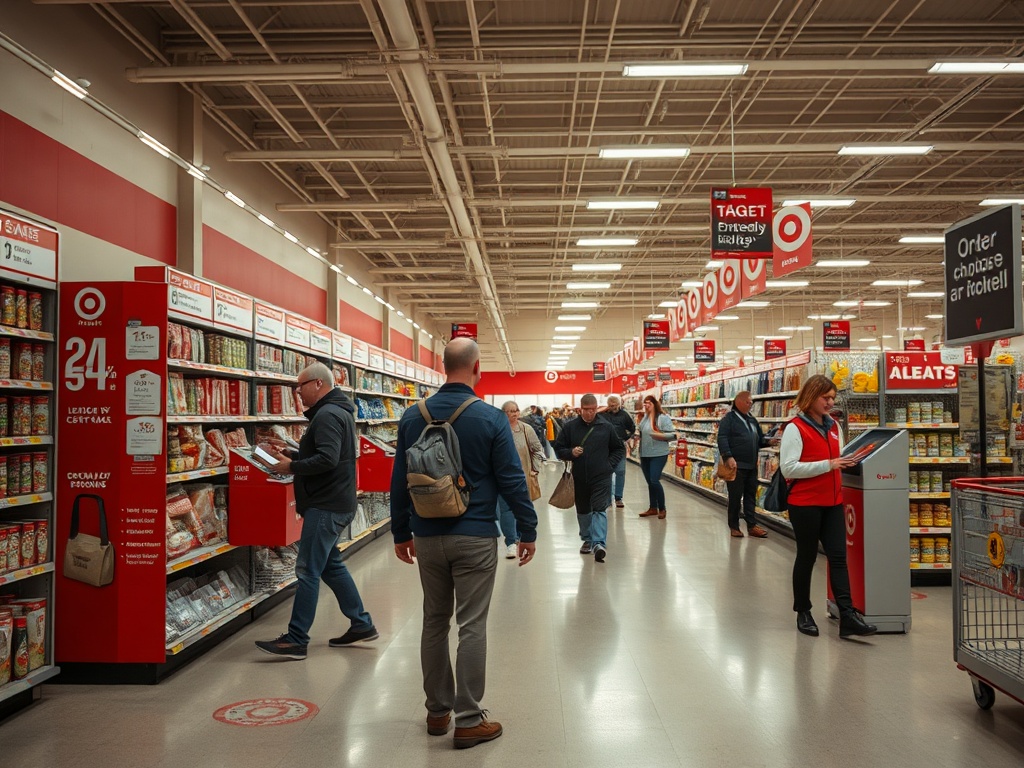
The context is clear: the strategy is communicated as a "new chapter" under CEO Michael Fiddelke, who took charge in February 2026 following sales setbacks in 2025. But the most crucial data is not about the changing of the guard. It's about the type of spending: a significant portion is allocated to in-store payroll and training, as well as adjustments to layouts, displays, marketing, and AI technology. When a company decides to pump hundreds of millions into the sales floor, it admits something unspoken: customer experience doesn’t improve through speeches or campaigns; it improves through human structure and disciplined repetition.
In retail, “delight” is a dangerous word. It suggests creative aspiration but, in practice, means zero friction, availability, clarity, controlled wait times, and teams that know their store. Target is attempting to buy back what erodes quickly: daily trust.
The $2 Billion Investment: An Operational Diagnosis, Not a Marketing Move
The market tends to read these announcements as a gesture of optimism. I interpret it as an operational diagnosis with an explicit price tag. Target separates its 2026 gamble into two tracks: operating expenses to “enable” the experience and CapEx to redesign the container. This mix usually appears when the issue is not just assortment or positioning but consistency. Consistency is costly because it's repetitive: more staff hours, more training, stricter standards, and more effective supervision.
In the announcement, the company talks about “the most extensive changes in stores in over a decade,” with layout updates, display improvements, and a strong focus on teams. This is the least glamorous part of the plan but also the most decisive. Remodeling can be seen and photographed; the quality of service is felt or suffered. If 2025 was a year of declining sales, 2026 is shaping up to be a year of rebuilding foundations.
There’s also a financial signal not to romanticize: increased operating expenses pressure margins in a sector where profitability is often thin. Target is accepting that hit with the expectation of regaining traffic and conversion. It’s a rational but unforgiving gamble: spending without execution becomes structural ballast. The history of many retail transformations is written with CapEx that looks spectacular in the first quarter and depreciates without a return when the human system doesn’t keep up.
Here lies the leadership point that headlines often overlook. The value of the plan does not depend on the eloquence of the new CEO; it depends on whether the executive committee can turn money into verifiable operational habits. In other words, whether the system can produce the same quality of experience on a Tuesday at 11:00 AM as on a Saturday at 5:00 PM.
“Busy Families” Are a Demanding Segment: They Penalize Inconsistency More Than Price
Target declares its intention to focus on “busy families”: digital consumers, style-oriented, value-sensitive, and convenience-driven. This profile is a tough combination because it forgives two types of failure: friction and disappointment. If the assortment is interesting but restocking falls behind, the customer doesn’t wait. If the design is appealing but the in-store experience feels chaotic, the brand suffers.
The strategy rests on four pillars: trend-oriented assortment, elevated experiences, technological acceleration, and team empowerment. In practice, this means portfolio decisions and execution by category. Target announced relaunches and new formats: Threshold in home goods in summer 2026, Target Beauty Studio later in 2026, an increase of “newness” in food and beverages, expansion in health and wellness following a growth in the assortment in January 2026, and a 20% increase in vitamins and nutrition in April 2026, as well as expansion in baby products with Cloud Island and partnerships with brands like UPPAbaby, Bugaboo, Doona, and Stokke.
None of this works if the value proposition is scattered. “Curating with conviction”—the idea of shifting from a "one-stop shop" to a clearer selection—makes sense in a saturated market. But curating demands sacrifice. It requires internal governance that sustains the “no” against the temptation to add more SKUs to cover anxiety. Buying teams and categories need to operate with a shared logic, not as fiefdoms. Real transformation occurs when the company stops measuring success by the quantity of novelties and instead measures it by the clarity of its proposal and the repetition of results.
At this point, leadership becomes architecture: it’s not just about having a vision, but achieving alignment. If the target customer is a time-strapped family, the standard is not “I liked it,” but “It solved my problem.” And “solving” is a function of processes, sourcing, layout, signage, restocking, service, returns, and last-mile services. The brand merely crowns that system; it does not replace it.
Technology and Same-Day Delivery Are Real Levers, But Only If the Store Floor Is Designed to Deliver
Target reports that same-day delivery services, like Drive Up and Order Pickup, already account for two-thirds of digital sales. This data is vital: it means that the dominant asset is not e-commerce as a website but the store as a logistical node. Target also plans to add 20 new metropolitan areas for next-day delivery this spring while scaling Target Circle, the loyalty program, Target Circle 360 as a paid membership, Roundel as a retail media network, and Target Plus as a marketplace.
The typical risk here is to confuse “more technology” with “better experience.” Technology merely amplifies the quality of the existing system. If order preparation in-store competes with customers walking the aisles, the result is bilateral friction. If aggressive delivery windows are promised without real picking and restocking capacity, operations enter firefighting mode.
Therefore, the most strategic part of the plan is not the AI itself but the decision to invest in hours, training, layouts, and displays. It’s implicit that the store is redesigned to be simultaneously a showroom, supermarket, collection center, and micro-distribution hub. This is where leadership must abandon the myth of the “big announcement” and enter the discipline of the “big standard”: define compliance metrics by store, stabilize routines, and prevent each market from inventing its own version of the experience.
When a retailer claims it wants to accelerate with technology, what they really mean is that they seek to elevate the productivity of their installed base. But productivity in retail is not decreed; it’s choreographed. And that choreography is human: who does what, when, with what tools, with what training, and with what autonomy.
Fiddelke’s Real Test is Building a System That Doesn’t Need Him Day-to-Day
In his statement, Michael Fiddelke spoke about “clear choices” based on a deeper understanding of Target’s “proprietary line” and where it is “distinctively positioned to win,” placing style, design, and value at the center. This is a correct message for investors and internal culture: focus, not dispersion.
However, mature leadership is not measured by the clarity of the narrative but by the distribution of decision-making power. This plan is too expansive to rely on a central figure. It includes physical expansion (30+ new stores in 2026, on track for 300 by 2035), massive remodels, category changes, digital services, loyalty, retail media, and a marketplace. If this is governed as a “CEO program,” it becomes a portfolio of initiatives competing for attention and creating organizational fatigue.
Healthy design is the opposite: a system where each piece has an owner, budget, metrics, cadence, and a clear interface with operations in-store. The money allocated for payroll and training suggests that Target understands that a “delightful” experience is created not in PowerPoint but in the shift. The question of corporate leadership here is not about charisma but about organizational engineering: the company must ensure that performance does not fluctuate with the presence of executives on field visits.
The market also imposes external discipline. Target competes with Walmart, Amazon, and specialized players in an environment where convenience, price, and personalization have become basic expectations. In that context, the "plan" is merely the cost of re-entering the fight. The advantage will come from stable execution, intelligent use of the store as an omnichannel asset, and the ability to maintain a style and value proposition without breaking margins due to inefficiencies.
Serious leadership, on this board, is defined by one thing: to build an organization that delivers repeatable results without relying on the personal energy of its CEO or the surrounding narrative.