
The Uncomfortable Scene for Any Boardroom
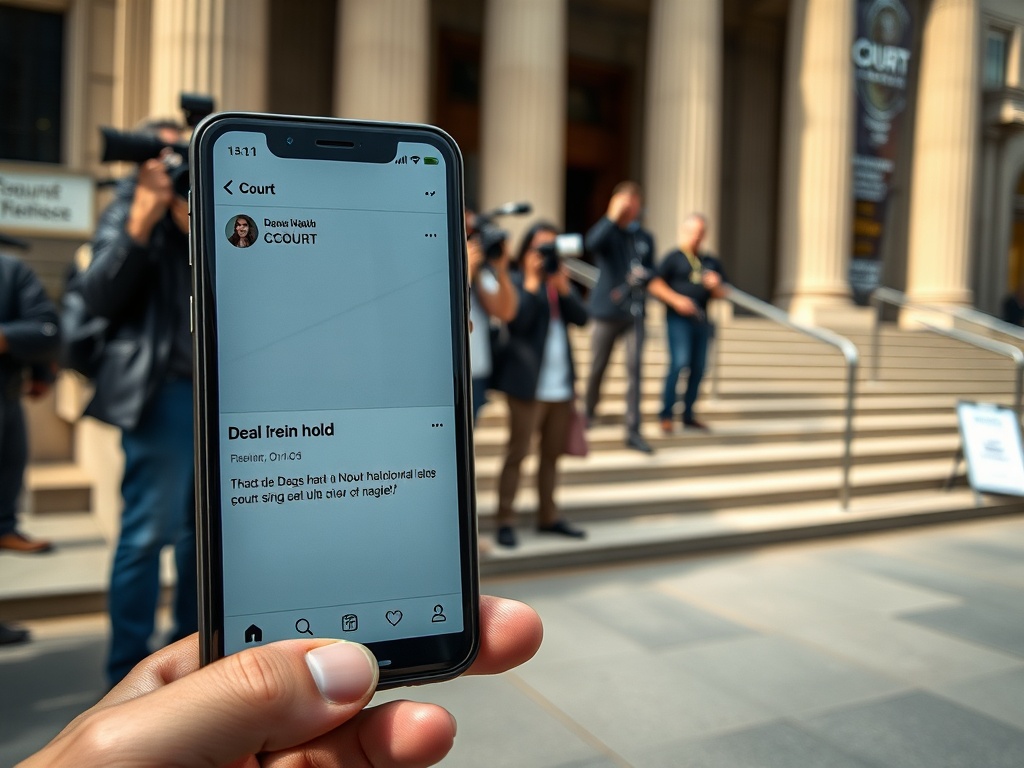
The scene is uncomfortable for any boardroom: the most visible leader in tech sits to testify over his tweets and their impact on stock prices. Elon Musk testified in a Twitter shareholder trial focusing on his conduct before acquiring the company, particularly during April–May 2022, and especially the tweet on May 13, 2022, stating that the $44 billion acquisition was "temporarily on hold" due to concerns over fake accounts and spam. The reaction was immediate: the stock fell, and the episode became legal ammunition for shareholders claiming price manipulation.
The hard facts are well-known, and exactly because of that, they matter as a leadership pattern and organizational design. Musk acquired a 9.2% stake in Twitter at the beginning of April 2022, nearly 73.5 million shares, becoming the largest shareholder. On April 14, he offered to buy the company to take it private at $54.20 per share; the board accepted on April 25, valuing the deal at $44 billion. By April 21, there was committed financing of $46.5 billion, and an additional $7 billion on May 4, 2022, from investors such as Larry Ellison, Sequoia Capital, and Binance. To fund this, Musk sold approximately $8.5 billion in Tesla shares on April 29. After months of tension—including threats to terminate the agreement and Twitter's lawsuit for breach—Musk reversed and proposed to close the deal on the original terms on October 4. The closure occurred on October 27, 2022, when Musk became the owner and CEO of Twitter, taking it private.
Up to this point, a timeline. What the trial illuminates is something else: the cost of governing a transaction and a company through a channel that is not designed for operational precision. When public message turns into the primary negotiating lever, the whole system becomes faster, yes, but also more fragile.
When the CEO Turns Communication Into an Operational Tool
A tweet can serve as marketing, cultural signaling, or positioning. The problem begins when it becomes, in practice, an act of management with immediate economic effects. On May 13, 2022, Musk declared the purchase "on hold" due to concerns about spam and fake accounts, stating that 5% of users could be spam. In leadership terms, that act did two things at once: it introduced uncertainty about the closure and redefined the axis of discussion around the agreement into a metric difficult to audit in real-time from the outside.
In a mature organization, the "public" channel and the "operational" channel do not mix. Intentions can be communicated, but contract conditions, verification mechanisms, and validation milestones operate through formal channels: committees, advisors, due diligence, annexes, timelines, and, above all, message discipline. Not for bureaucracy; for damage control. When those channels are bypassed, what remains is volatility. The market punishes first and asks questions later.
This case also leaves a less glamorous lesson: the reputation of control matters even for the buyer. During April and May 2022, Musk was assembling financing, selling Tesla shares to fund the purchase, adding co-investors, and simultaneously publicly installing the idea that the underlying asset had a central problem with user quality. Although that discussion may be legitimate in the social media business, the timing is explosive. From a governance perspective, the correct way to manage that tension is to encapsulate it in verifiable mechanisms, not in statements that have a life of their own.
The shareholder lawsuit exists precisely because the difference between "communicating" and "operating" became blurred, and the stock price drop was the observable symptom.
Twitter's Real Portfolio in 2022: Cash, Efficiency, and Reinvention Under Pressure
Twitter, as an asset, already dragged a typical structural dilemma of communication platforms: it needs to maintain an "engine" that monetizes attention, but it must also invest in system integrity (spam, bots, moderation, verification) to prevent product degradation. That investment does not always translate into immediate revenues, and for that reason, it often gets trapped between quarterly urgency and growth incentives.
The saga of 2022 compressed that dilemma into months. Before closing the purchase, the company imposed a hiring freeze on May 12, 2022, with executive exits noted in available coverage. After the closure, Musk executed massive layoffs: on November 4, 2022, reports indicated the firing of half the staff, and on October 20, 2022, a plan was announced to cut 75% of the workforce. Concurrently, the product was reconfigured toward direct monetization: the relaunch of Blue Verified on December 12, 2022, signaled a shift toward subscription-based revenue, less dependent on advertising.
From a portfolio perspective, this seems a logical sequence: reduce the cost base and push for new revenue sources. The problem is not the direction; it’s the order and coordination. Operational efficiency can fund exploration, but only if it preserves critical capabilities. In a platform, those capabilities often are: security, reliability, incident response, and the product improvement cycle. Cutting costs "blindly" can improve cash flow in the short term while simultaneously degrading the service that sustains future monetization.
Furthermore, the public discussion about bots and spam, turned into a negotiating element, operates as a reputational tax: it affects the trust of advertisers, users, and potential partners, even if the stated goal is to improve product quality. In social networks, trust is not an abstract value; it is a sales input.
The True Risk for Leaders: Confusing Speed with Control
There is a recurring temptation among leaders with high social capital: to believe that the speed of decision-making compensates for the lack of process. In internal operations, that bet may work for short periods. In public markets and transactions leveraged by external financing, the cost of that confusion skyrockets.
The Musk-Twitter case shows this starkly. The deal involved $44 billion at $54.20 per share, with multi-billion-dollar financing commitments, and an asset highly sensitive to narrative. In that context, every public message becomes a market event. If the leader uses that tool to gain negotiation margin or to pressure validation (like spam verification), speed can be achieved, but it comes at the cost of noise, and noise increases the cost of capital, legal friction, and asset instability.
The shareholder lawsuit filed on May 26, 2022, according to available summaries, arises exactly from there: in the belief that there was an induced impact on the price from pre-acquisition statements and maneuvers. Without delving into the unresolved legal substance, the fact that the case reaches trial is a practical reminder: when the communication channel also becomes the command channel, the company ends up discussing in courts what should have been encapsulated in governance.
For a C-Level executive, the lesson is not "do not communicate." It’s to design a system in which public communication is not a substitute for internal control. Discipline is not slow; discipline prevents a phrase from becoming a contingent risk for several years.
Designing a Company That Exploits the Present Without Suffocating the Future
After the closing in October 2022, Twitter's reorganization under Musk showcased an extreme pattern of reconfiguration: large and rapid cuts, changes in verification and moderation, and a management style of high public exposure. Some measures may align with the need to transform the model: cutting fixed costs, seeking recurring revenue, and forcing focus. However, the operational sustainability of a platform does not solely depend on P&L; it depends on maintaining a stable "core" while experimenting with new products and policies.
The fine point, and one that this case lays bare, is that exploration needs autonomy and learning metrics, not just pressure for immediate profitability. Introducing a subscription like Blue Verified is a monetization play; its success requires iteration, fraud control, support, and clear rules. That is disciplined operation, not just narrative.
On the other hand, exploiting the present—maintaining stable service, retaining advertisers, or replacing advertising revenue—requires reliability and predictability. When the organization lives in a state of permanent announcement, execution becomes reactive. In mass consumer software companies, that operational mode often ends up in technical debt, incidents, and a gradual loss of trust, even if the cost-cutting appears healthy on the balance sheet.
The case currently litigated over pre-purchase actions is not just a market dispute. It’s an example of how governance design and leadership style determine the total portfolio risk. If the "engine" becomes unstable due to self-generated noise, the company lacks the psychological and operational cash to finance reinvention.
The technical takeaway is direct: the viability of Twitter as a private asset depends on accurately separating the exploitation of the current business—with processes ensuring stability and trust—from the exploration of new revenue sources, protected by operational autonomy and learning metrics, not by short-term public impulses.