
The Satellite That Thinks for Itself and What It Tells Its Sales Team
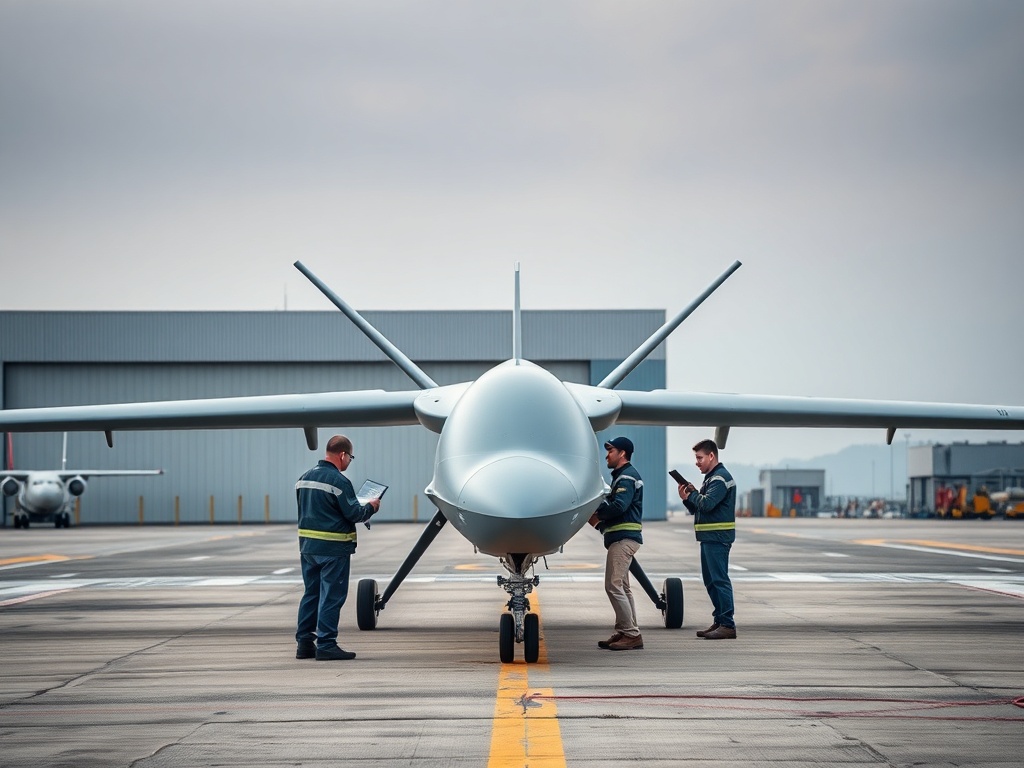
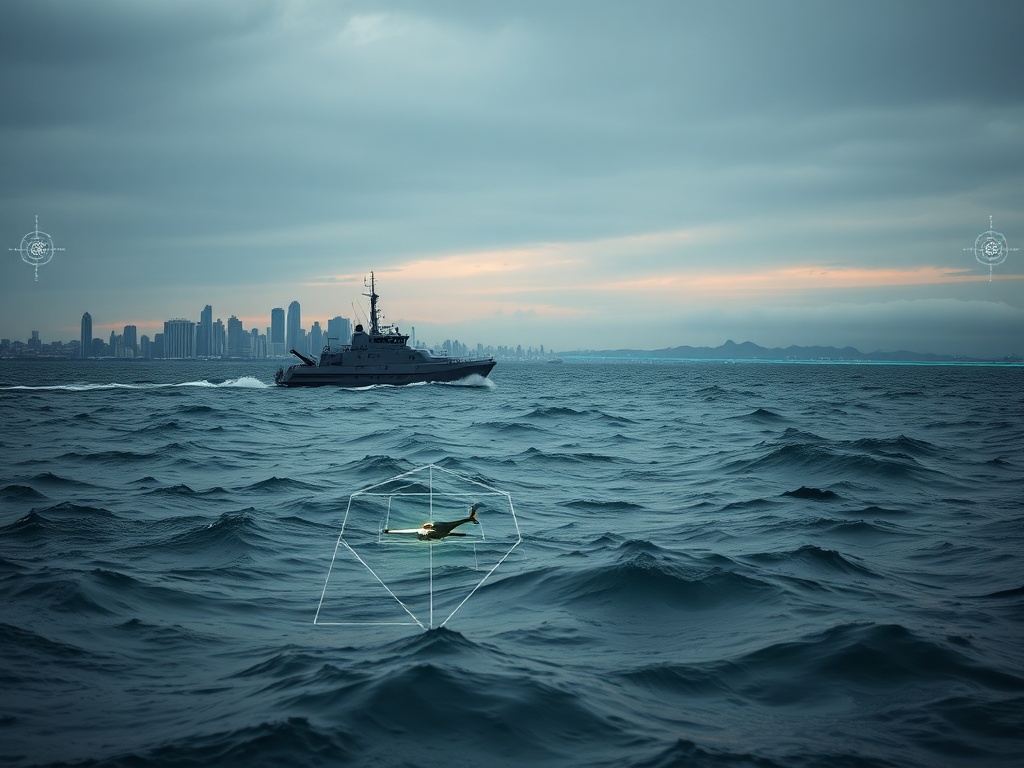
On March 25, 2026, Planet Labs' Pelican-4 satellite captured an image of Alice Springs Airport in Australia from an altitude of 500 kilometers, identifying airplanes within it and delivering the results in processed geospatial format—all without sending a single byte of raw image data to Earth. The entire process took place in orbit, using an NVIDIA Jetson Orin module, achieving an initial accuracy of 80% on unprocessed images.
Aerospace industry headlines celebrated this technical milestone. Meanwhile, I reflected on a different aspect: the architecture of fear that Planet Labs must dismantle for this to become a business, not just a brilliant demonstration.
From "Bent Pipe" to Orbital Brain: The Momentum Already Exists
For decades, Earth observation satellites operated like what the industry calls a bent pipe: sophisticated cameras that photograph and send images. Analysis was done on land, with delays that could exceed hours. For a natural disaster operator, that’s not latency; it’s paralysis. For a security analyst monitoring critical infrastructure, it’s a blind spot.
This accumulated pain is precisely the fuel that a new technology needs to gain traction. The frustration with the previous model was not marginal; it was structural. Planet Labs' clients in humanitarian response, defense, and infrastructure monitoring already knew they needed something different. They needed no convincing that a problem existed.
This is where the most underappreciated asset of this announcement resides. Kiruthika Devaraj, Vice President of Avionics and Space Technology at Planet, articulated it with clinical precision: the goal is to reduce the time between seeing a change on Earth and a client acting on it. That statement is not just marketing. It is the exact description of a push that is already operating in buyer psychology, and that Planet doesn’t have to create from scratch.
CEO Will Marshall was even more direct: going from hours to minutes can be the critical difference in disasters or security situations. That’s not an abstract value proposition. It acknowledges that the status quo already hurts enough for someone to be willing to change.
Where Technical Brilliance Creates Friction Instead of Sales
Yet, this is where most tech companies make the mistake that pains me to witness: they invest 90% of their communicational capital in making the product shine, and almost nothing in dispelling the customer’s fears.
An 80% accuracy rate on raw images is an technically honest result for a first demonstration. For a systems engineer, it’s promising. For a security operations executive who has to justify to their board why they are trusting critical decisions to a model that fails to detect one in five planes, it’s an alarm signal that can freeze adoption for months.
The problem isn’t the metric. The problem is that no high-risk customer makes change decisions when they see an 80% demonstration, no matter how exciting the rest of the narrative is. Anxiety toward the new is not calmed by more technical specifications. It is calmed by evidence that the cost of being wrong is contained.
AI models deployed in disaster response or security monitoring do not compete against older technology: they compete against the instinct of the decision-maker who knows that if something goes wrong, it’s their name appearing in the report. That’s the habit that’s hardest to displace: not the technological one, but the political one.
Planet knows this. The company has already announced it is refining the models to improve accuracy and comprehensiveness. But the timeline for that improvement and how it’s communicated to the market will determine whether the magnetism of this demonstration turns into contracts or an eternal conversation with the purchasing committee.
What Docker Containers in Orbit Reveal About the Business Model
There’s a technical detail in the announcement that most articles mention in passing but which I find the most relevant from a value-delivery standpoint: the outputs are generated in isolated Docker containers directly on the satellite, in GeoTIFF and GeoJSON formats.
That’s not an implementation detail. It’s an architectural decision with direct economic consequences. By transmitting processed results instead of raw images, Planet dramatically reduces the volume of data it needs to send down to Earth, leading to lower downlink costs and the ability to operate on narrower bandwidths. For a constellation growing in the number of satellites, this difference in marginal cost per image could be the variable that separates profitability from perpetual subsidy.
But there’s another angle I find more interesting: privacy as an untapped selling argument. When processing occurs in orbit and only the metadata from the analysis is sent down, the client operating in sensitive sectors has a guarantee that no terrestrial processing model can provide in the same way. The raw image never traveled over a terrestrial network. It never touched a server with a conflicting legal jurisdiction. It was never in a data pipeline susceptible to interception.
This argument, which is technically sound, is still not prominently featured in Planet’s public narrative. It’s the kind of benefit that doesn’t shine in a product presentation, but that eases the deepest fears of a buyer in defense or critical infrastructure. And paradoxically, it has the greatest chance of shortening a sales cycle that would otherwise extend indefinitely in legal and compliance reviews.
The Difference Is Made by the Customer You Don’t Have to Convince
Planet's Global Monitoring service, which this orbital intelligence capability is directly linked to, now has an argument that its more conventional competitors cannot easily replicate: the time between the event and measurable alert is in minutes, not hours. This is not an incremental improvement in the satellite imagery market. It’s a repositioning of the product as near-real-time decision-making infrastructure.
The Owl constellation, which Planet is developing, will take this logic further. If the current Pelican can already detect airplanes with 80% accuracy in an initial test, the model trajectory points toward capabilities that could operate with sufficient confidence thresholds in 18 to 24 months to automate alerts without prior human review in cases of low ambiguity.
When that happens, the customer that will adopt it most readily will not be the one who received the best sales presentation. It will be the one who already trusts the process because Planet invested time in accompanying them through the imperfect phase, managing their fears with transparency about current limitations, and not just projecting the bright horizon of what’s to come.
Leaders who read this type of announcement as engineering victories are looking at the tree. The forest is this: no technical advantage monetizes by itself. It monetizes when the team that has to make the purchasing decision is able to affirm internally that the risk of adopting is less than the cost of staying where they are. That calculation does not happen in an orbital laboratory 500 kilometers above. It happens in a boardroom where someone has to defend the decision with their name. The company that builds the bridge to that room, and not just the smartest satellite, is the one that turns demonstration into category.