
Robots That Triple Revenue: What Korean Hotels Understood First
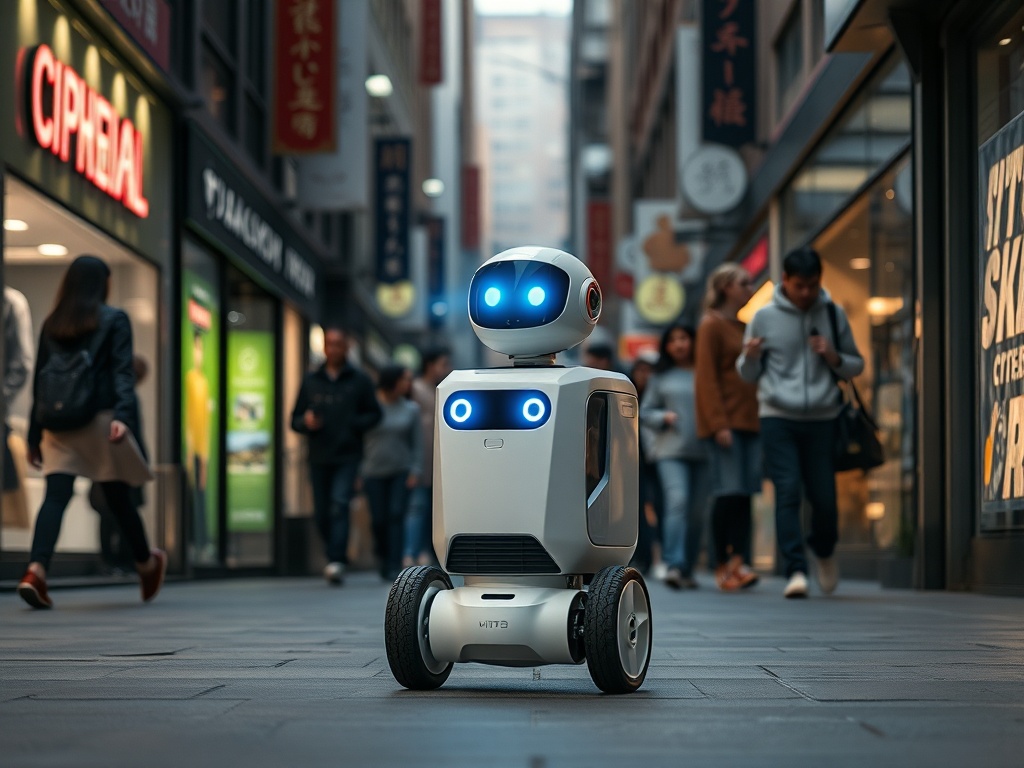
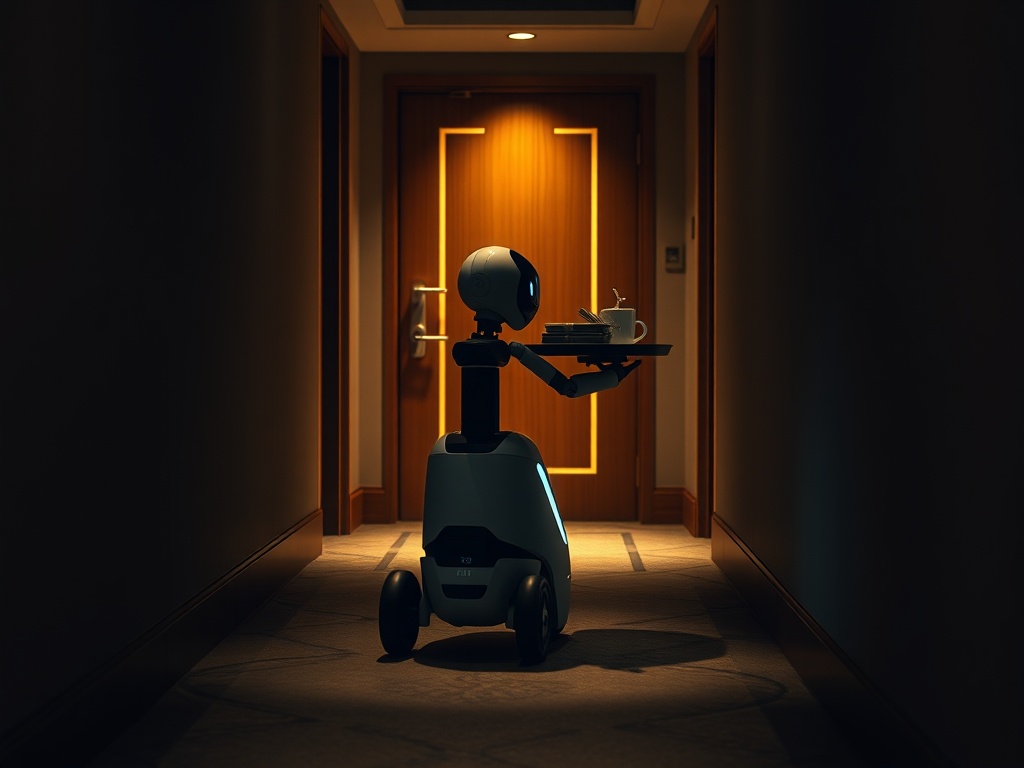
A robot delivering amenities to room 412 is not a business in itself. It’s simply hardware on wheels awaiting someone to address the right problem. Kakao Mobility and ROBOTIS took two years to learn this difference, and results published on March 16, 2026, confirm they finally got it right: daily robot usage increased eightfold, a 100% delivery success rate, and the most critical data point—increased room service revenue tripled in one of their partner hotels.
That last point isn’t just an operational metric; it’s a signal of previously suppressed demand.
The Problem Nobody Named Correctly
For years, the prevailing narrative around robots in hospitality centered on labor efficiency: fewer staff, lower costs, same service. This is a reasonable logic in a sector with compressed margins and labor shortages, particularly in South Korea post-pandemic. The mistake lies in placing the robot in the wrong context: it’s viewed as a substitute for an employee instead of a demand activator.
What the data from Kakao Mobility reveals is something different. The integrated system not only delivered orders more reliably but also incorporated a QR code ordering system that changed the friction of accessing service. Previously, ordering room service involved calling on the phone, waiting on hold, describing the order, confirming the floor, and waiting for final confirmation—a process with enough steps that many guests simply gave up. The QR code collapsed that chain into just seconds. The robot made delivery predictable. Together, they reduced the decision-making cost for the guest to the point where ordering felt less like a chore.
Tripling room service revenue doesn’t mean that robots work three times faster. It means that three times as many guests decided to place an order. That’s the invisible mechanics that headlines about automation usually overlook.
Why the Platform Model Matters More Than the Robot
Kakao Mobility doesn’t manufacture robots. Strategically, that is its most valuable position. The company operates as a platform integrator: it connects robots from different manufacturers—ROBOTIS, LG Electronics, Bear Robotics—with hotel infrastructure, staff workflows, and guest ordering systems. Its advantage lies not in hardware but in orchestration software: a supply and demand management algorithm derived from its original urban mobility business, adapted to predict how many robots a specific floor needs at 10 PM on a Tuesday.
This predictive ability is what accounts for the surge in utilization. During the initial deployment, robots were likely poorly distributed: too many in low-demand areas, not enough during peak times. A stationary robot isn’t efficiency; it’s immobilized capital. Kakao’s dispatch algorithm solved this dynamic allocation issue, elevating average daily utilization to levels eight times higher than the initial baseline.
This architecture has a direct financial implication for hotels: it transforms what would have been a fixed hardware cost into a variable service with measurable metrics. Hotels like Shilla Stay Seocho or Banyan Tree Club & Spa Seoul don’t purchase robots; they access optimized delivery capacity and can measure their return in generated revenue, not just in hours of labor freed. This entirely changes the conversation with the hotel’s CFO when it comes time to approve spending.
What Staff Gained (and What It’s Worth)
There’s a dimension of this model that efficiency metrics don’t capture well: the reconfiguration of human work. When robots take on repetitive deliveries—bringing an extra towel, delivering breakfast, placing a minibar order—floor staff regain time for interactions that no algorithm can manage: the guest needing a restaurant recommendation, the family facing a reservation issue, the frequent customer who expects to be recognized by name.
This isn’t corporate philanthropy; it’s a profit bet: luxury hotels compete on the quality of their human interactions, and every minute that an employee spends handling logistics is a minute not spent enhancing the experience for which the guest paid a premium. While Kakao describes it as freeing staff for higher-value tasks, what it’s really doing is protecting the most difficult intangible asset to replicate in hospitality: personalized attention.
Banyan Tree and Shilla Stay are not mid-range hotels; they are properties where guest expectations soar. When a robot arrives on time with their order, it confirms that the hotel has its operations under control. When a human follows up to ensure satisfaction, that transaction becomes a memorable experience. This combination isn’t accidental; it’s the service design that Kakao is selling along with the software.
The Next Step Is No Longer the Hotel Room
Kakao Mobility has explicitly declared its upcoming territories: hospitals, residential buildings, offices, and logistics. The choice isn't random; they all share a structural characteristic with hotels: they are spaces where internal delivery demand is frequent, predictable in patterns, and disproportionately costly to manage with dedicated staff.
The difference between deploying robots in a boutique hotel versus an 800-bed hospital or a residential complex with 2,000 apartments is one of scale, not model. The orchestration platform that Kakao tested in Seoul already contains the necessary components for this expansion: heterogeneous robot control (different manufacturers, various capabilities), integration with building infrastructure like elevators—there’s an agreement with Hyundai Elevator targeting exactly this—and dispatch algorithms that improve with each additional delivery.
The real risk of this model doesn’t reside in the technology or in the adoption by the end customer; it lies in dependence on hardware partners. If ROBOTIS or LG decide to build their own orchestration platforms—which any vertically ambitious manufacturer will consider—Kakao could face an erosion of its central position. The response to this risk is installation speed: every hotel, hospital, or office that adopts Kakao's standard becomes a network argument that makes it costlier for any competitor to offer a fragmented alternative.
The Work Guests Were Really Hiring
The success of this model demonstrates that what hotel guests were hiring for wasn’t delivery technology or operational efficiency; it was permission to order frictionlessly. Every order that wasn’t placed in previous years wasn’t due to a lack of desire but rather an excess of perceived effort. Kakao Mobility’s platform didn’t automate delivery; it removed the decision barrier. And when that barrier falls, the demand that always existed finally translates into revenue.