
New York Turns World Cup 2026 into an Advantage for New Jersey
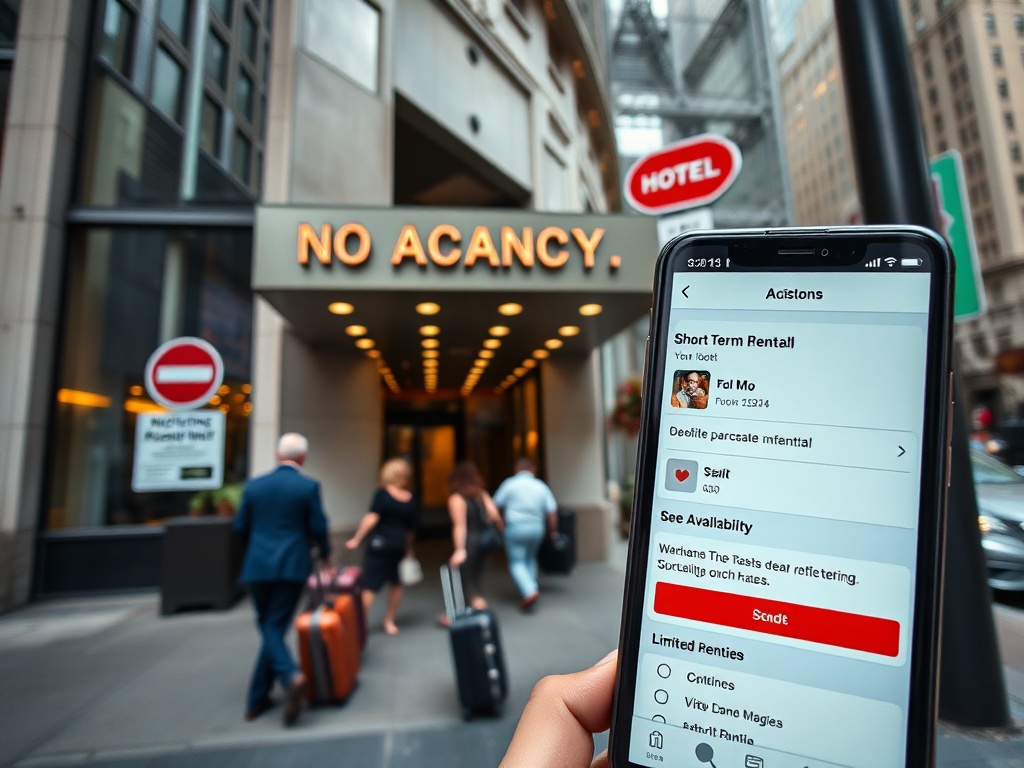
New York City is facing a textbook challenge ahead of the 2026 World Cup: extraordinary demand, limited capacity, and a regulator unwilling to change the rules. According to the New York Post, the city has decided not to lift or pause restrictions on Airbnb and short-term rentals for the tournament despite pressure from Manhattan business groups seeking temporary relief between June 1 and July 31, 2026.
This is no small event. The World Cup runs from June 11 to July 19, 2026, and the U.S. expects up to 10 million international visitors. In this context, Airbnb has announced a $750 incentive for new hosts who list entire homes in host cities, provided their first stay occurs between February 18 and July 31, 2026.
However, New York maintains the core of its regulatory framework: for reservations of less than 30 days, the registered host must be physically present during the stay. Operationally, this undermines the most common "entire home" model, which constitutes a significant portion of the platform's inventory.
The result is deliberate friction. In business, friction doesn’t magically destroy the willingness to pay; it typically changes where the payment is made, who receives it, and how much of the expenditure stays within the local economy.
Regulation as a Lever for Inventory and a Filter for Supply
The host presence rule for stays under 30 days is no technical detail. It is a filter separating two markets.
First, it eliminates the “professionalized” inventory of entire homes rented without hosts. Second, it leaves alive a much more limited model: the host who lives on the property and rents out a room or shares the space. This may work for a certain traveler profile, but it’s an imperfect substitute during a World Cup, where groups, families, and multi-day stays often prefer privacy, kitchen facilities, space, and straightforward logistics.
For hospitality SMEs, the issue is not ideological; it’s mechanical. If a flexible inventory source is blocked just as demand surges, the city bets on a “price rationing” model in hotels. This may favor some operators but also pushes visitors toward geographic substitutes.
Skift, mentioned in the coverage, notes that authorities “do not seem ready” to lift the ban even temporarily. Translated into strategy: New York is saying it would rather defend its housing framework than capture the full tourism opportunity of the event.
An immediate consequence for the market is that by limiting supply within the city, the price premium for what remains available increases, making the offerings in nearby jurisdictions with less friction more attractive.
Airbnb's $750 Incentive Doesn't Compete with the Real Problem
Airbnb is trying to tackle a very specific challenge: reducing supply-side friction with a direct payment to new hosts. The $750 incentive acts as a "startup bonus" to accelerate listings in the 16 host cities, under clear eligibility conditions.
The problem is that in New York, the main friction is not the cost of starting but the practical impossibility of listing an entire home without the host being present. In execution terms, the incentive pushes where doors are open. Where the door is closed by design, the money doesn’t open it.
This reveals a strategic tension: Airbnb can spend to grow in permissive markets but cannot purchase regulatory legitimacy in a hostile market simply with incentives. The company has already "burned millions" in previous attempts to re-enter, as characterized in the article. This background matters because it suggests that the learning isn’t tactical but structural: when the legal framework blocks your main product, your growth becomes an exercise in substitutions.
For SMEs and entrepreneurs, there’s an uncomfortable lesson here. A “marketing budget” doesn’t compensate for a model with high regulatory friction. You can improve messaging, subsidize onboarding, or even pay the supplier. If the service you sell is incompatible with the norm, your acquisition equation breaks.
Meanwhile, demand for the World Cup continues. What changes is who captures the money.
The Border Effect and the Redistribution of Tourist Spending
When a market does not absorb demand due to supply restrictions, the flow doesn’t disappear. It shifts. In this case, towards New Jersey.
Coverage indicates that New Jersey is “dominating” in accommodation availability for the World Cup. While there are no detailed numbers in the provided sources, the pattern is recognizable to any operator: visitors maximize utility. If accommodations in the city are too costly or directly scarce, they accept longer travel times in exchange for price, availability, and less uncertainty.
And that’s the word that matters most for high-value tourist spending: uncertainty. In massive events, consumers pay for certainty. Certainty of having a bed, access, smooth check-in, reasonable cancellations, viable transport. If New York tightens the supply funnel, not only do prices rise: the perceived risk of not getting anything “decent” on time also increases.
For SMEs, the “border effect” represents a complete reshaping of the capture map:
- Restaurants, shops, and services in New Jersey receive some of the spending that would normally remain in New York.
- Transportation and interurban logistics operators gain volume from increased transfers.
- Hotels in New York capture higher rates but do not necessarily capture more nights if part of the audience decides to stay outside the city.
The city, as a marketplace, is choosing a model where the marginal income from the event is concentrated more in hotels and less in the rest of the urban economy that usually benefits when visitors “live” in the neighborhoods.
What SMEs Should Do to Capture Margin Without Relying on Airbnb
In this situation, there are two types of SMEs: those within New York and those operating within the natural displacement radius of visitors.
For SMEs within NYC, the logical move is to stop thinking that accommodation is the only bottleneck. If accommodation becomes expensive and scarce, visitors arriving in the city become more sensitive to time and logistics. This opens space for offerings with high operational certainty:
- Guaranteed reservations with prepaid options in restaurants and experiences.
- Packages with fixed schedules, tickets, and clear change policies.
- “Zero friction” services for groups: transportation, luggage storage, language assistance, executable itineraries.
It’s not about “marketing the World Cup.” It’s about selling certainty where the market will be eager for it.
For SMEs in New Jersey and nearby areas, the opportunity is more direct: accommodate the displaced flow and build a product that minimizes transportation sacrifice. This means connectivity, simple check-in, transport information, and agreements with local suppliers. Visitors tolerate distance when the effort is reduced.
Here, the example of Vancouver provides a useful contrast, even though it’s another country: Deloitte estimates that hosts could earn about $4,200 during the World Cup period, with listing prices at four or five times their usual rates but with regulatory costs of around $1,300 for licenses and registration. This math reveals two things: (1) the event premium can be brutal, (2) the regulator also captures part of the value through costs and requirements.
In New York, the cost isn’t a high licensing fee in the information provided; it’s an operation condition that redraws the permissible product.
A Market That Rewards Certainty, Not Discourse
Manhattan business groups requested a temporary pause of the rules, arguing a potential hotel capacity deficit. The city refused. From there, public conversation fills with narrative, but the market arranges itself by incentives.
- New York is prioritizing housing policy and controlling rental externalities for short-term stays.
- Airbnb is prioritizing capturing inventory wherever it can, with a $750 incentive to accelerate supply.
- Travelers prioritize availability and predictability, even if it means crossing into New Jersey.
This setup leaves a tough message for any SME relying on platforms: when the canal is blocked, your product is exposed. The way to protect oneself isn’t to pray for a last-minute regulatory change but to design an offer that can be sold through alternative channels and has fewer points of failure.
If there’s one thing this episode reveals, it’s that major events don’t always “flexibilize” cities; sometimes, they merely shine an unbearable light on existing restrictions.
The Profitable Move is to Reduce Friction Where the Regulator Doesn’t Yield
New York isn’t negotiating the principle: host presence for short stays. Airbnb is pushing growth in other markets with money and urgency. And New Jersey appears as the natural beneficiary of this imbalance.
For SME leaders, the useful lesson doesn’t lie in political debate but in commercial architecture: when demand surges, those who deliver the expected results with the greatest certainty and the least effort for the customer win. High pricing comes as a consequence when the product reduces operational friction and lowers the perceived risk of purchase. Designing irresistible proposals remains an engineering discipline: raising willingness to pay while maximizing outcome and certainty, all while minimizing wait times and effort.