
A Quiet, Structural Shift
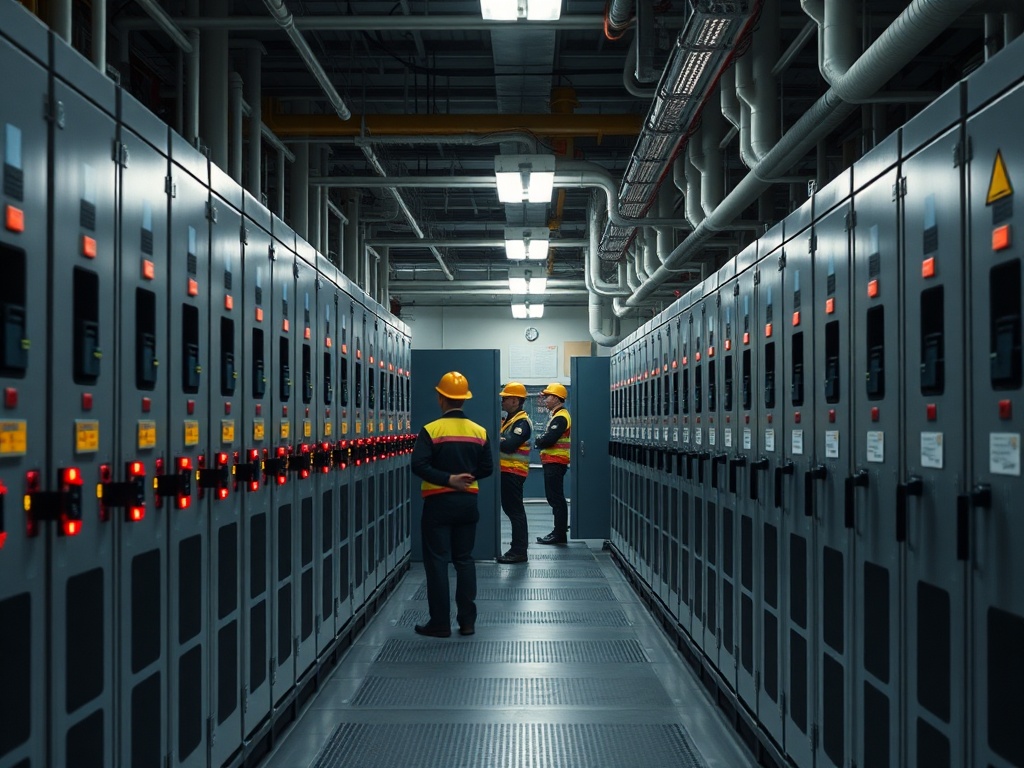
For over a decade, the growth of data centers in Europe was framed as a story of land, fiber optics, and permits. Starting in 2024, that narrative shifted: electricity is the bottleneck. And when electricity governs the landscape, so does industrial policy.In North Dublin, AVK and Pure Data Centers have launched what is touted as the first European data center connected to a microgrid, a 110 MW campus that operates with distributed generation to circumvent the limitations of public grid connections amid the AI computing boom. Journalist April Roach described it from the medium-voltage switching room, the space where "energy is received, controlled, and redistributed" to servers and cooling systems. This statement, read coldly, confirms an essential point: the new data center is not just about computing; it’s private electrical infrastructure housing computing inside.
As a longevity architect and macroeconomic futurist, I view this news through one singular lens: zero marginal cost. Not out of a romantic view of technology, but for mathematical clarity: the marginal cost of computing is falling, but the marginal cost of energy and connection capacity is not decreasing at the same rate. This asymmetry is reshaping the power map.
Ireland as a Laboratory in Tension Between AI and Electrical Capacity
Ireland has become a discomforting mirror for Europe. In 2024, data centers consumed 6,969 GWh, equivalent to 22% of the country’s measured electricity, up from 5% in 2015. This leap is not a picturesque statistic; it's direct pressure on transmission networks, substations, planning, and the social legitimacy of energy use.This pressure has already produced a tough response. In Dublin, the network operator froze new connections starting in 2021, stalling larger hyperscaler projects. The economic consequence is evident: if the wait for connections extends to 3 to 5 years, the data center ceases to be a real estate asset with servers and transforms into a financial asset with regulatory and execution risks. When AI demand calls for shorter deployment cycles, that wait becomes an opportunity cost.
The microgrid thus appears as a pragmatic play. CNBC reports that an AI training cluster may require 10 to 20 MW, comparable to a small city. This figure explains why the conversation no longer revolves around "more racks" but instead centers on "more megawatts". If each AI capacity jump equals electrifying a new neighborhood, the scale becomes less a decision driven by IT and more a matter of applied energy policy.
Here Ireland also offers another clue: in December 2025, the regulator imposed conditions on new data centers, requiring on-site or nearby generation or storage that matches the import demand, with an 80% annual demand supported by Irish renewable projects, granting a six-year adaptation period. In other words, the market is no longer just buying computing capacity; it’s purchasing the capacity to comply.
The Microgrid as a New Data Center Product
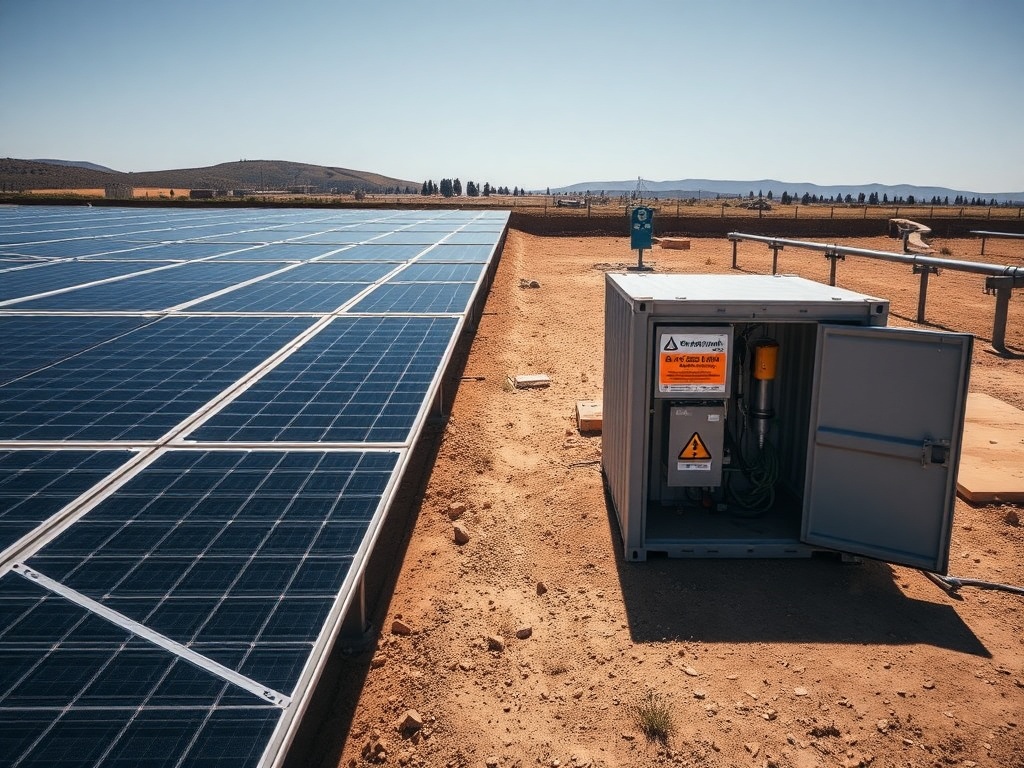
The campus of Pure Data Centers and AVK introduces an idea that Europe will undoubtedly replicate out of necessity: data centers should be designed as energy systems. According to coverage, the site utilizes a mix of on-site or nearby generation that can include renewables, natural gas, and batteries, with phased rollouts planned for energy centers (EC1, EC2) expected to be fully operational by late 2026.The strategic consequence is that “capacity” is no longer measured solely in IT MW but is now assessed in assured electrical MW. This reorders competitive advantages. An operator capable of deploying a distributed energy solution in 18 to 24 months, as opposed to the traditional 3 to 5 years necessary for network reinforcements, reaches the market sooner: it captures a monetization window where AI demand commands a premium, and the installed capital gets amortized with a greater degree of certainty.
Here, the zero marginal cost concept becomes a useful compass. The marginal cost of running inference and training tends to compress with more efficient hardware and better software, but that compression increases usage volume. More use means increased electrical demand. The paradoxical result is that while the marginal cost of computing decreases, the total energy expenditure may rise. In that environment, the differential asset is supply control.
Thus, the medium-voltage room showcased by CNBC is more than just a technical detail. It symbolizes vertical integration. Receiving, controlling, and redistributing energy is a function historically performed by the electrical system. When a data center operator takes on part of that role, the data center resembles less a building and more an industrial plant tied to contracts, fuels, batteries, permits, and stability regulations.
The Political Economy of the Megawatt and the Erosion of European Advantage
Europe has already begun losing relative weight in global data center capacity: its share has dropped from over 25% in 2015 to around 15% in 2024, while the European Commission aims to triple capacity within a five to seven-year horizon. Concurrently, data centers are projected to account for about 10% of the EU’s electricity demand growth by 2030. These numbers, reported in the context of this news, fit a diagnosis: the continent wants more computing, but its electrical infrastructure progresses at a different pace.When this occurs, the geography of investment shifts. Projects no longer compete solely for proximity to human capital or digital hubs but rather for access to reliable energy and viable permits. And when the bottleneck is energy, those in control can:
There’s no need to dress it up in jargon. It's a new type of entry barrier. If previously the differential lay in building engineering and connectivity, now the advantage lies in energy architecture and relationships with regulators.
This point also redefines the game between hyperscalers and colocation providers. Hyperscalers have financial muscle but are subject to timelines and reputational exposure when they clash with public limits. Specialized operators can gain ground by offering "ready computing" because they addressed the electrical part upfront. In this sense, the microgrid is neither an environmental gesture nor a technical whim: it’s a commercial product that turns time into money.
There’s also a systemic cost: if Europe migrates towards private solutions to navigate congestion, it risks creating fragmented infrastructure and investment decisions that optimize individual projects at the expense of the system's resilience. This tension is resolved not by rhetoric; it’s resolved with clear interoperability rules, price signals, and network planning that makes public connection competitive again.
The New Social Contract for Sustainable Data Centers
Sustainability in data centers is hardening. It’s not merely about internal energy efficiency anymore; it’s about compatibility with the electrical system and decarbonization mandates. Ireland has set explicit conditions starting in 2025, and the European Union keeps its goal of climate-neutral data centers by 2030, focusing on efficiency and, in some discussions, heat reuse. The microgrid appears as a response to a restriction, but it opens up scrutiny: how do we account for the mix of renewables, gas, and batteries, and how do we uphold the promise of computing growth without transferring environmental costs to the broader public?With the data at hand, there are honest limits: exact percentages of renewables or project investment details in the cited sources are not clear. Nevertheless, the direction is verifiable. If the regulator requires the data center to "stand" with nearby generation or storage, the operator becomes the manager of an energy portfolio. There, sustainability becomes an operational audit, not just a narrative.
In economic terms, the microgrid reduces the risk of missing operational deadlines and lowers exposure to delays in grid connectivity. In exchange, complexity rises: purchasing energy, maintenance, redundancy, and an evolving compliance framework. The decision to build microgrids is not without costs, but in a market where waiting costs years, the calculation is cold.
What’s happening in Dublin is a preview of a new normal: the sustainable data center will be the one that can simultaneously demonstrate three things with documentation and performance: available energy, regulatory-compliant energy, and competitive deployment time. The rest will fall by the wayside due to delays, capital costs, or political limits.
A Mandate for the Next Decade of European Computing
The first microgrid connected to a data center in Europe is not an isolated engineering milestone; it’s a signal that digital infrastructure is entering its energy phase. Computing for AI will continue to expand as its marginal cost falls and its economic utility multiplies, but that expansion will repeatedly come up against the megawatt as a unit of power.Leaders who design data centers as if they are merely buildings will lose time, capital, and competitive capability. Leaders who conceptualize data centers as energy assets with computing inside, aligned with network rules and verifiable renewable commitments, will dominate the next decade of digital infrastructure in Europe with an advantage that now relies not on promises but on electrons delivered on time.