
Conservation That Scales: Why the Canadian Fund of 25 Years is a Governance Bet, Not Philanthropy
On March 6, 2026, the Government of Canada announced up to $5.2 million for 31 projects in the 2025–2026 cycle of the Habitat Stewardship Program (HSP) for Species at Risk, coinciding with the 25th anniversary of the fund, which has been active since 2000. The HSP is not an isolated announcement: since its inception, it has invested over $241 million in more than 3,800 conservation projects across the country. This track record matters because it turns conservation into something that organizations can plan, operate, and measure, rather than experiencing it as an episodic campaign.
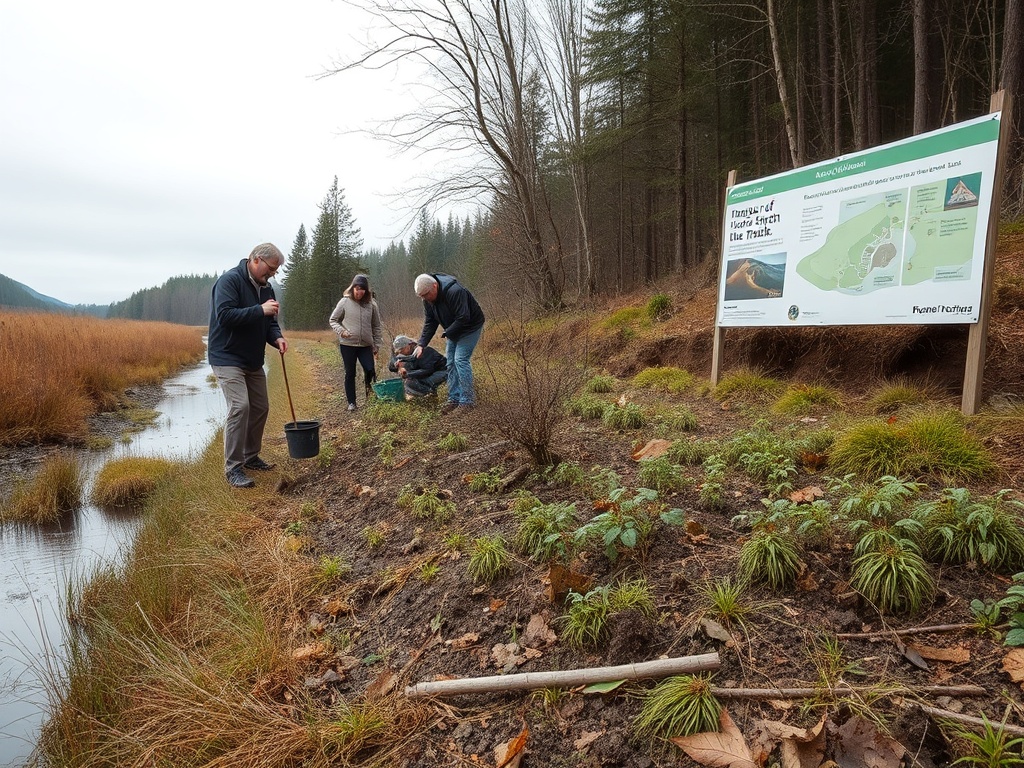
Concrete examples from this new round illustrate the operational logic. In British Columbia, the Rivershed Society of BC will receive $404,884 for a five-year stream restoration program at Bell Slough, Chilliwack, in partnership with Cheam First Nation and Sqwá First Nation. In Quebec, the Conseil régional de l'environnement du Centre-du-Québec obtained $59,000 over two years to protect five at-risk species, including the bobolink, Eastern meadowlark, and chimney swift, combining inventories, education, habitat improvement, and threat mitigation. In Outaouais, the Université du Québec en Outaouais received $143,039 over five years to support the recovery of the Blanding's turtle, with nest monitoring in June. In Saskatchewan, the Native Plant Society of Saskatchewan secured $332,350 over five years to develop site-specific management plans for sand dunes and native prairies, collaborating with landowners and First Nations.
As a Diversity, Equity, and Social Capital Analyst, my reading is pragmatic: the HSP is a case study of how the state purchases distributed execution capacity. Serious sustainability resembles less a speech and more a network architecture that reduces regulatory risks, lowers future costs, and accelerates social permissions for operation.
A Long-Standing Program as Infrastructure: What is Really Financed?
The headline speaks of a new investment. The real asset is institutional continuity: 25 years of iteration, learning, and standards. In complex markets, repetition matters more than heroism. The HSP has supported thousands of interventions, and that volume generates something valuable for any executive: operational predictability. When a program stays alive for a quarter of a century, it is not buying "good intentions"; it is financing a conservation supply chain with actors, processes, and accountability.
The design also reveals discipline: Environment and Climate Change Canada (ECCC) manages terrestrial projects, while Fisheries and Oceans Canada oversees aquatic ones. That separation is not cosmetic; it is a governance decision that prevents a single bureaucracy from attempting to be an expert in everything. Furthermore, the program aligns with listed species under the Species at Risk Act (SARA) and assessments from the Committee on the Status of Endangered Wildlife in Canada (COSEWIC), anchoring projects to recovery goals and verifiable threats.
The scale of annual funding ($5.2 million) may seem modest against national budgets. But in territorial execution, money is only part of the equation. What matters is leverage: the HSP works because it purchases local labor and coordination with landowners, communities, and institutions already “on the periphery” where habitat loss, invasive species, and land-use conflicts occur. That pre-existing social capital, well-orchestrated, produces results that a central agency cannot manufacture through mere memoranda.
The official narrative emphasizes that projects include riparian restoration, invasive species removal, buffer creation, education, and threat mitigation. This portfolio is relevant to business because it combines actions that reduce upstream risks. A restored riparian corridor, for example, can translate to less erosion, less sedimentation, and less friction in the coexistence of production and conservation, especially when Indigenous actors and private landowners are involved from the design phase.
The Uncomfortable Lesson for Companies: Biodiversity is Operational Risk and Social License
For C-Level executives, the HSP reads as a map of incentives. Canada is reinforcing its compliance with SARA and its commitments to halt and reverse nature loss by 2030, with a goal of full recovery by 2050, including the objective to conserve 30% of land and waters by 2030. When a country makes this direction explicit, soil and water-intensive industries (agriculture, forestry, real estate, infrastructure) receive a signal: biodiversity ceases to be a reputational issue and becomes a component of business continuity.
The mechanism of “on-the-ground projects” has concrete financial implications even though the news does not publish returns. First, it reduces regulatory uncertainty by aligning interventions with recognized recovery objectives. Second, it lowers the cost of social conflict. Conservation implemented with local alliances creates visible evidence of responsible management, and that evidence transforms into operational credentials when inspections, consultations, or land-use disputes arise.
The available quote states this precisely without falling into romanticism. Andréanne Blais, director general of the Conseil régional de l'environnement du Centre-du-Québec, credits the HSP with the opportunity to work “directly on the ground, alongside landowners and local partners,” asserting that collaboration-based conservation founded on science and trust produces “sustainable outcomes” that benefit communities and biodiversity. In business language, that describes friction reduction: less distance between public policy and execution, and a higher likelihood of compliance because the actors controlling day-to-day land-use decisions participate in the process.
There is also a portfolio reading. The four highlighted examples cover riparian areas, prairies, grassland birds, and a recovering turtle, with horizons of two to five years. This diversity reduces reliance on a single intervention and increases resilience against climate shocks or implementation failures. Companies that claim to manage climate risks but ignore biodiversity and social permitting risks are only managing half the board.
Social Capital as a Competitive Advantage: The HSP Purchases Networks, Not Just Hectares
The most sophisticated part of the HSP lies not in the check but in the architecture of partnerships. The case of the Rivershed Society of BC incorporates partnerships with Cheam First Nation and Sqwá First Nation, mentioning the integration of traditional ecological knowledge in projects like wetland creation and buffer zones. From my perspective, this is a design decision that mitigates typical failures: technically correct projects but socially unviable.
When intelligence is distributed, homogeneity becomes a risk. A uniform executive team tends to underestimate local variables: production cycles, micro-conflicts over boundaries, actual monitoring capacity, or how a specific threat (invasive species, riparian degradation, disturbance during nesting periods) manifests on the ground. In contrast, the HSP operates as a horizontal network: it funds those with proximity, legitimacy, and a routine of execution.
For companies, this is the difference between merely "doing ESG" and building capability. The HSP projects require collaboration with landowners, universities, organizations, and First Nations. This mix creates positive redundancy: if one piece fails, the system doesn’t collapse. In terms of social capital, it’s a portfolio of relationships where trust is an accumulative and transferable asset.
There is also a measuring and controlling element. The briefing mentions that ECCC uses grant management systems and requires reports on outcomes such as habitat improvements and threat reductions. This discipline is what many corporate strategies fail to achieve: converting intention into traceability. For a CFO, that traceability makes the difference between discretionary spending and verifiable mitigation.
The evident risk is the continuity of funding, as recipients depend on annual cycles. The strategic response is not to complain about volatility; it is to design hybrid models where on-the-ground work has co-funding, long-term partnerships, and plans that survive cutbacks. The HSP demonstrates that the state can act as an anchor, but stability is built by diversifying sources and strengthening the local network.
Operational Mandate for C-Level: Invest in Real Diversity Where Risk is Executed
The announcement of up to $5.2 million for 31 projects is primarily a piece of governance: Canada is financing distributed execution to sustain national commitments and fulfill frameworks like SARA. What appears to be environmental policy is in reality a country risk reduction strategy and stability in land use.
Companies wanting to operate with fewer interruptions must internalize this logic: biodiversity is not managed from presentations, but from local networks with technical capacity and legitimacy. This demands diversity of profiles, origins, and real authority in decision-making, as blind spots arise from homogeneity.
In the next board meeting, the small C-Level table must look at itself with professional starkness and recognize that if everyone is too similar, they inevitably share the same blind spots, and that fragility makes them imminent victims of disruption.