
The Price of Absolute Control is Always Paid by the One Exercising It
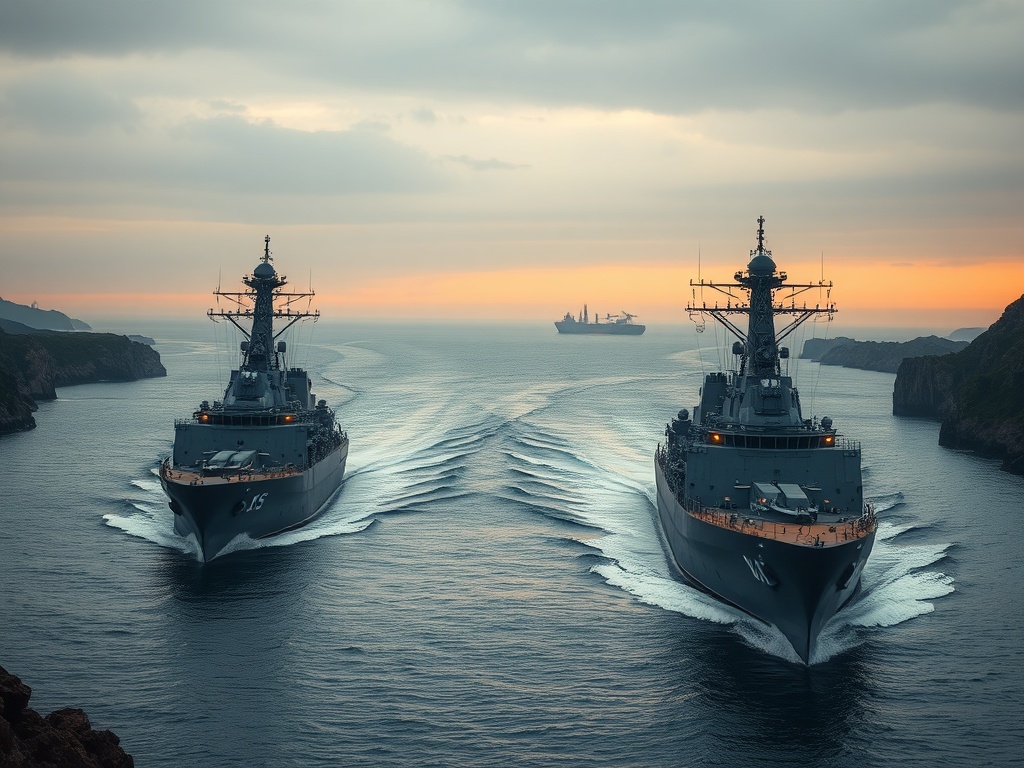
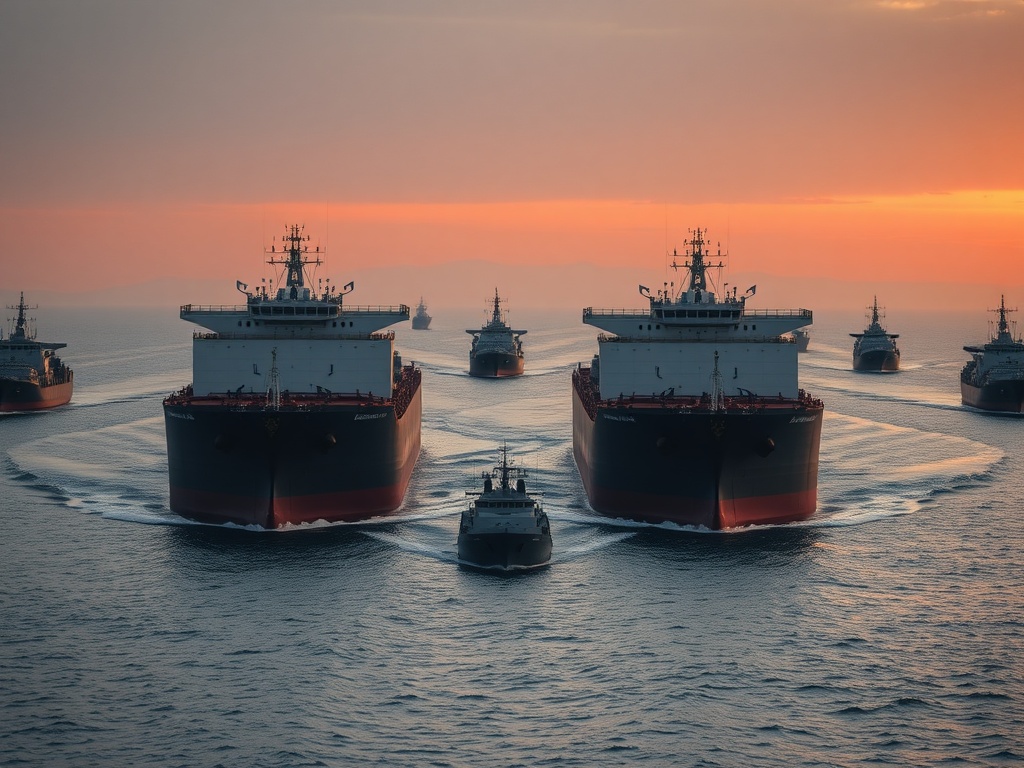
On April 13, 2026, at 10 AM EST, the USS Abraham Lincoln and eleven destroyers positioned themselves in the Gulf of Oman. President Donald Trump announced the move the day before on social media with language that mixed military threats with trade sanction logic: no ship would enter or leave Iranian ports without consequences. The Strait of Hormuz, through which a substantial fraction of the oil driving the global economy passes, became direct battleground.
The official narrative from Washington is simple: cut Iran's oil revenues to force a nuclear agreement. But this view overlooks a distributive mechanism that no press release from the U.S. Central Command mentions: when an actor takes control of a critical node in a global value chain, they do not only pressure the adversary; they redistribute the cost to all actors who depend on that node, including allies, neutral importers, and the very economy that originated the pressure.
Negotiations in Islamabad, led by Vice President JD Vance with Pakistani mediation, collapsed after more than twenty hours of talks. Washington's conditions included the complete dismantling of Iran's nuclear program, the cessation of funding to groups like Hamas, Hezbollah, and the Houthis, and unrestricted access to the Strait without tolls. Iran rejected the entire package. Forty-eight hours later, the U.S. Navy was already in position.
The Strait is Not a Lever, It is a Knot
The distinction matters. A lever is used to move something in one direction. A knot, if tightened, immobilizes everything passing through it, discriminating neither between allies nor adversaries. The Strait of Hormuz is, in terms of value chain architecture, a knot.
The flows passing through this passage are not exclusively Iranian. They include Kuwaiti, Emirati, Qatari, and Saudi shipments. They are cargoes destined for ports in South and East Asia, European refineries, markets that are not involved in the bilateral conflict between Washington and Tehran. When Central Command specified that the blockade would apply to vessels destined for Iranian ports, not those transiting toward other destinations, it attempted to construct an operational distinction that is extraordinarily difficult to maintain in maritime practice without disrupting the general flow.
Iran responded with the only threat that carries geographical weight: if its traffic is impeded, no port in the Gulf will be safe. Moreover, it pointed to the Bab el-Mandeb Strait as a possible secondary front. This is not empty rhetoric. It describes how an actor that loses access to a node can degrade the value of all adjacent nodes. The cost of that degradation is not borne solely by Iran; it is absorbed by the global energy market, which was already operating under tension since the attacks on February 28.
British Prime Minister Keir Starmer was explicit: the United Kingdom will not participate in the blockade and will send mine-sweeping vessels and drone defense systems to ensure access to the Strait without conditions or tolls. London's position is not humanitarian. It is a reading of incentives: any structural restriction on Hormuz damages London's financial district as much as it does Shanghai or Bombay.
The Trap of Confusing Pressure with Value
What Washington executed in Hormuz follows the logic that reducing the adversary's income equates to winning. That equation is incomplete because it ignores the difference between destroying value and capturing it.
When a company stops paying a supplier to improve its margin, it does not create new value; it merely redistributes it temporarily until the supplier goes bankrupt, abandons the agreement, or finds another buyer. Pressure on the supply chain has the same structural flaw as business models that strangle their weaker partners: they function in the short term until the system reorganizes without them.
In this case, Iran has several vectors for reorganization available. The first is collateral damage to third parties who have no interest in the conflict but have the diplomatic and commercial capacity to pressure Washington. China and India, two of the largest importers of Gulf crude, have direct exposure to any sustained disruption in Hormuz. Their response will not be military, but it will also not be passive: every month of energy disruption is an additional month of incentive to diversify their routes, suppliers, and payment denominations, moves that have long-term structural consequences on the dollar's financial architecture in energy trade.
The second vector is price. Oil futures markets do not wait for certainty to move; they move with probability. A sustained blockade on the passage through which a determining portion of global crude flows generates a risk premium that does not discriminate between Iranian and Saudi barrels. That premium is paid by the importer, not the blocked exporter. The European consumer, the Asian industrialist, and the American logistics chain absorb part of the cost of a measure designed to exclusively punish Tehran.
The distributive irony is precise: the more effective the blockade is in damaging Iran, the more damage it inflicts on the actors whose support Washington needs for the pressure to be sustainable.
When the Ceasefire Expires, Costs Become Permanent
The current ceasefire expires around April 22, 2026. Pakistan insists on a second round of negotiations before that date. Trump indicated that other countries might join the blockade. The diplomatic arithmetic in the days leading up to the ceasefire's expiration determines whether the crisis is contained or whether the disruption in Hormuz ceases to be tactical and becomes the new baseline state of the global energy market.
The problem with baseline states is that they reorganize the infrastructure around them. Maritime insurance companies were already readjusting premiums since the Houthi attacks in the Red Sea. A second critical node under active threat does not add linearly to risk; it multiplies it. Alternative routes, additional insurance, logistical delays, and price volatility are not discrete events. They are costs internalized in long-term contracts, infrastructure investments, and industrial siting decisions that take years to reverse.
None of those costs appear in Central Command's communiqué. Nor do they appear in Trump's tweet. But they will appear, with precise accounting, on the balance sheets of companies and the fiscal budgets of countries that rely on the flow that Washington decided to interrupt to negotiate with Tehran.
The blockade of Hormuz gives the United States temporary control over the most sensitive node in global energy trade. What it does not give is the ability to isolate that control from the system that surrounds it. The actors absorbing the cost of that decision today have long institutional memories and reallocating options that do not require Pentagon authorization. The value that is destroyed in a shared knot does not disappear: it migrates to those who build the alternative route.