
Alibaba Bets $290 Million on the Future of AI Beyond Text
In early April 2026, Alibaba Cloud led a funding round of 2 billion yuan—approximately $290 million—into ShengShu Technology, a three-year-old Chinese startup known primarily for Vidu, its AI-based video generator. The notable aspect of this investment isn’t just the substantial figure; ShengShu had previously raised about $88 million just two months prior. What stands out is the intended use of the funds.
The declared purpose is not to enhance Vidu or scale its video business. Instead, it is to build a general world model, trained with multimodal data that includes vision, audio, and touch, with direct applications in physical robotics and autonomous driving. Operationally, ShengShu is attempting to enable AI to learn how to interact with the physical world, rather than merely process sequences of text.
This distinction is far more significant than it might appear in headlines.
Why Language Models Can’t Get There Alone
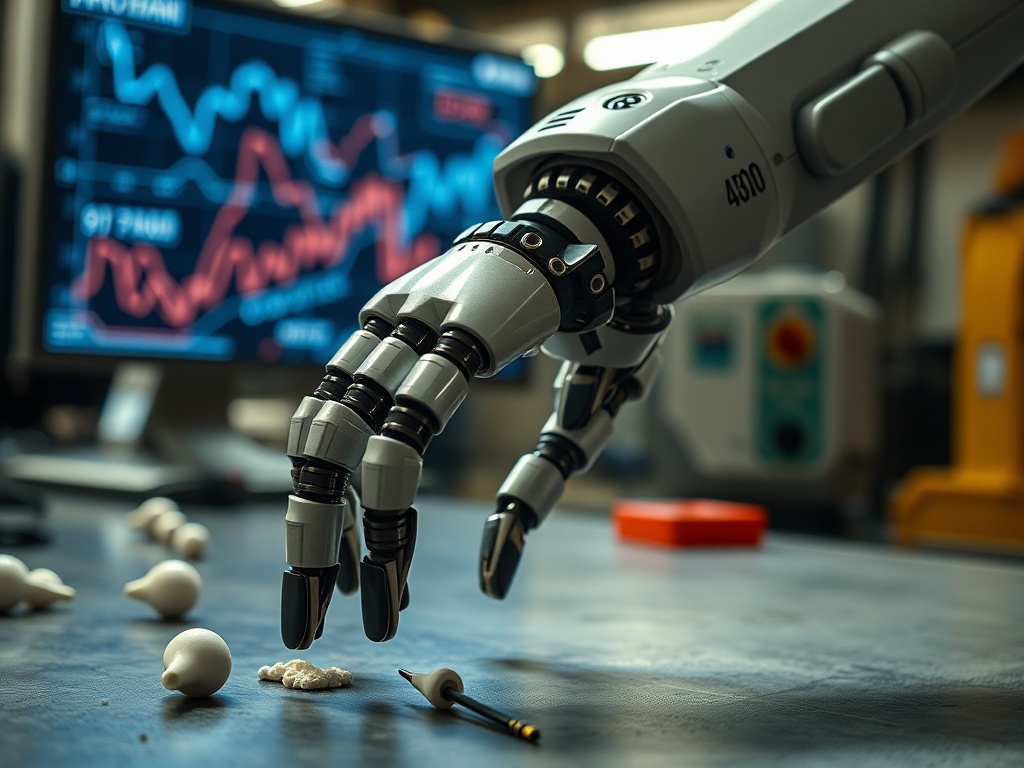
Large language models excel within their domain: symbolic reasoning, text generation, information synthesis. However, they suffer from a structural limitation that no additional parameter tuning can resolve: they cannot generalize to closed-loop physical environments. A robot that needs to calibrate the precise force required to hold a fragile object cannot rely on statistical probabilities regarding token sequences. It needs to have “seen” thousands of iterations of that object, under varying lighting, textures, and temperatures. In technical terms, it requires a world model.
This is not speculation; it is the bottleneck that currently limits the mass deployment of autonomous physical robotics. Companies attempting to scale robots in manufacturing, logistics, or healthcare will find that their language models, no matter how refined, falter when transferring behavior from digital simulations to real-world environments. This phenomenon is known in the industry as the sim-to-real gap, which refers to the disparity between what the model learns in a simulated environment and what it can execute in the physical world with real variability.
ShengShu is precisely building the infrastructure to bridge that gap. And Alibaba is funding it.
From the perspective of the 6Ds of technological development, this move marks the transition from a technology that has long been in the phase of digitalization and disappointment—where promises exceed results in physical applications—towards a phase of concrete disruption in industrial sectors. This disruption will not come from more refined text; it will arrive through more precise simulation.
The Arithmetic Behind the Bet
The accumulated funding of ShengShu in just two months—almost $380 million in total—is no accident. It reveals the economics involved in building a scalable world model.
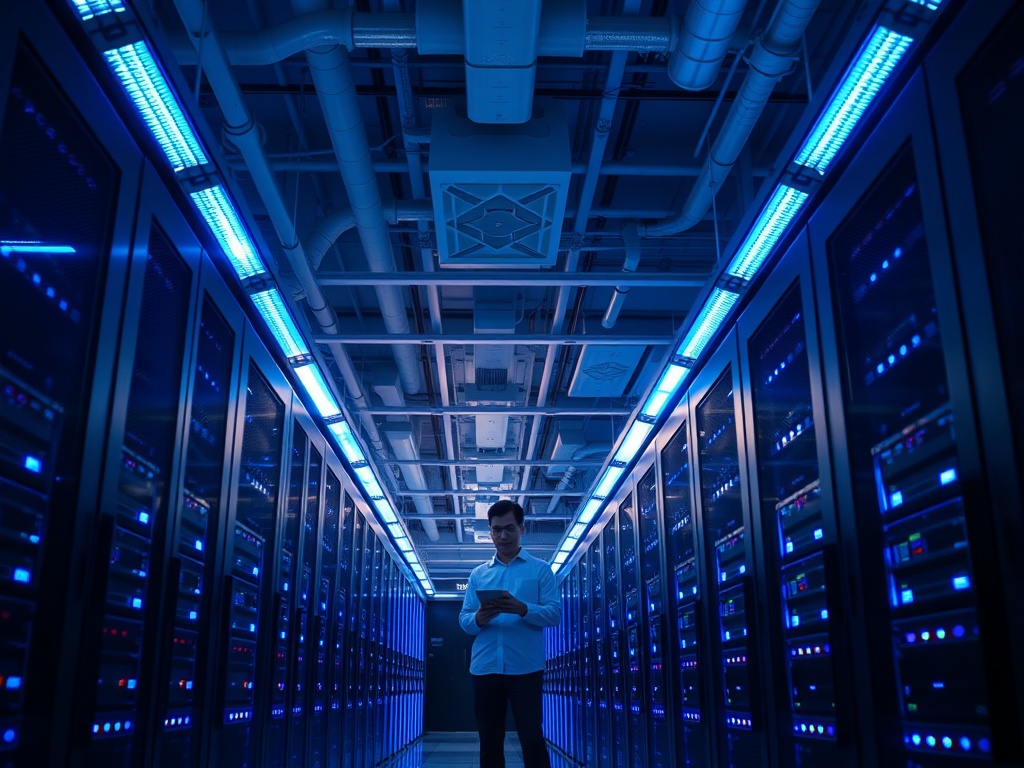
Among the most resource-intensive spending categories for this type of project are three: massive collection of multimodal data (video, sensor, audio, haptic), the development of simulation platforms to generate high-fidelity synthetic data, and the computational infrastructure to train models that can handle such heterogeneous signals. None of these three categories is cheap, nor do they scale linearly.
For Alibaba Cloud, the strategic calculation is different from that of ShengShu. The cloud needs high-value computational verticals to justify its infrastructure. General world models—due to their demand for continuous training, simulation, and real-time inference—are precisely the type of workload that converts idle cloud capacity into recurring revenue. Alibaba’s stake in ShengShu isn’t just a financial bet; it represents a way to generate captive demand for its platform.
This pattern aligns with other recent moves by Alibaba: the launch of HappyHorse 1.0—its video generation model that topped global rankings in Artificial Analysis in April 2026—and RynnBrain, its object mapping tool for robotics. Alibaba is not investing in a single bet; it is building layers of a unified business architecture where its cloud, proprietary models, and invested startups mutually reinforce each other.
Alibaba's shares in Hong Kong rose 2.12% on April 10, 2026, following the confirmation of HappyHorse, on a tech trading day that had already increased by 6.75%. The market is recognizing the same pattern.
When Video Stops Being Entertainment and Becomes Industrial Data
There’s a conceptual shift worth noting because it has implications for any company considering AI as a productivity tool: generative video has ceased to be a consumer product and has become a source of training data for physical systems.
Vidu, ShengShu’s video generator, is not the destination of the company. It’s a mechanism for accumulating visual data that will feed into the world model. Every video generated, every user interaction, every scene variation is, in ShengShu’s logic, a data point about how the world behaves visually. That repository, scaled to tens of millions of interactions, becomes the substrate for training a system that ultimately needs to understand physical causality, not just statistical correlation.
This logic has a direct historical parallel: Google didn’t build Street View to sell street photographs. It built it to train visual recognition systems that today power everything from Maps to the sensors in its autonomous driving projects. ShengShu is doing something structurally similar: using a mass-market consumer product as a mechanism for data accumulation for an industrial application of much greater value.
For the executive leadership of any company operating in manufacturing, logistics, health, or mobility, the message is clear: companies that currently control quality multimodal data repositories—video, sensor, audio within real physical contexts—hold an advantage that cannot be easily acquired in the spot data market. Accumulation matters now, before world models mature.
The Shift Has Already Begun, and Text Is Just the First Step
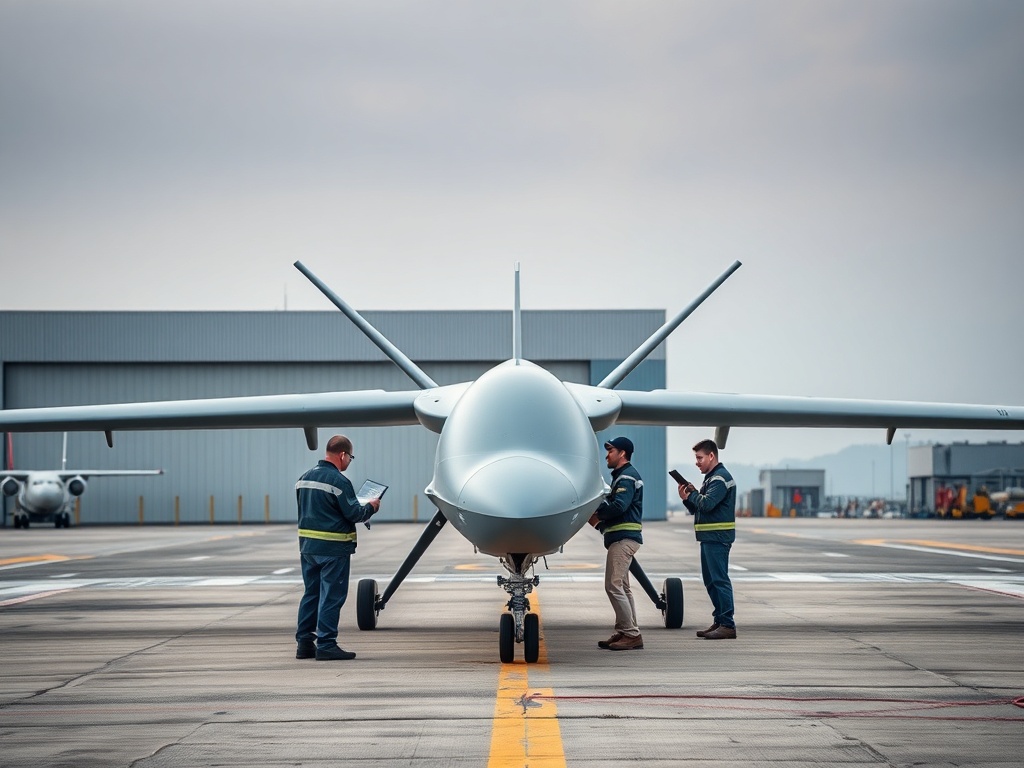
Alibaba, ShengShu, ByteDance, and a growing number of Chinese and global players are competing in a race where the prize is not the best chatbot. The prize is controlling the layer of intelligence that connects the digital world with the physical world: industrial robotics, autonomous vehicles, adaptive manufacturing systems.
Language models democratized access to symbolic reasoning. That was the first step. General world models, if they achieve the technical maturity that this investment assumes is possible, will democratize access to physical reasoning: the ability of autonomous systems to act judiciously in variable environments, without constant human intervention. This transition will define which companies and industries maintain control over their production processes and which relinquish that control to those who own the intelligence infrastructure.
Alibaba’s investment in ShengShu marks the visible start of the disruption phase in robotics and physical industry. It does so not through a finished product but through the most scarce resource in the sector: the ability to simulate the world with enough fidelity to train systems that will eventually operate in it. That capability, once solidified, doesn’t just monetize a sector; it redefines who has the right to monetize the intelligence that moves things.