
Your Sleep Score Doesn't Measure the Same as Your Competitor's
Two people wake up at 7 AM after sleeping exactly six and a half hours. One wears an Oura Ring and scores 71 points. The other wears a Whoop and scores 84. Neither device is malfunctioning; both are operating exactly as designed.
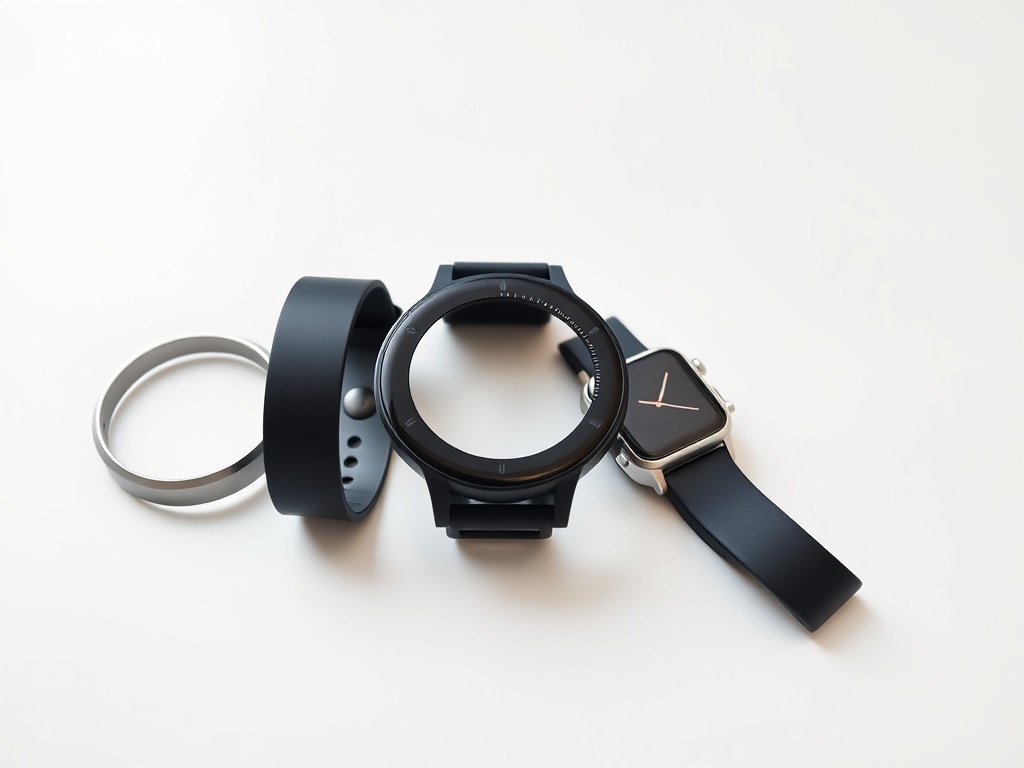
This was revealed in a recent analysis of leading wearables — Oura Ring Gen 4, Whoop 5.0, Apple Watch Series 11, Garmin Venu 4, and Fitbit Charge 6 — when compared with clinical sleep lab data. What seems like a technical dispute over algorithms is, in reality, an involuntary audit of five distinct business models. The gap between them has implications that extend far beyond how many hours of deep sleep your wrist recorded.
When the Algorithm is the Product, Not a Tool
Clinical validation published in 2026 gives the Oura Ring Gen 4 the highest kappa coefficient of agreement among these devices: 0.65 in four-stage sleep classification, with a sensitivity to detect deep sleep at 79.5%. Whoop 5.0 achieves an estimated kappa of 0.62 and an error in total sleep time of just -1.4 minutes. The Apple Watch Series 11 records 0.60, with a deep sleep detection rate of merely 50.5%, while the Fitbit Charge 6 closes out at 0.55.
These numbers matter, but not for the reasons that most users think. What they reveal is that each company deliberately calibrated its algorithm to serve its monetization model, not to maximize clinical accuracy.
Oura designed its algorithm to penalize insufficient sleep: it does not award high scores for few hours, incorporates chronotype, nap tracking, and breathing regularity. This sustains an annual subscription of $72, justified by providing the user with a dense, detailed, and technically honest reading. The product is depth. Whoop made the opposite choice: it integrated physical load history and stress into the sleep equation, allowing a bad sleep night to generate a high score if the athlete didn't train hard. The product is recovery narrative, sustaining a subscription price of between $199 and $359 annually, the highest on the market. This isn't an accident; it reflects the economics of serving a segment that pays more because they self-identify as performance athletes.
Apple, on the other hand, sacrificed accuracy in sleep staging to stake a regulatory territory: its sleep apnea detection has FDA approval with an 89% sensitivity in severe cases. This isn't a wellness feature; it's a move into the medical device market, where margins and barriers to entry are structurally higher than in the fitness segment.
The Subscription Model as a Loyalty Contract
The financial architecture behind these devices shows very different risk patterns. Oura and Whoop rely on subscriptions to sustain their post-hardware margins, estimated in the 80 to 90% range once the device cost is amortized. This turns the user into a recurring asset, not a transaction. The logic is impeccable as long as retention remains high.
The problem is that retention depends on the user perceiving constant value in their data. And here lies Whoop's structural vulnerability: various independent analyses documented that the system can generate high sleep scores even when objective recovery is low because the absence of training load mathematically compensates for poor sleep. For a casual user, that might feel good. But for a serious athlete who pays nearly $360 a year for precision, it creates precisely the type of friction that generates churn.
Fitbit Charge 6, priced at $99-140 without mandatory subscription for basic functions, operates under a different logic: lowering the entry barrier to the point where the price-function comparison makes the question of worth irrelevant. With a kappa of 0.55, it's the least accurate in the group, but its proposition is not accuracy — it’s access. Google, Fitbit's owner, does not need the device to be the best; it needs it to be the entry point to its health data platform.
Garmin Venu 4 plays in a different lane altogether: without direct validation for four-stage sleep but with a battery life of up to 29 days in some modes and 10 to 11 sensors including multi-band GPS, its value proposition isn't sleep but operational endurance. This positions it for corporate sales, employee wellness programs, and users in remote areas where charging an Apple Watch every night isn’t feasible. The corporate segment is likely where Garmin finds its most predictable margins.
The War Settled in the Regulatory Locker
There is a dimension to this market that precision comparisons do not capture: regulation as a competitive moat. Apple currently has two FDA-authorized features in Series 10 and three in Ultra 3, including apnea detection, ECG with atrial fibrillation detection, and hypertension alerts. Garmin and Fitbit each have one. Whoop and Oura have zero in their standard models.
This is no small detail. It means that Apple can charge insurers, health systems, and corporate employers for clinically validated data, while its competitors sell in the mass-market wellness space. These are markets with entirely different pricing structures. An insurer that reduces hospitalizations from undetected apnea can justify subsidizing the device for its members, creating a distribution channel that no fitness competitor can replicate without years of regulatory investment.
Oura and Whoop, which currently lead in sleep staging accuracy, face asymmetric pressure: if Apple integrates ring capabilities in its upcoming iterations or better validates its deep sleep algorithms, the kappa gap between 0.60 and 0.65 becomes irrelevant compared to the difference between being inside or outside the reimbursable healthcare system.
The Most Disquieting Data for the Entire Industry
Behind the scores and algorithms lies a reality that none of these companies communicates clearly enough to their users: no consumer wearable is a diagnostic medical device. Apple’s apnea detection requires 30 nights of data to activate. The highest kappa in the group, Oura's, implies that approximately one in three sleep stage classifications may not match a lab study.
This does not negate the usefulness of these devices. Longitudinal trends, correlations between recovery and performance variables, and detection of sustained anomalies over time are of real value for users applying these devices judiciously. But there is a gap between what marketing communicates and what clinical validation supports. And that gap is not innocent: in a market valued at $81.9 billion with a projected growth rate of 14.6% annually until 2030, the ambiguity regarding what each score measures precisely is a commercial advantage for companies.
For business leaders evaluating these devices as part of corporate wellness programs or employee benefits, the decision cannot be reduced to which device has the highest score in a product review. The operational question is what data architecture, what recurring cost model, and what level of clinical validation support the institutional investment.
The business models that endure aren’t the ones selling the best device of the year. They are the ones that build the data layer that makes it impossible for the customer to leave without losing something unattainable elsewhere. Oura does this with the richness of its sleep history. Whoop does this with the accumulated training narrative. Apple does this with FDA-validated clinical records. Each chose their moat. And the C-Level who fails to audit which of those moats is deeper before committing a corporate wellness budget will be paying for data they cannot compare, validate, or export.
The metric that matters isn’t how many points the device scores at dawn. It’s what portion of the value generated by that data remains in the user's hands and how much is captured, indefinitely, in the manufacturer’s platform. Companies that use their clients’ money to elevate their decision-making capacity are building something lasting. Those that use it to deepen user dependency on their proprietary software operate with an extractive logic, no matter how many hours of deep sleep they promise to the wrist of whoever pays.