
# Wendy's and the Art of Navigating Efficiency Without Sacrificing the Future
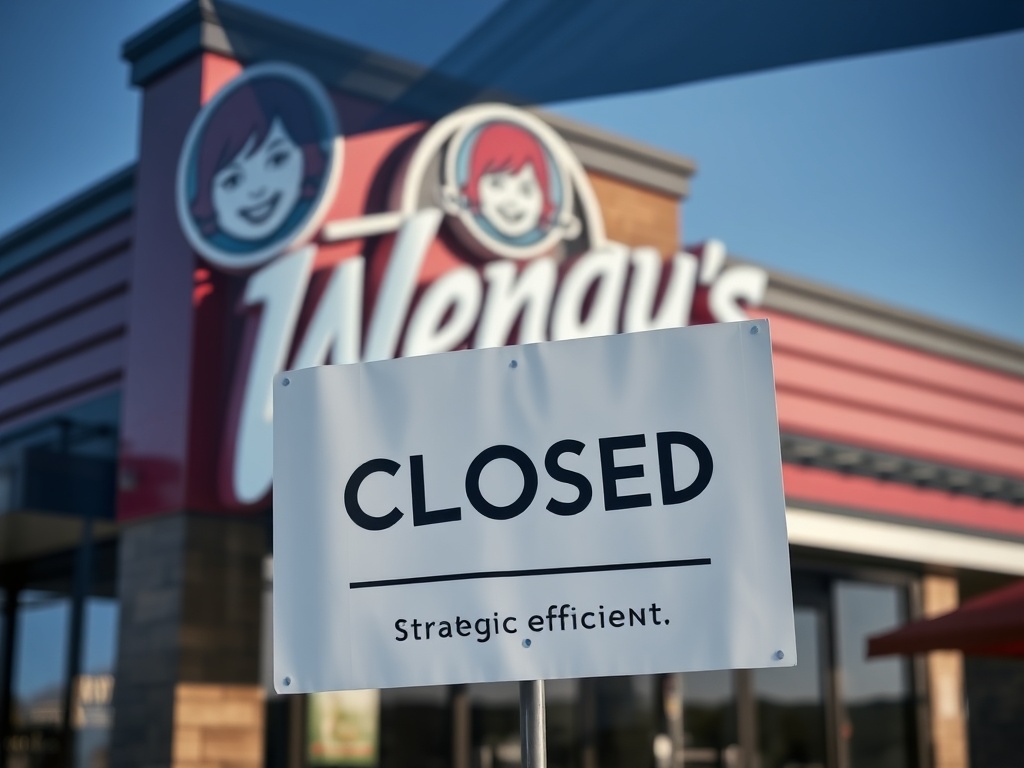
Wendy's recent announcement to close hundreds of its restaurants highlights a critical reality for many businesses: the need to restructure for profitability while preparing for future innovations. The decision by Wendy's is not merely a cost-adjustment issue; it reflects how an organization can effectively manage a portfolio of businesses.
The Balance Between Exploitation and Exploration
In the business world, the tension between exploiting the current business model and exploring new opportunities is constant. Wendy's has chosen to close some of its locations to improve operational efficiency. Yet the true challenge lies in how to use the freed-up resources to fund the exploration of new ideas that will ensure its future relevance.
For Wendy's, the key is to protect its core business cash flow, ensuring that current operations remain profitable while incubating new growth opportunities. Closing these restaurants could free up capital that, if managed properly, will allow for investments in new technologies or business models that enhance its long-term competitiveness.
Navigating the Trap of Past Success
Many companies fall into the trap of over-exploiting their core business without leaving room for innovation. Wendy's seems to be aware of this trap. With projected global sales described as 'flat' for 2026, it is evident that the company cannot solely rely on its current model for growth.
This recognition is a crucial step in business transformation. Wendy's must avoid measuring its innovation efforts with the same financial indicators it uses for its mature operations. Instead, it should focus on metrics of learning and market validation that allow for the incubation of 'internal startups' with autonomy and flexibility.
Smart Restructuring: More Than Cost-Cutting
The closure of restaurants at Wendy's should not be interpreted as mere cost-cutting. The strategy should focus on protecting the cash flow of the core business while financing customer-validated explorations. This restructuring is an opportunity to audit its business portfolio and ensure that each unit contributes to the sustainable growth of the company.
It is essential for Wendy's to avoid destroying its long-term survival capacity. This involves ensuring that the released resources are not only reinvested in operational efficiency but also in innovation that allows for scaling future successes.
A Future Balancing Profitability and Exploration
Wendy's ability to balance current profitability with future exploration will depend on its capacity to manage operations in a bimodal way. By protecting its current revenue engine and fostering the incubation of new ideas with independence, Wendy's can navigate market challenges and ensure its future relevance.
In conclusion, Wendy's restaurant closures are a strategic move that, if managed well, can serve as a springboard for innovation and growth. The company must focus on creating an environment that allows for the coexistence of efficiency and exploration, thereby ensuring its long-term survival and success.