
Sweetgreen Is Not Struggling Due to Salad Prices: Paying for Execution Fragility
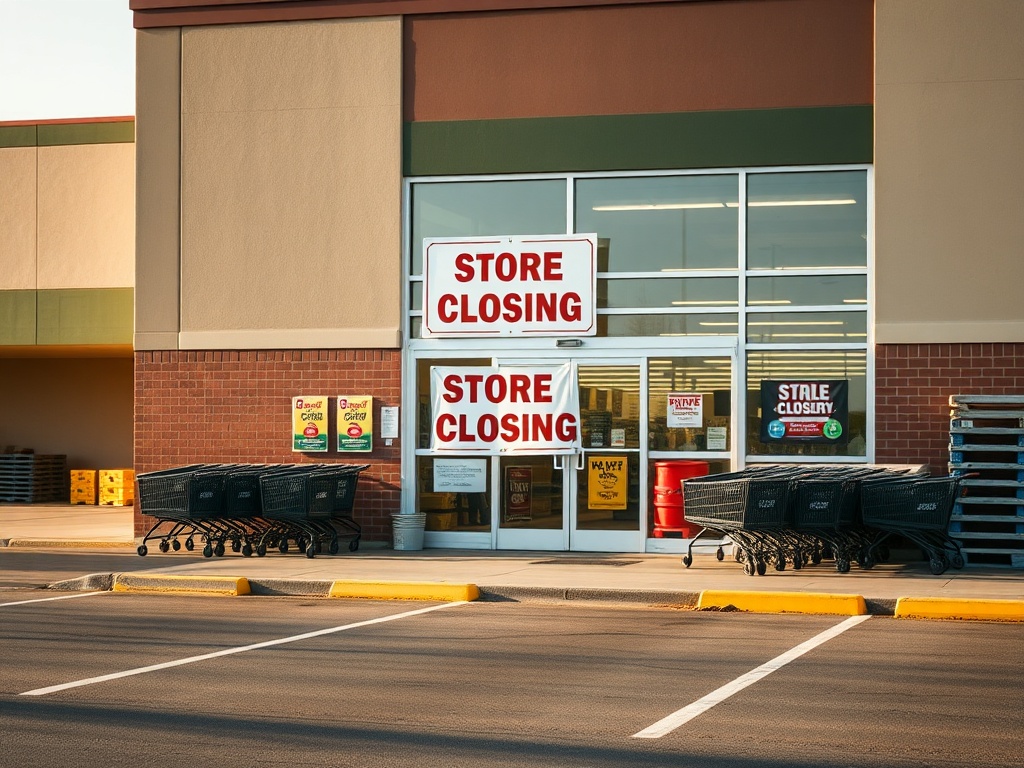
Sweetgreen, the salad chain born in Los Angeles, is doing something many companies avoid until it's too late: laying out concrete numbers on declining demand and acknowledging that there may be more closures in 2026. Their guidance points to comparable sales declines of 2% to 4% that could extend into 2026, following a 2025 characterized by traffic drops, operational adjustments, and a loss of consistency that even management admits to. This narrative isn’t just about a "high-priced" brand in an inflationary environment; it’s about an organization that grew with a compelling story and is now facing the financial cost of failing to deliver a uniform experience.
In the fourth quarter ending December 28, 2025, revenues fell to $155.2 million from $166.9 million year-over-year, and the net loss widened to $48.1 million from $29 million. Most striking is the metric in the restaurant industry that separates a cyclical slowdown from a structural problem: comparable sales declined 11.5% in that quarter, driven by decreased traffic and mix changes, and January 2026 followed in the same direction with an -11.8%, partially attributed to severe weather. The company closed three restaurants in 2025 due to contract expirations, yet plans for 15 openings in 2026 from a base of 281 locations by the close of 2025.
The defining phrase of this case isn't in the income statement but in CEO Jonathan Neman's operational autopsy: only one-third of the restaurants operate consistently at standard; the other two-thirds represent a “significant opportunity for improvement.” In a business with tight margins, that gap isn’t just a nuance; it's the engine that explains why a brand can theoretically have products, supply, and processes, but still fail in execution, frequency, and profitability.
Decline Is Not Linear: A Combination of Traffic, Loyalty, and Operational Complexity
The numbers suggest that Sweetgreen is not dealing with a single blow, but rather the overlap of several issues. In the second quarter of 2025, comparable sales fell 7.6% and traffic dipped nearly 10%, partially offset by a 2.5% price increase. This forced the company to lower its annual comparable sales guidance to -4% to -6%. Moreover, the operating loss reached $26.4 million with an operating margin of -14.2%, deteriorating from -8.8% the previous year. This sequence reveals that it’s not just a "blip" in consumption: when traffic drops more than the ability to recover through price, the model becomes mathematically fragile.
To that fragility, a business decision with a direct impact on revenue has been added: the transition from the Sweetpass+ subscription to the SG Rewards program. Reportedly, this change eliminated subscription income and contributed to the pressure on comparable sales. Loyalty transitions are often marketed as modernization, but they can also be a temporary "supply cut" if not calibrated to maintain frequency and ticket size. If the previous program monetized predictability (subscription), and the new one bets on behavior (points), the bridge between the two must ensure that the customer does not perceive a loss of value.
Complexity emerges as another hidden cost that kills expanding chains and many SMEs when they open a second or third location. Sweetgreen decided to discontinue Ripple Fries despite their popularity to reduce complexity. They also implemented cuts: a 10% reduction in support center teams in 2025. These actions align with a thesis: the core problem wasn’t a lack of ideas, but rather too much variability in execution. In the restaurant business, every menu item, every additional step in the kitchen, and every customization exception increases times, errors, and operational stress. When comparables drop and margins are negative, complexity ceases to be a differentiation bet and becomes operational debt.
The Most Serious Signal Is Internal: Two-Thirds of the Network Fail to Meet Standards
For a management team, admitting that two-thirds of locations do not meet standards equates to recognizing that the main asset — the network — is functioning as a portfolio of micro-enterprises with uneven quality. In an SME, this is seen when the founder "saves" the operation through physical presence; in a chain, it manifests when experience varies by shift, manager, and location. The customer does not penalize an isolated mistake; they penalize uncertainty.
This inconsistency intersects with a “more selective” consumption environment. While high prices may be the trigger, inconsistency is the damage multiplier. A brand that charges premium prices requires surgical precision: timing, portions, service, cleanliness, availability. Sweetgreen has attempted to respond with targeted measures: increasing chicken and tofu portions by 25%, testing $10 bowls as a value proposition, and pushing menu innovation with limited-time offerings. Neman indicated there would be two additional seasonal menus in 2025 and plans for at least eight seasonal or limited-time events in 2026.
The risk lies in organizational design: if the operational base is unreliable, more menu innovation can morph into more variability and greater friction along the way. In other words, innovation without operational discipline can accelerate wear rather than correct it. And here emerges a point that I find particularly interesting from the standpoint of diverse thinking and social architecture: when systems depend on “heroism” (good managers saving the day) rather than on replicable standards, genuine intelligence remains on the periphery, unrecorded, and unscalable.
The company also sold its automation technology Infinite Kitchen to Wonder Group, seeking to reinvest in priorities. The implicit message is clear: automation does not resolve an operation that is still not stabilized at the basics. It’s a tough lesson for any SME that dazzles at the prospect of technology: automating an unstable process only allows for faster failures.
For SMEs: Expansion Without Operational Social Capital Ends in Closures
The Sweetgreen case reads as a growth risk manual for an SME. Not because of size, but due to the pattern. When an organization opens locations or scales capacity without converting its “best version” into a standard, expansion amplifies deviations. The cost is not just financial; it’s reputational, and it reflects in traffic.
From my perspective, a frequent blind spot in these stories is confusing “central team” with “real capacity.” A chain with hundreds of locations is actually a network. Execution lives within supervisors, store managers, shift leaders, and floor teams. If that network lacks trust, feedback channels, and autonomy to correct in real-time, the center ends up designing initiatives that do not hold up in operations. That is operational social capital: the ability to coordinate effectively at scale because a horizontal network exists where information travels quickly and people are incentivized and permitted to act.
Sweetgreen has already shown that it is cutting complexity and adjusting its portfolio. It closed three locations at the end of contracts and anticipates an environment where more closures could occur. With 15 openings planned for 2026, the risk is opening with the same standard dispersion that currently affects two-thirds of the network. In an SME, the equivalent is opening a new store without having consolidated manuals, training, daily metrics, and a learning system that captures what works.
The lesson isn't “don't innovate” or “don't grow.” It's to grow only when the company can demonstrate repeatability: controlled service times, measured waste, understood staff turnover, consistent training, and a loyalty program that does not disrupt the value proposition during transitions.
The Executive Decision Is No Longer Just Marketing: It’s Governing Consistency and Value
Sweetgreen stated that it is undergoing a transformation plan with five priorities, including operational excellence, menu quality and innovation, personalized experience, brand relevance, and disciplined, profitable investments. That order matters: given the current state, the lever that must yield dividends first is operational consistency. Without it, personalization becomes a cost, innovation becomes friction, and the brand becomes an unfulfilled promise.
There’s also an inevitable financial reading. With losses expanding (e.g., $48.1 million in the reported fourth quarter) and a drop in shares over the past year, the market's tolerance for experimentation diminishes. In that context, “disciplined investments” means prioritizing what protects cash flow and stabilizes comparable sales, not what generates headlines. The sale of Infinite Kitchen fits this logic: freeing up resources and focus.
My final point is uncomfortable but operational: the companies that suffer the most in these cycles are not those lacking ideas, but those with too many ideas and insufficient capacity to convert them into replicable standards. Competitive advantage in fast food isn’t defended by isolated creativity; it's defended by a network that performs equally well across all shifts.
The mandate for the C-Level is to act as architects of the network, not as curators of campaigns: in the next board meeting, observe your small table and recognize that if everyone is so similar, they inevitably share the same blind spots, making them imminent victims of disruption.