
Starbucks Cedes Control in China, Turning Withdrawal Into Its Greatest Asset
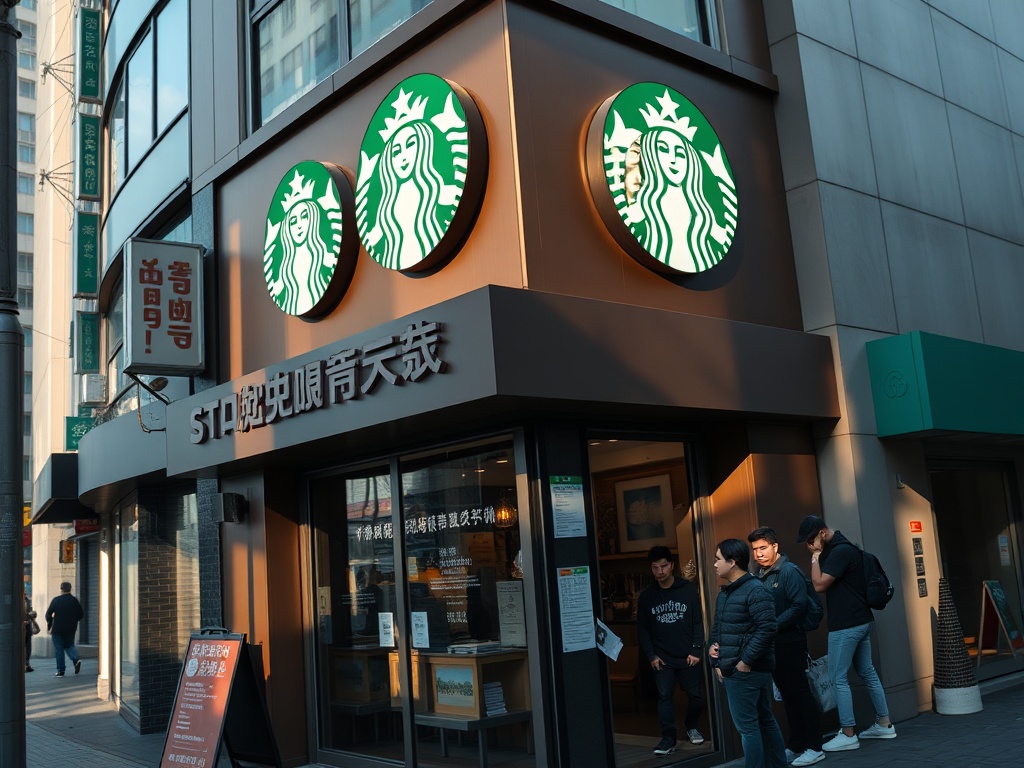
On April 2, 2026, Starbucks formally closed its agreement with Boyu Capital and transferred 60% of its retail operations in China to a joint venture. In one swift move, it relinquished operational control of approximately 8,000 cafes to a private equity partner with deep ties in the Chinese political and commercial landscape. The market responded with relief: SBUX shares rose the following Monday while the S&P 500 barely advanced by 0.2%.
But the stock market celebration is the subheading. The real headline is this: Starbucks just executed one of the most costly and well-structured strategic withdrawals seen in the global mass consumer industry in years. Most analysts are too busy applauding the $4 billion in cash to notice what this entails internally.
The Pain of Cashing in $4 Billion and Remaining in the Minority
There’s a tension that press releases don’t resolve: Starbucks built a presence of 8,000 stores in China over more than two decades under a direct-operating model. This represents an accumulation of operational capital, local know-how, supplier relationships, and brand positioning that no balance sheet fully captures. In April 2026, the company decided to sell off the majority of that living asset for an implied valuation exceeding $13 billion, retaining only 40% and the right to license its brand.
The move generated a cash injection of $4 billion while simultaneously eliminating the responsibility for financing the expansion to 20,000 stores that Boyu Capital is now mandated to open. That's a sacrifice of control in exchange for speed, liquidity, and reduced exposure to operational risk in a market that has become notoriously difficult to decipher from the West.
What makes this decision strategically coherent is not the figure itself. It’s that the figure is a consequence of a guiding policy that Starbucks has been articulating for months under the internal name "Back to Starbucks": recalibrating from gross expansion to capital efficiency. Brian Niccol, its CEO, isn’t managing a China problem. He’s rewriting the financial architecture of the entire company, and China was the heaviest chapter in the book.
What Boyu Capital Acquired That Isn’t in the Contract
Boyu Capital didn’t simply acquire 60% of 8,000 locations; it acquired the right to scale a premium brand in a market where the average consumer drinks coffee three times a year. That’s both an enormous opportunity and an underlying warning.
The Chinese coffee market is projected to go beyond $100 billion, but the competition Starbucks faces there is unmatched in any other global market. Luckin Coffee and Cotti Coffee have built aggressive pricing models that directly attack the customer volume Starbucks needs to sustain its premium positioning. In this context, Boyu's advantage isn't financial: it’s its network of institutional relationships and its understanding of second- and third-tier cities where the next wave of growth is located.
Starbucks, operating out of Seattle, cannot manage the expansion into markets like Chengdu, Wuhan, or Hefei with sufficient speed. Boyu can. And in a market where the speed of opening determines who captures the first preference of consumers discovering coffee, that local execution differential is worth more than any amount of equity capital Starbucks could have deployed.
Here lies the invisible mechanics of the deal: Starbucks converted a massive fixed cost—the capex of opening stores in China—into a variable income stream through licensing. It no longer puts up the money to open store 8,001. It earns a fee for every store that Boyu opens until reaching 20,000. This represents a structural transformation of the Chinese business economy, not an exit.
The True Risk That No One Is Measuring
The market’s euphoria on April 6 overlooked something that deserves direct attention: when a premium brand cedes operational control, it also relinquishes the last line of defense over customer experience.
Starbucks built its valuation on an experiential promise: the "third place" between home and office, the ritual of the cup with the name written, the global consistency of every espresso. That standard isn’t maintained solely with a licensing contract. It requires daily operational oversight, ongoing training, and the authority to tell a local operator that something is wrong and demand immediate correction.
Boyu holds 60%. Boyu has control. And Starbucks holds the remaining 40% plus the reputation accumulated over 27 years of operation in China. If the in-store experience degrades—even marginally, even in third-tier cities that Wall Street analysts never visit—the damage doesn’t first hit Boyu’s balance sheet. It affects the global brand value of Starbucks.
This isn’t a critique of the deal; it’s an honest description of the bet Starbucks is making: trusting that the governance mechanisms of the joint venture, the licensing standards, and the alignment of incentives between both parties will be sufficient to protect what took decades to build. The question that Q2 2026 results will begin to answer isn’t how many stores Boyu opened; it’s whether each of those stores still feels like Starbucks.
The 11% year-over-year revenue growth that Starbucks China reported in Q1 2026—its fifth consecutive quarter of increase—shows that the base is solid. But the pressure from Luckin and Cotti isn’t going to disappear. Those competitors have cost structures incompatible with Starbucks' premium model, meaning the battleground isn’t price: it’s cultural relevance. And cultural relevance in China is now managed operationally by Boyu Capital.
The Discipline That C-Level Executives Rarely Practice
What makes this move worthy of serious analysis is not that Starbucks struck a good financial deal. It’s that they made a painful decision. Giving up 60% of a $13 billion market in implicit valuation, in a country that has represented one of the most cited growth vectors in every investor presentation over the last decade, requires a strategic conviction that most executive committees don’t have the stomach to maintain in front of a board.
The $4 billion freed is not a gain; it’s the cost of buying focus. That capital is going towards recovering the U.S. market, towards product innovation, and towards global priorities that Starbucks couldn't fund while it maintained the capex of China on its balance sheet. That’s exactly what a resource allocation policy should do: force the company to choose where it competes with all its energy and where it accepts a secondary role in exchange for more predictable revenues.
The C-level executive who doesn’t feel discomfort at signing that kind of deal probably isn’t sacrificing enough. Comfort in a strategic decision of this magnitude is, almost always, a sign that there wasn’t any real renunciation—just cosmetic rearrangement. Starbucks didn’t rearrange its organization chart; it transferred operational control of its second-most important market in the world. That hurts. And precisely because it hurts, it takes the shape of a strategy.
An executive aiming for a sustainable position in highly competitive markets will sooner or later face the same dilemma that Niccol resolved in April 2026: either define with surgical precision where to concentrate capabilities, or spread thin trying to defend every front simultaneously until none are truly defended. Attempting to control everything in China while rebuilding operations in the U.S. wasn’t a strategy; it was the illusion of one.