Samsung SDS and KKR: When Idle Capital Becomes an Expansion Engine
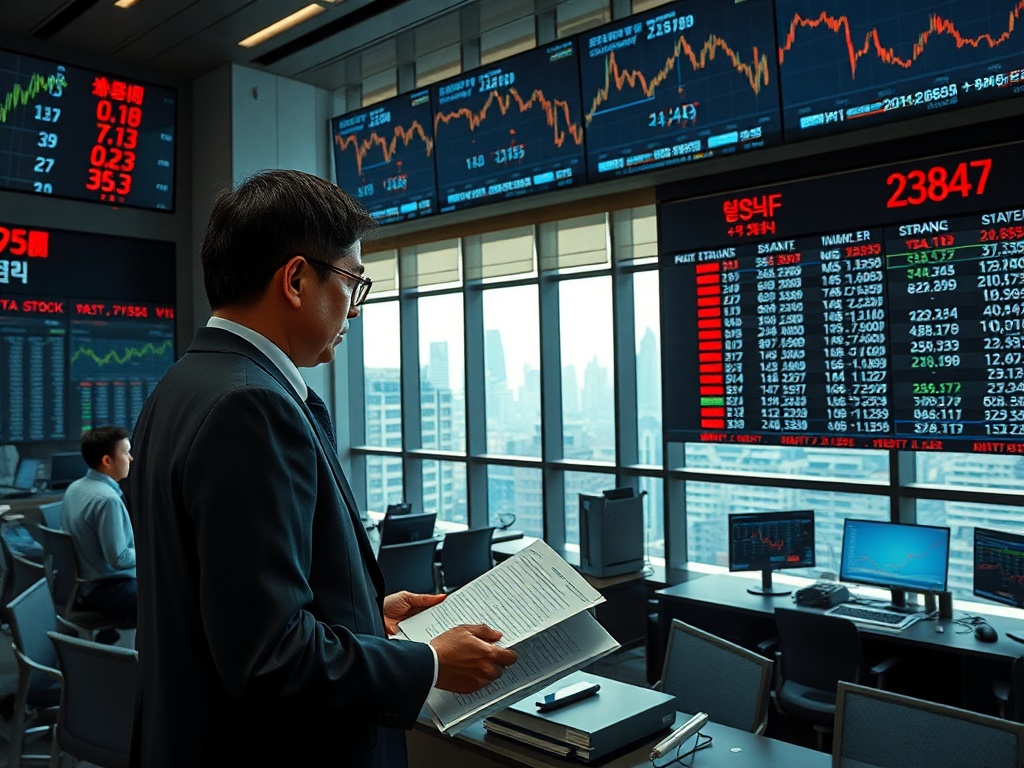
On April 15, 2026, Samsung SDS's stock surged by 20% on the Seoul Stock Exchange, closing at 178,600 won. This movement was not a reaction to an exceptional quarter or record contracts; it was a response to something more specific and revealing: the announcement that funds managed by KKR would purchase convertible bonds valued at 1.22 trillion won, equivalent to 820 million dollars and 8.06% of the company’s outstanding shares. In simple terms, a heavyweight global investor wrote a check for nearly a billion dollars to sit at the table of a tech company that already had the money but didn’t know how to deploy it.
That is the real story behind the headlines.
The Flaw the Market Has Been Pricing In for Years
Samsung SDS is not a troubled company. With annual revenues of 14 trillion won, operations in over 40 countries, and around 26,000 employees, it has the scale of a key player in cloud services, artificial intelligence, and digital transformation for sectors such as manufacturing, financial services, and logistics. Since 1985, it has evolved from enterprise IT solutions to what it today describes as a full-stack AI provider. The issue wasn’t in revenue generation.
The problem lay in the 6 trillion won in cash that the company had accumulated but was failing to deploy. For a tech firm operating in a sector where speed of acquisition and investment in infrastructure dictate market capture, maintaining such a large volume of idle cash signals strategic paralysis, not financial prudence. Idle capital is not a neutral asset: it’s a real-time losing position because while the company isn’t using it, its competitors are acquiring capabilities, talent, and access to customers.
Kim So-hye, an analyst at Hanwha Investment & Securities, articulated it with clinical precision: Samsung SDS was undervalued partly due to its passive stance on mergers and acquisitions, despite having the resources to execute them. That diagnosis existed before the announcement on April 15. The market knew it. What was missing was the mechanism to shift that piece of the puzzle.
KKR arrived to be that mechanism.
What the 820 Million Dollars Buy
The structure of the deal deserves analysis. KKR didn’t purchase stock directly. Instead, it acquired convertible bonds worth 1.22 trillion won, meaning Samsung SDS receives fresh capital without immediate dilution to existing shareholders. The conversion is deferred, conditioned on terms not publicly disclosed. This financial architecture has a clear logic: it allows Samsung SDS to strengthen its balance sheet and finance AI infrastructure investments without immediate dilutive effects on current stakeholders. It’s an influx of capital that buys time and maneuvering capacity.
But the most important component of the agreement is not in the bond's structure. It lies in the operational role KKR will assume as an active investor. According to the announced terms, KKR will provide direct advisory to Samsung SDS’s management team in three specific areas: merger and acquisition decisions, capital allocation, and global strategic growth. Jun Hee Lee, president and CEO of Samsung SDS, described the collaboration in terms that point directly to this execution capability: leveraging KKR’s accumulated experience in global capital markets to explore growth opportunities, including M&A activities.
Chung Ho Park, partner and head of KKR in Korea, was even more direct in positioning the bet: the growing demand for digital transformation and AI solutions creates conditions for Samsung SDS to play a significant role in advancing Korea’s digital capabilities. KKR sees Samsung SDS as an infrastructure lever, not just a service provider.
This substantially changes the company’s diagnosis. Samsung SDS was not a company lacking ideas or funds. It was a company with both but lacking the institutional muscle to execute large-scale operations in a market where acquisitions are decided quickly and closed with networks that take years to build. KKR has those networks. Its track record in IT services includes investments in system integrators in Japan, digital solution providers in Germany, hybrid services in the U.S., and cloud firms in France. In Korea, it already has exposure across multiple sectors. For Samsung SDS, connecting to that network is akin to building in weeks what would take years of developing their own institutional relationships.
One Piece Changes, the Whole Machine Is Recalibrated
There’s a pattern that mid-tier tech companies regularly repeat. They build solid technical capabilities, generate consistent cash flow, accumulate reserves, and then find themselves trapped within their own perimeter. The problem isn’t the product quality or the customer base; it’s that the organic growth model has a ceiling that capital alone cannot break. To surpass it, one needs acquisition velocity, access to new markets, and credibility to carry out complex transactions with international counterparts who evaluate both the check and the buyer's reputation.
Samsung SDS reached that ceiling with 6 trillion won in hand and no institutional framework to deploy it efficiently on a global scale. The alliance with KKR incorporates that missing piece. The revenues from the bonds will go directly to strengthening infrastructure for transformation services via AI, aligning the capital's destiny with the positioning that the company has already been establishing as a provider of end-to-end artificial intelligence solutions.
The closing of the transaction is expected in the second quarter of 2026. What comes next is harder to predict in terms of timing but easier to read in terms of logic: Samsung SDS will need to shift from announcing an acquisition strategy to executing it. This involves identifying targets, closing deals, and integrating capabilities without disrupting its current operating model. KKR will provide the framework; Samsung SDS will need to demonstrate that it can move the pieces with the speed the sector demands.
Idle Capital Without Executory Architecture Builds Nothing
The 20% jump in stock was a market signal, not a business outcome. The stock price reflected expectation, not cash generated. The real task starts after the closing, when Samsung SDS must transform that network of relationships and that capital into acquisitions that expand access to segments where it does not currently compete deeply enough, or into infrastructure that reduces its cost of delivering AI services at scale.
What the agreement makes clear, beyond the specific operation, is a principle that repeats in any business architecture: companies do not fail for lack of capital or scarcity of ideas, but because the pieces of their model do not fit together to convert available resources into measurable value and sustainable cash. Samsung SDS had the money. It lacked the mechanism to transform it into strategic movement. That, precisely, is what 820 million dollars in convertible bonds and an active investor with a global network have just put on the table.