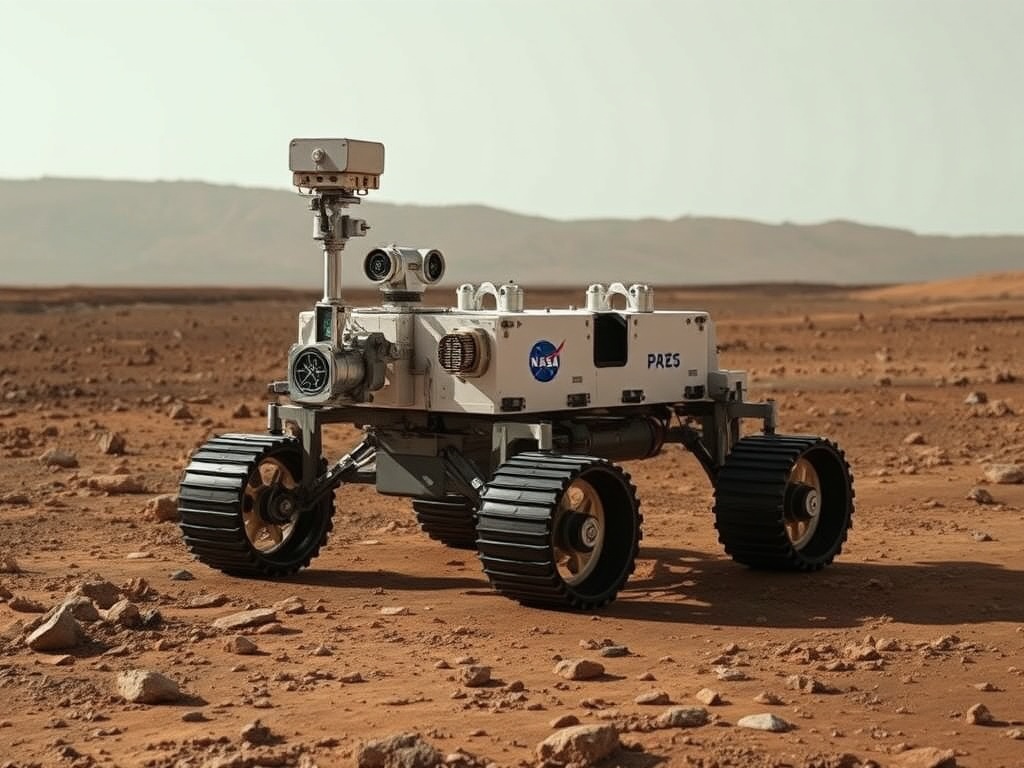

Autonomy of Perseverance: Beyond Earth
NASA's Perseverance rover has achieved a significant milestone: it can now determine its exact location on Mars without assistance from Earth. This advancement not only represents a leap in space exploration but also offers valuable lessons for innovators and product strategists here on Earth.
Perseverance's ability to operate more autonomously is a testament to the importance of empirical validation and continuous iteration. Instead of relying on constant instructions from mission control, the rover can now make decisions based on real-time data. This approach perfectly illustrates how autonomy and adaptability can transform a project.
Evidence-Based Innovation
In the business world, innovation is often hindered by the lack of interaction with real customers. Many companies fall into the trap of developing products in a vacuum, relying on assumptions rather than concrete data. Perseverance, however, has been designed to adapt and evolve in response to its environment—a principle that should be central to any product strategy.
The lesson here is clear: early validation and co-creation with the user are essential. Just like the rover, products must be capable of adapting to the changing needs of the market. This requires an agile approach and a willingness to iterate quickly based on real feedback.
The Value of a Viable Product
The concept of a Minimum Viable Product (MVP) is often misinterpreted as an unfinished or low-quality product. However, an effective MVP is a minimal experiment designed to glean the maximum amount of validated learning with the least effort. With its autonomous navigation capabilities, Perseverance exemplifies how an MVP can evolve to meet end-user needs.
Instead of launching a fully developed product without testing, companies should focus on creating prototypes that facilitate direct customer interaction. This not only validates willingness to pay but also ensures that the final product aligns with market expectations.
Avoiding the "Innovation Theater"
Perseverance is not a "laboratory invention"; it is the result of years of real-world testing and adjustments based on actual data. In contrast, many companies get caught up in "innovation theater," where the appearance of progress is more important than actual advancement. This often leads to failed launches and products that do not solve real problems.
To avoid this pitfall, innovators must concentrate on execution and real traction. This means getting out of the building, interacting with customers, and being willing to pivot when necessary. The false certainty of rigid plans should be replaced with a mindset of continuous learning.
Conclusion: Lessons for Innovators
The success of Perseverance on Mars underscores the importance of autonomy, empirical validation, and continuous iteration. For innovators on Earth, these lessons are invaluable. Like the rover, products should be designed to adapt and evolve in response to user needs.
To apply these lessons, business leaders should:
1. Foster autonomy: Allow teams to make decisions based on real data.
2. Validate early: Engage with customers early on to ensure the product addresses a real problem.
3. Iterate quickly: Be willing to adjust and pivot based on market feedback.
By adopting these principles, companies can avoid common pitfalls of innovation and ensure their products have a meaningful and lasting impact.