One Billion in Cash Without Debt: The Financial Architecture Few Know How to Build
Greatland amassed $1.208 billion in cash without issuing a single bond or diluting its shareholders. There’s a specific mechanism behind this that most executives never learn.
One Billion in Cash Without Debt: The Financial Architecture Few Know How to Build
On April 8, 2026, Greatland Resources Limited released its third-quarter fiscal figures, leading to a 14% surge in its stock price on the AIM market in London. The eye-catching headline was production: 82,723 ounces of gold and 4,128 tons of copper extracted from January to March. However, that number isn’t the most intriguing part of the report.
The figure that should grab the attention of any CFO or CEO is this: the company ended the quarter with $1.208 billion in cash, zero debt, after paying $73 million in taxes related to fiscal year 2025 and executing its capital investment plan. In just 90 days, cash grew by $260 million. Net. Clean. Without external financing.
This is not an accounting result. It’s the product of a financial architecture built on a premise many companies abandon once they secure their first round of capital: that the only cash flow that doesn’t incur interest, requires no board seat, and doesn’t dilute is the one generated by your own business.
When Sales Exceed Production, the Model Speaks for Itself
There’s one detail in Greatland’s report that slips under the radar of most press analyses: the company sold 97,800 ounces of gold in the quarter while only producing 82,723. They sold more than they extracted. This indicates that they liquidated accumulated inventory from previous periods, deliberately converting physical assets into liquidity.
The financial implication is straightforward. If an industrial company sells more than it produces in a quarter, it is optimizing its cash conversion cycle. It’s reducing the time an asset remains on its balance sheet without generating returns. In mining, where storage, security, and deterioration costs are real, that decision holds measurable value.
By the quarter’s end, Greatland had accumulated 249,887 ounces of gold and 11,022 tons of copper in annual sales. With a production guidance for fiscal year 2026 between 260,000 and 310,000 ounces, the company was positioned to close the year at the upper end or above that range. When the volume sold consistently exceeds production, the company is not speculating on market price; it is executing against its own inventory with treasury discipline.
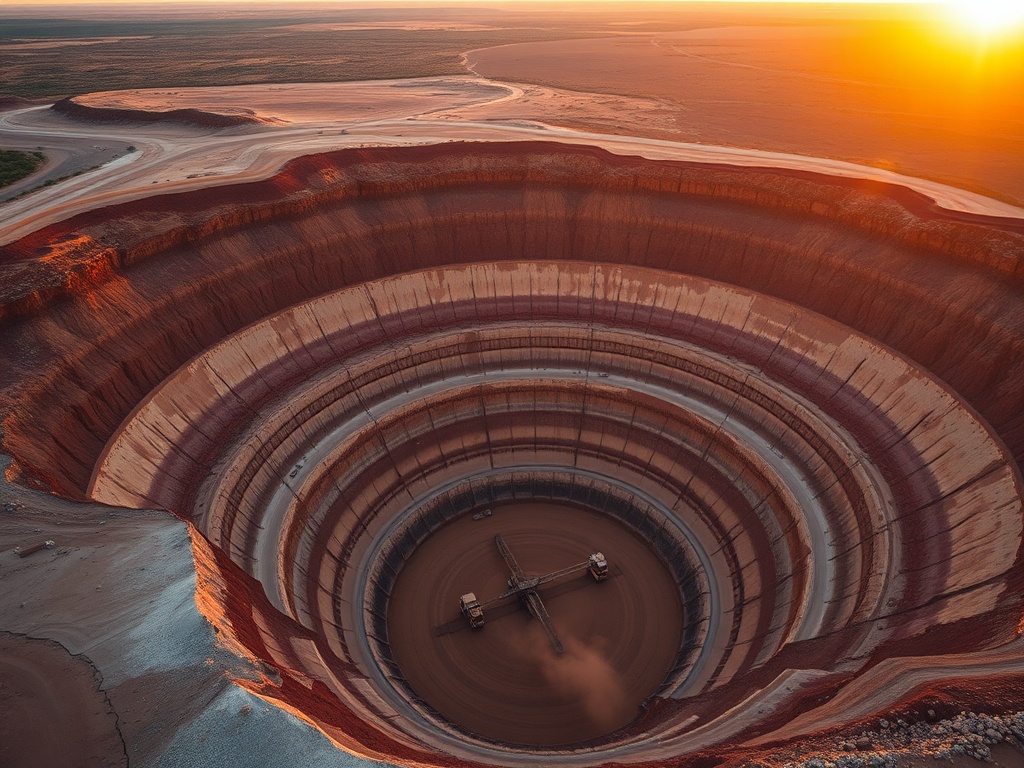
What supports all of this is the Telfer mine in Western Australia. Surface reserves amount to 22 million tons with a grade of 0.36 grams of gold per ton and 0.05% copper, sufficient for over 12 months of continuous processing feed. This is no ordinary productive asset: it’s an operational cushion that allows the company to plan sales without depending on every blast in the mine occurring exactly on schedule.
Infrastructure That Nobody Counts as a Competitive Advantage
During the first quarter of 2026, tensions in the Middle East caused disruptions in the global diesel supply. For a mining operation in the Pilbara region of Australia, hundreds of kilometers from any major port, this could have led to unscheduled shutdowns, skyrocketing operational costs, or both.
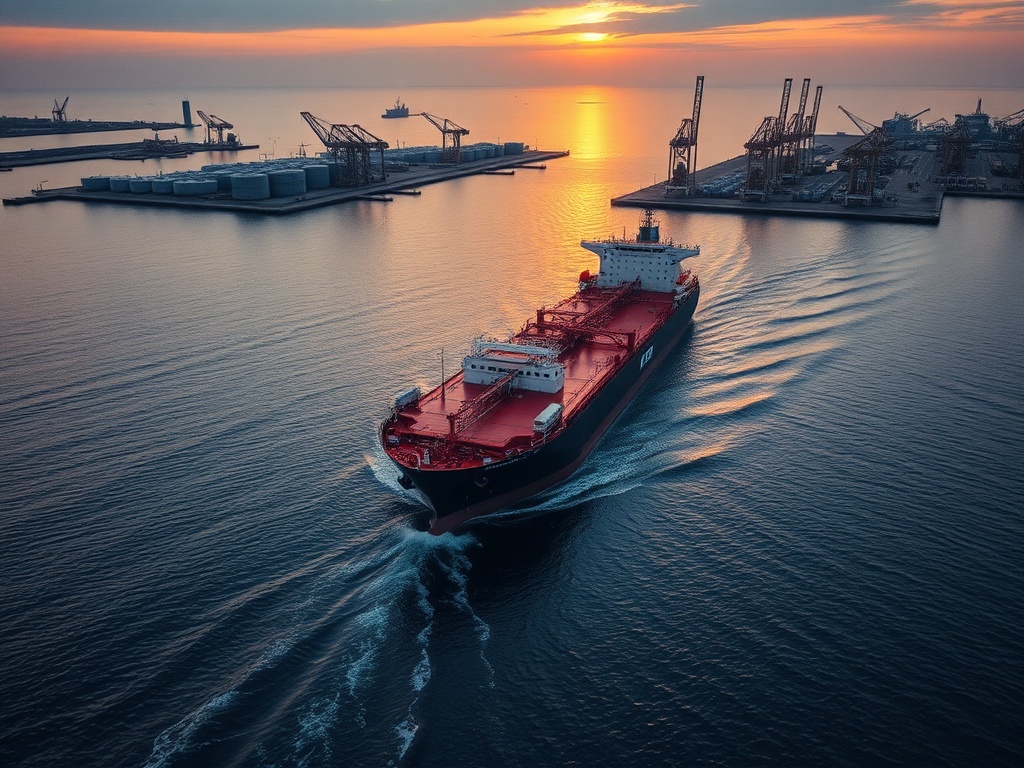
Telfer did not face this issue. The mine operates using natural gas from the Pilbara Pipeline System for on-site power generation, employs an electric hoist in underground operations to minimize diesel consumption, and has a long-term supply contract with a global oil company via the Port Hedland port. Three distinct mechanisms that, when combined, virtually eliminated exposure to both price risk and fuel availability during that quarter.
This may seem like an operational detail. Financially, it’s another matter. When a company transforms its exposure to volatile variable costs into long-term contractual commitments or proprietary infrastructure, it’s doing something that textbooks call operational hedging, but in practice means this: its margin doesn’t depend on what the fuel market does in the next six months. That type of protection doesn’t show up in the stock price until the entire sector suffers, and the company reports that its numbers remain unchanged.
The report did not yet include the All-in Sustaining Cost (AISC) per produced ounce, which will be available in the full activity report in April. However, the logic of the cost structure is already visible in the operation’s architecture: access to cheaper energy compared to competitors, reduced diesel components in underground operations, and contracts that set forward prices. When the AISC is published, the market will have the figures. The mechanics that produced it were already readable before.
A Cash Reserves of $1.208 Billion with No Debt is a Decision, Not a Consequence
Many financial reports present cash reserves as a passive result, something that simply happens when things go well. Greatland’s trajectory suggests the opposite. In December 2025, the company had $948 million in cash. Three months later, after paying taxes, investing in capital, and sustaining operations, it finished with $1.208 billion. An increase of $260 million in a quarter where $73 million also went to the Australian treasury.
This movement is not constructed in a quarter. It is built over years of decisions prioritizing operational margin over rapid growth, stability of costs over unfinanced capacity expansion, and converting inventory over accumulating non-cash-generating assets.
The company announced that starting April 2026 it will begin making regular installment tax payments, indicating that the treasury already recognizes the normalization of its profitability. When the tax system starts to charge you in advance, it’s because your cash flow is predictable enough for the government to trust you’ll be around next quarter. It’s a sign of financial maturity rarely interpreted as such.
Furthermore, Greatland maintains a position for partial downside protection through put options on the price of gold while retaining full upside exposure. This is asymmetric risk management: limiting potential loss without sacrificing gain if the price rises. With gold pricing at historically high levels in the early months of 2026, this structure allowed them to capture market prices in their sales of 97,800 ounces without being exposed to a sharp decline unprotected.
A Debt-Free Balance Sheet as a Strategic Signal, Not Conservatism
When a company the size of Greatland operates with $1.208 billion in cash and zero debt, the market initially interprets it as a signal that something is coming: an acquisition, a stock buyback program, an extraordinary dividend, or a capacity expansion. The 14% rise in stock price on the day of the announcement blends two distinct aspects: validation of operational results and speculation about future capital use.
What this reading sometimes omits is the intrinsic value of holding that position. A debt-free company with more than a billion in cash can withstand six consecutive quarters of depressed gold prices without needing refinancing, without renegotiating bank covenants, without issuing stock at hammered prices. This resilience carries no explicit price tag in a valuation multiple, but it has real value when the cycle shifts.
The 14% leap in a single trading day is loud. What goes unnoticed is the structure that makes it possible: a mine with reserves ensuring over a year of guaranteed feed, energy contracts that safeguard margins, sales that exceed production, and a cash position that grew by 260 million in 90 days without anyone putting external dollars on the table. That cash was not built by a bank or a private equity fund. It was built by customers who purchased every ounce of gold and every ton of copper at the price the market dictated. That is the only source of capital that demands nothing in return except that you continue to produce well.