
80% as a Mathematical Sentence
On April 9, 2026, Australian Prime Minister Anthony Albanese stood before cameras in Lytton, Queensland, announcing something that liberal economic manuals would have deemed unthinkable a decade ago: the Australian federal government will guarantee, using public funds, the spot market fuel purchases made by Ampol Limited and Viva Energy Group Limited, the country's two largest distributors. The institution executing this backing is Export Finance Australia (EFA), a credit agency that until that moment operated in the opposite direction: financing what Australia sells to the world, not what it needs to buy to function.
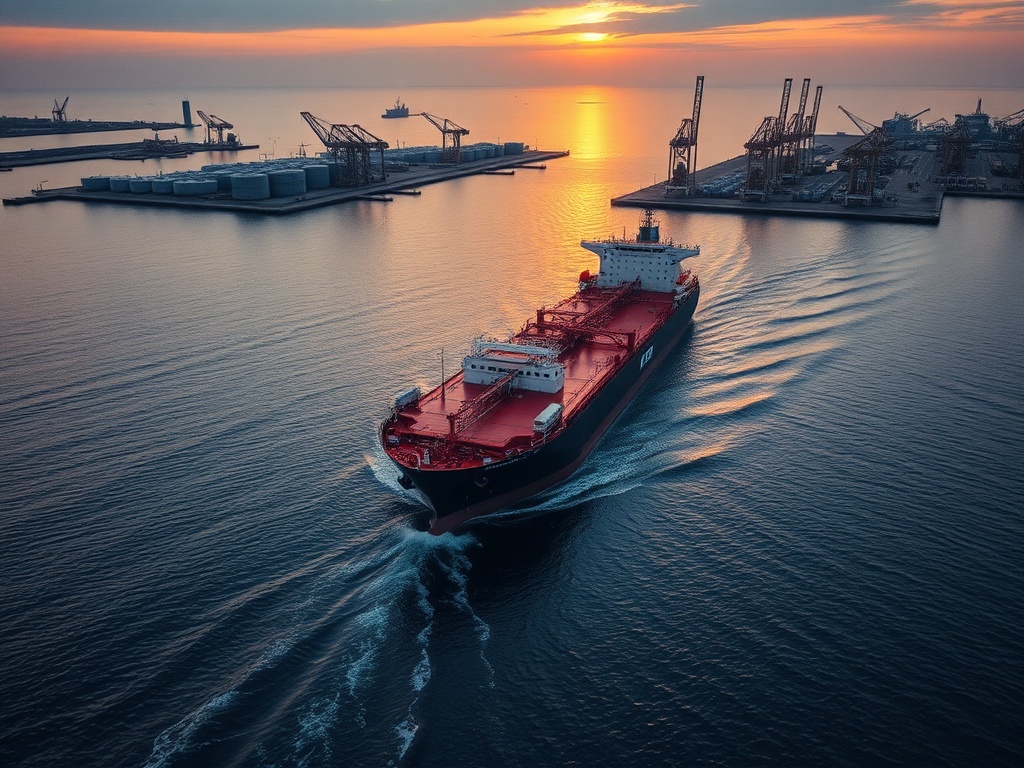
The turnaround is symptomatic. Australia imports approximately 80% of its liquid fuel needs. This figure isn't new. It has been known for years to energy planners, sovereign risk analysts, and industry executives. However, for decades, it served as contextual information, not as a crisis variable. What changed in February 2026 was the geopolitical scenario that turned it into an operational mandate: the onset of war between the United States and Israel against Iran blocked the regular flow through the Strait of Hormuz, the bottleneck for a decisive fraction of the world’s oil. Australia began reporting localized fuel shortages. The market alone could not resolve the issue.
The reason is mechanically clear. Importing companies face three simultaneous frictions when trying to acquire shipments in the spot market under these conditions: soaring insurance costs driven by transit risk, price volatility that destroys projected profitability before the ship arrives in port, and direct competition from economies with greater purchasing power or long-term contracts that divert available shipments. Without a guarantee to absorb some of that risk, companies simply don’t buy. It’s not corporate irresponsibility; it’s basic financial calculation.
EFA resolves exactly that problem. By backing the operations of Ampol and Viva, the government transforms unmanageable private risk into distributed sovereign risk. In exchange, it gains something it previously lacked: the authority to direct the domestic distribution of imported fuel, prioritizing areas of greatest need. It’s a transfer of control that, under normal conditions, no company would voluntarily cede.
When the Supply Chain Becomes an Instrument of Power
Oil at $97.35 a barrel in Brent contracts and $97.43 in WTI at the time of the announcement — after a brief drop due to a two-week ceasefire that the market dismissed within hours — illustrates something that futures markets communicate coldly: the perceived risk over physical crude flows surpasses any short-term diplomatic ceasefire. The rebound post-ceasefire wasn’t irrational. It was the market processing that a pause doesn’t solve the structural vulnerability of the Strait.
For Australia, geography aggravates the problem. Its natural suppliers are Singapore, South Korea, and Malaysia, all reliant on maritime routes that pass near or through tense zones. The alternatives that Energy Minister Chris Bowen mentioned — North America and Mexico — involve significantly greater logistical distances, higher freight costs, and transit times that do not align well with urgent spot market purchases. Bowen acknowledged the proximity advantage of Asian partners, but geographical diversification is now a strategic obligation, not an option.
This explains why Albanese traveled to Singapore on April 10 to meet with Prime Minister Lawrence Wong. The conversation wasn’t about ceremonial diplomacy. It was about securing supply agreements with Southeast Asia’s most important refining hub before other buyers with more urgency or better contractual conditions did. The fuel supply chain has become an instrument of active geopolitical negotiation, and Australia was late to establish its positions.
Ampol operates the Lytton refinery, which provides nearly 10% of national transport fuel and 40% of fuel for its own customers. Viva Energy operates from Geelong. Together, these two companies control the backbone of the country’s wholesale and retail distribution. EFA’s backing allows them to capture shipments that would otherwise go to markets with lower purchasing friction. In terms of competitive positioning, the distance expands with smaller importers who do not have that umbrella. The duopoly solidifies precisely when the market is under greater stress.
The State as the Last Resort Guarantor in Critical Infrastructure
What Australia is executing is not a covert nationalization or a subsidy to consumption. It is something more specific and, in some respects, more revealing: the admission that energy commodity markets under conditions of acute geopolitical disruption do not generate sufficient price signals to sustain physical supply in economies highly reliant on imports. The pricing mechanism works when there are buyers and sellers in reasonably comparable conditions. When transit risk and insurance volatility disconnect the willingness to sell from the willingness to buy, the market ceases to operate as an efficient coordinator.
The Australian parliament understood this and passed the legislation enabling EFA to take on this role in less than a week before the announcement. Legislative speed alone signals the perceived severity. Legal frameworks for intervening in energy markets are not improvised over speculative crises. They are established when reports of physical shortages are verifiable and when private resolution channels have failed.
The complementary measures confirm the depth of the problem. The temporary reduction of minimum fuel reserve obligations and adjustments to gasoline standards to retain more product on national territory are interventions that erode regulatory margins that exist for technical and safety reasons. When a government touches those margins, it is using its last reserve levers.
Minister Bowen indicated that EFA has other agreements in advanced negotiation with additional suppliers, beyond Ampol and Viva. If these agreements materialize, EFA’s role would have permanently mutated: from an export-oriented credit agency to an import energy security mechanism. This institutional mutation carries budgetary and sovereign risk consequences that are not yet fully visible in public balances.
Imported Fragility as a Long-Term Fiscal Variable
Leaders managing companies with supply chains dependent on imported commodities need to read this Australian episode as a projection of their own risk states, not as a distant geographic anomaly. The 80% dependency on fuel imports that Australia has normalized for decades is the structural equivalent of any company subcontracting its most critical input to suppliers concentrated in high geopolitical instability zones without diversified contractual alternatives.
When that input fails, the cost of emergency resilience is exponentially higher than the cost of having built it in advance. Australia today will pay the sovereign guarantee it did not want to finance yesterday as proactive diversification of sources. There are no scenarios where this math favors the treasury.
The model that emerges from this crisis — the state as a guarantor of supply risk, companies as executors with ceded directing power, and diplomacy as an instrument of energy contracts — will be the energy security architecture that economies with high import dependency will adopt in the next decade. Organizations that wait for fractures to design their responses will pay the price that Canberra paid in April 2026: urgent legislation, ceding operational control, and absorbing the political cost of admitting that vulnerability was always there.