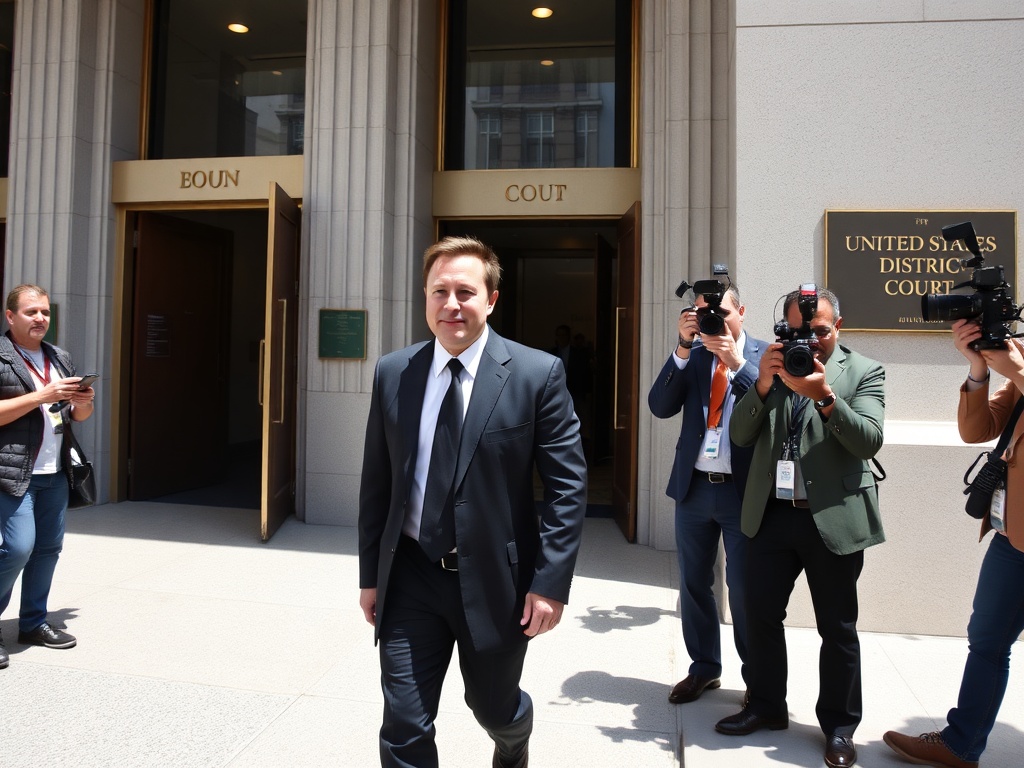

I write this as a piece of applied macroeconomics, not as a legal chronicle. On March 4, 2026, the U.S. Court of International Trade ordered the Customs and Border Protection (CBP) to begin calculating refunds—with interest—for tariffs imposed under the International Emergency Economic Powers Act (IEEPA), an emergency economic powers regulation. The case that triggered this move was brought by Atmus Filtration Technologies, which paid around $11 million in disputed tariffs. What is truly relevant here is the scale: the ruling impacts nearly 2,000 similar cases in the same court and millions of shipments that could be re-evaluated.
The potential amount circulating as a tax shadow is even larger: the Wharton Budget Model estimates that potential refunds could reach up to $175 billion if the reversal is broad. Meanwhile, the legal mechanics are already driven by a higher fact: on February 20, 2026, the Supreme Court (6-3) ruled in Learning Resources, Inc. v. Trump that the IEEPA does not authorize the president to impose open-ended tariffs, reserving that power for Congress. On the same day, an executive order ended IEEPA-based tariffs, and Customs ceased collecting them for entries made after February 24, 2026, following guidance issued on February 22.
This episode is not just about returning money; it addresses how risk pricing in supply chains is affected when the state uses—and subsequently loses—an instrument of revenue collection and trade pressure.
The Court’s Decision: From Abstract Ruling to Real Cash
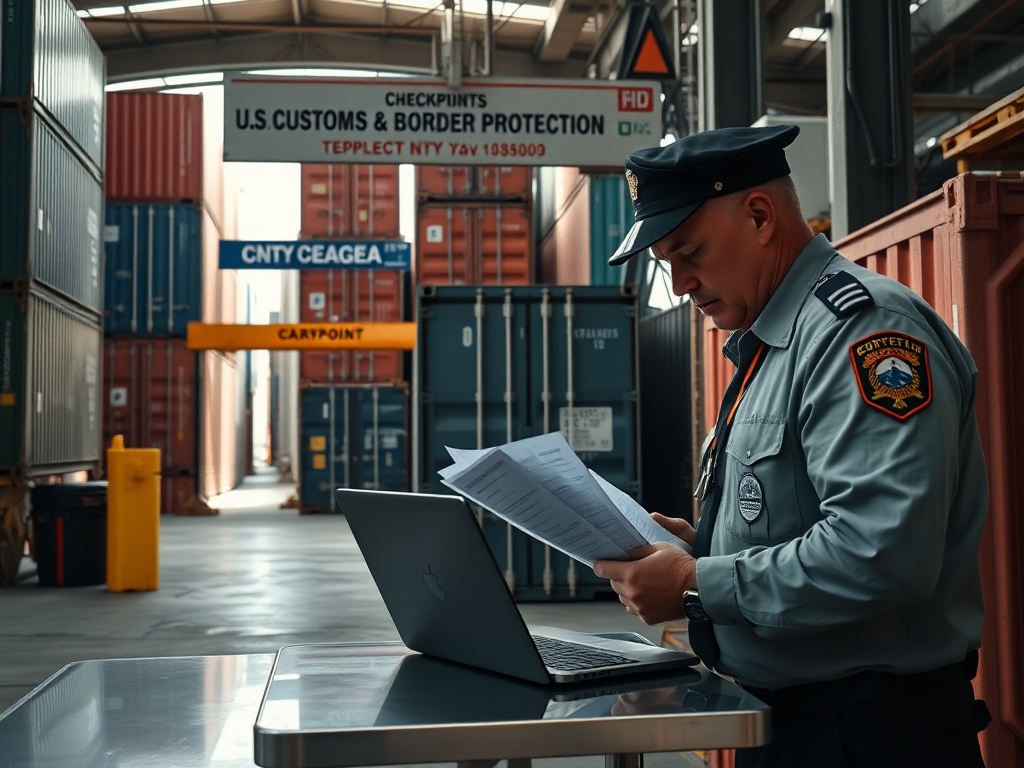
The Supreme Court made it clear: "regulating" imports does not equate to imposing indefinite tariffs. However, what changes the game for businesses and investors is what happens after the major headline. During the March 4 hearing, the Court of International Trade moved the case from constitutional theory to operational accounting: it ordered CBP to calculate how much it would have cost to import without those tariffs and prepare the recalculation to return what was wrongly collected, with interest. Reports indicate that the judge was explicit in his operational confidence: Customs knows how to do this.Here's a piece that financial teams cannot brush off: the refund does not come from "goodwill"; it comes from procedure. The briefing indicates a 180-day window after the "liquidation" of merchandise to protest and request a refund. This temporal architecture creates a race in administrative economy: those who preserved rights, documented entries, and maintained litigation are in the front row for cash return. Those who did not may face the uncomfortable reality of having absorbed the cost as final.
From a market perspective, the court’s step transforms an intangible asset—a probability of legal success—into a financial asset with date and mechanics, although the government itself has argued that the process could take years. Moreover, the Federal Circuit Court’s rejection of delays requested by the administration reduces the state’s "option" to stretch the timeline, accelerating the conversion of the ruling into cash flow.
In corporate finance, time is not neutral. A refund with interest does more than repair; it redefines the historical costs of inventory, margins, and pricing, and forces a rework of internal narratives about what was "inflation" and what was a temporary tax. The difference is material when discussing millions of shipments and up to $175 billion at stake.
The New Price of Risk: Importing Is No Longer Just Logistics, It’s Governance
The IEEPA tariffs of 2025 were born from executive orders anchored in "emergencies"—fentanyl trafficking, trade imbalances—and expanded into two families: the so-called tariffs for "trafficking" against Canada, Mexico, and China, and "reciprocal" tariffs on nearly all trading partners. This design had one virtue for the executive branch: speed. For the importing business, that speed was a tax on planning.What is happening now is a re-evaluation of governance risk. CFOs usually model exchange rate risk, demand risk, transportation risk, even inventory risks. But in 2025-2026, the real cost was regulatory volatility: tariffs imposed, collected, litigated, ended by executive order following a court ruling, and finally headed for refund by a specialized court.
This back-and-forth changes three things in the real economy. First, working capital: when a tariff is paid at the border, the importer funds the state until they recover (if they recover). If the process is lengthy, the tariff functions as involuntary credit. Second, pricing: many companies passed costs through surcharges, “surcharge” clauses, or renegotiations with suppliers. Third, contractual risk: the briefing mentions the implication for entities that are not direct importers but have paid surcharges; for them, the return is not automatic, it depends on contracts and capacity for private claims.
At this point, the data on the participation of large players in parallel litigations—FedEx, Revlon, Costco, alongside smaller companies—matters for what it reveals: the IEEPA tariff was not a niche industrial phenomenon. It impacted logistics, retail, and consumer goods. This makes the refund a transversal cash event and also a distributive dispute: who retains the return—the registered importer or the link that absorbed the surcharge?
My macro reading is sober: the U.S. economy is pricing the border as a political variable. When the "fastest" instrument for imposing tariffs collapses due to lack of authorization, the risk shifts from "tariff shock" to "legislative shock": the next round, if it exists, will depend more on traditional statutes and Congress, with more friction and less immediacy.
The Network and Circularity: Tariff as Friction that Reconfigures Chains, Not Just Simple Collection
The correct lens here is the Network and Circularity, not as a slogan, but as economic engineering of supply chains. The IEEPA tariffs operated as artificial friction injected into a global network already operating under strain: multiple suppliers, redundant routes, defensive inventories, and an obsession with reducing dependencies. A friction of up to 19% in certain reciprocal schemes—according to the briefing on 2025 orders—forces redesign of flows, sometimes with inefficient moves merely to avoid the tax.When a court orders refunds, it does not "reverse" the operational past: companies have already redirected orders, changed suppliers, increased stock, or accepted lower margins. But it does alter the network's future in three ways. First, it reduces the incentive to build permanent structures around a legal tool that has already been invalidated. Second, it opens up an internal audit cycle: accounting for entries, classification, protests within 180 days, documental traceability, and legal-financial coordination for claims. Third, it reorganizes bargaining power: if an importer knows that the tariff was illegal from the outset, their position with suppliers and customers changes, especially where there were contractual surcharges.
The word "circularity" here does not refer to environmental marketing; it refers to the capacity of a network to recirculate value and liquidity when the state alters the rules. A refund with interest is literally a recirculation of cash from the fisc to the private sector, with micro impacts on treasury and macro impacts on collection. Wharton warns, as cited in the briefing, that future revenues could be halved without replacement. That fiscal gap puts pressure on other levers: debt, cuts, or new sources of income. None are neutral for inflation, investment, or consumption.
For this reason, this case is a reminder that trade policy is not just geopolitics; it is network architecture. When the instrument changes, the topology of the network readjusts, and the winners are those who can quickly reconfigure without destroying their cost structure.
The Mandate for the C-Level: Turn Litigation and Customs into a Financial Discipline
There is a dangerous temptation to treat this as a "legal event" that the legal department will resolve and finance will account for at the end. In importing companies, foreign trade is already a P&L function: it determines cost of sales, inventory turnover, and the ability to maintain price without losing volume. The court's order raises the standard: it is now also a balance sheet discipline.The potential refund—from the $11 million of Atmus to the aggregate figure of $175 billion—has three immediate executive implications. One, data governance: without traceability of entries and liquidations, there is no defendable return. Two, scenario modeling: the timeline may be long, but the law is crystallizing; the present value of the refund changes treasury, debt, and repurchase decisions. Three, governance with counterparts: where surcharges have been passed on, it is predictable that there will be internal disputes in the chain about who captures the recovery.
At a country level, the message is equally severe. When the Supreme Court limits the use of IEEPA for tariffs and lower courts activate the refund mechanism, the U.S. is rewriting the border between emergency and taxation. This reduces executive discretion in trade and returns weight to the legislative process—slower but more predictable.
Global leaders and decision-makers who survive the next decade will be those who treat regulatory volatility as a structural financial cost, build supply networks capable of absorbing frictions without collapsing margins, and govern the border with the same discipline they govern their debt and cash flow.