
Grocery Outlet and the Real Cost of Rapid Growth: Store Closures, EBITDA, and Operational Correction
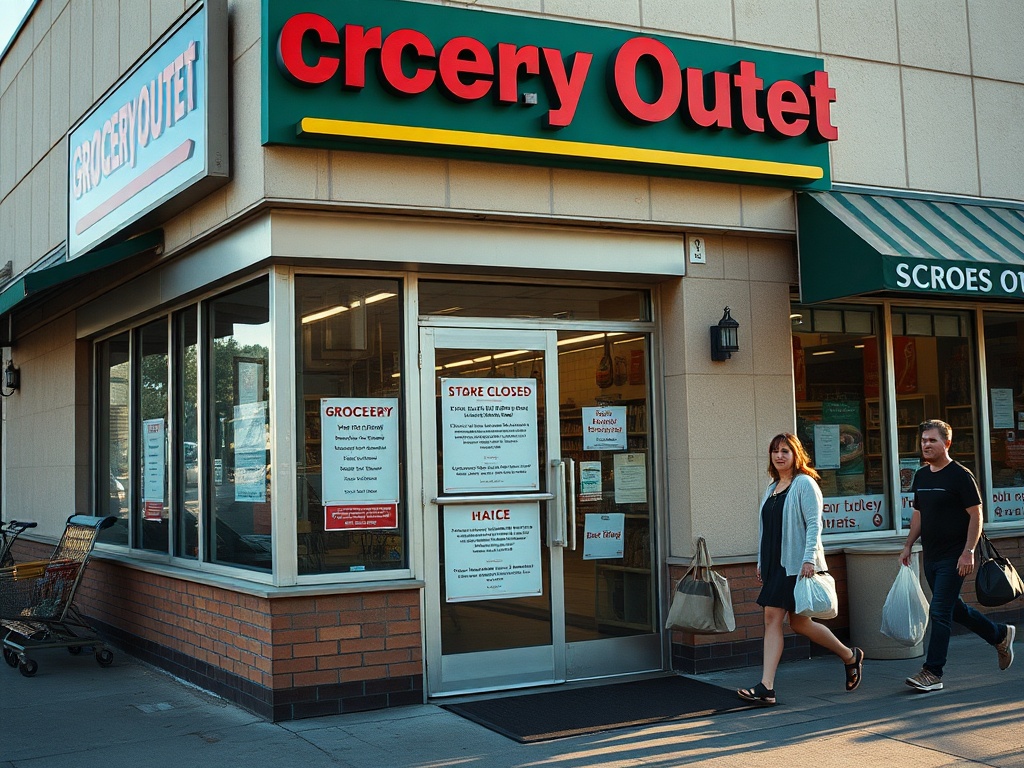
Grocery Outlet, a discount supermarket chain based in California, announced the closure of 36 stores across the United States as part of an optimization and restructuring plan following a fiscal fourth quarter that made one thing clear: growth in store count was not translating into sustainable profitability. The company wrapped up the fiscal quarter ending January 3, 2026, with 570 locations in 16 states, having opened seven stores during the same period. Quarterly net sales rose nearly 11% to $1.2 billion, but the operational metric that defines daily success for the format weakened: comparable sales fell by nearly 1%. Meanwhile, the magnitude of the accounting-operational adjustment was exceptional, with nearly $235 million in operating losses and over $218 million in net losses for the quarter.
The message from management was explicit. CEO Jason Potter stated that the fourth-quarter results were "unacceptable" and took responsibility for correcting them. CFO Chris Miller quantified the financial objective behind the cuts: an annualized improvement of approximately $12 million in adjusted EBITDA once the closures are completed. The restructuring, however, is not without costs: there are expected total net charges of $14 to $25 million in fiscal year 2026, plus an additional impact of $4 to $6 million on gross margin due to inventory liquidations through discounts and markdowns. The market interpreted the move as a sign of fragility: the stock fell to a historic low of $8.79, plummeting over 20% in after-hours trading following the earnings release.
From my role as Editorial Director, the financial point is not to celebrate or dramatize the cut. The key is to understand the mechanics: mass store closures often signal a company admitting that its expansion map was poorly calibrated, that its supply chain didn't keep pace with growth, or that its value proposition has lost clarity. In Grocery Outlet, all three variables appear simultaneously.
Store Closures as Capital Reallocation, Not a Crisis Narrative
Closing 6% of the store fleet is not, by itself, a sign of strategic retreat. It’s a capital reallocation signal after identifying that part of the store portfolio is not meeting minimum return thresholds. The company describes the closures as the removal of "underperforming locations." The relevant technical question is not how many stores are closing but how quickly the organization can convert this adjustment into a healthier cash profile.
One often-overlooked fact: 24 closures are on the East Coast, representing 30% of the stores in that region. Still, the company emphasizes that it is not fully exiting any state, and 51 stores in the East ended the quarter profitable, also recording a 3.3% increase in sales. This contrast reveals that the problem is not “the region” as a concept, but the quality of deployment from store to store: location selection, operational maturity, logistical density, and the ability to sustain the value promise.
From a corporate finance perspective, closing unprofitable units is a quick way to reduce variability in results and protect the return on invested capital. But actual savings depend on the cost structure. Grocery Outlet anticipates an annualized improvement of $12 million in adjusted EBITDA after this measure is implemented. In a company that reported quarterly losses of hundreds of millions, that number does not solve the problem; it marks a directional change: less tolerance for stores that consume management, inventory, and logistics resources without return.
Moreover, the restructuring incurs exit costs (up to $25 million in net charges) and margin erosion from liquidations (up to $6 million). Operationally, the success of the plan will be measured by two speeds: the speed at which closures can occur without contaminating the experience in neighboring stores, and the speed at which the company regains traction in comparable sales without buying growth through aggressive discounts. This tension is critical for a discount retailer, where margins are thin and execution errors are paid for in cash.
Sales Up, Comparables Down: A Deterioration in the Quality of Growth
A 11% increase in net sales for the quarter and a 7.3% increase for fiscal year 2025, nearing $4.7 billion, might appear as business strength. The issue is that this growth coexists with a dynamic that often predicts deeper adjustments: comparable sales are weakening. In the fourth quarter, they fell by nearly 1%; for the full year, they rose by only 0.5%. When total growth relies more on openings than on productivity from the base, the company becomes vulnerable to any demand or cost shocks.
Potter attributed the decline to three fronts: consumer spending pressure, erosion of the perception of value despite competitive base prices, and supply chain tension stemming from improved availability and expanded assortments. Translated into retail mechanics, this suggests customers are visiting less, buying less per trip, and perceiving fewer “memorable deals” that justify filling their baskets.
In discount formats, the perception of value is a financial asset, even though it is not listed on the balance sheet. When that perception falls, the retailer compensates with promotions or a broader variety; both can stress the system. If you increase inventory without mastering supply, you heighten complexity: more SKUs, more out-of-stocks, more replenishment, more waste, and more operational noise. If you push for availability at any cost, the chain becomes stressed, and the central promise—here, the “weight” of the WOW deals the company mentions—can dilute.
The company also reported a double-digit decline in sales with EBT in November due to a temporary interruption of SNAP funds and an additional slowdown in December, hitting a low in January during the promotional period. This matters because it reveals sensitivity to income from budget-restricted customers. For a CFO, that pattern is not managed through communication; it's managed with an operational model that withstands traffic volatility without eroding margins.
The East Coast as a Case Study: Accelerated Expansion and Insufficient Operational Density
Potter elaborated on the regional component with a statement well understood in retail strategy: the company sees an opportunity in the East, but “expanded too quickly.” This diagnosis points to a classic error: opening stores before achieving sufficient density for logistics, local marketing, and operational oversight to function efficiently.
In retail, geographic growth has simple mathematics. If you open few dispersed locations, each store operates with higher invisible costs: less efficient supply routes, lower ability to negotiate and plan by area, less repeated learning per format, and greater dependency on “operational heroes” to put out fires. When the company admits that part of that expansion was premature and decides to close 30% of the stores in that region, it indicates that the deployment map did not reach the required productivity threshold.
The fact that 51 East Coast stores remained profitable is key: there is a “healthy core” that can be sustained with reduced noise and reorganized resources. The decision not to exit entire states also implies that the company prioritizes brand continuity and future options while eliminating locations likely to be destroying returns.
Meanwhile, the company plans to open between 30 and 33 stores in fiscal year 2026 and renovate 150 locations, utilizing a “cluster” growth model to gain supply chain efficiency and marketing leverage. This is not a contradiction with the closures; it’s a bet that the problem was not growth itself, but rather growing without the appropriate scaffolding. Financially, the risk lies in executing two simultaneous transformations—closure and expansion—with a weak comparable sales base. If the clusters are implemented well, they reduce delivery costs and improve availability; if done poorly, they amplify complexity.
Restructuring to Recapture the Discount Promise Without Breaking Margins
The guidance for 2026 is cautious: net sales between $4.6 billion and $4.7 billion, with comparable sales ranging from -2% to 0%. This range acknowledges that the company has not yet regained the productivity engine per store. From finance, the relevant data shows that the plan combines three levers with distinct short-term signs.
First, closures that improve annualized adjusted EBITDA by $12 million, but require restructuring charges (up to $25 million) and impact gross margin from liquidations (up to $6 million). Second, massive renovations: renovating 150 locations in a year entails execution and capital expenditures, although the company did not specify investment amounts in available information. Third, new openings: between 30 and 33 stores with a cluster model that should increase efficiency but also need sufficient demand to mature.
The operational point the company acknowledged—fewer "WOW deals" and smaller baskets—suggests a priority task: restoring format differentiation without turning the business into a price war. When a discounter loses the “treasure hunt” effect, it competes more directly with chains that have more consistent supply. In that scenario, the advantage does not come from marginally lowering prices; it comes from aligning assortments, availability, and turnover so that the customer feels there are always finds and that the visit is worth the time.
There is also an organizational signal: Grocery Outlet's model relies on independent operators, which can speed local execution but also requires guidelines and supply discipline to maintain consistency. If the company increased inventory and availability in a way that stressed the chain, the adjustment is not merely logistical; it’s about operational governance: what is purchased, how it is prioritized, how it is measured, and how the value proposition is protected without inflating costs.
The drop in stock to historic lows after the earnings release is not a verdict on the future, but it is an indicator of weakened confidence. In that context, the plan must be tested against hard indicators: stabilization of comparables, recovery of traffic, improvement in units per transaction, and normalization of margins after liquidations. The restructuring, by design, buys time and focus; it does not buy demand.
A Necessary Correction That Demands Execution Discipline
The closure of 36 stores at Grocery Outlet is an operational correction aimed at protecting returns, concentrating resources, and reducing friction in an expansion that management considers too accelerated, particularly in the East Coast region. The company quantified the expected benefit in annualized adjusted EBITDA and accepted significant restructuring and liquidation costs, placing the plan in a measurable execution territory rather than narrative.
In 2026, with comparable sales guidance between -2% and 0% and nearly flat net sales compared to the previous year, success will depend on whether the cluster model and renovations can recapture productivity per store without eroding margins. The adjustment is financially logical, but its value will only materialize if the company can translate the cut into operational consistency and a stronger value perception at the store level.