
The Company That Turned Order Tracking into a Competitive Advantage
In 2008, when Domino's launched its pizza tracker, most fast-food chains operated under a single promise to their customers: just wait for it to arrive. The tracker radically changed that equation. For the first time, customers could see in real-time whether their pizza was being prepared, baked, or on its way. The result wasn’t just increased user satisfaction; it was the creation of a strategic asset that no competitor has managed to replicate in the same depth. Over the subsequent years, more than 2.5 billion orders were processed through that interface. That number isn’t just an operational achievement: it’s a massive repository of behavioral data, demand patterns, and market signals.
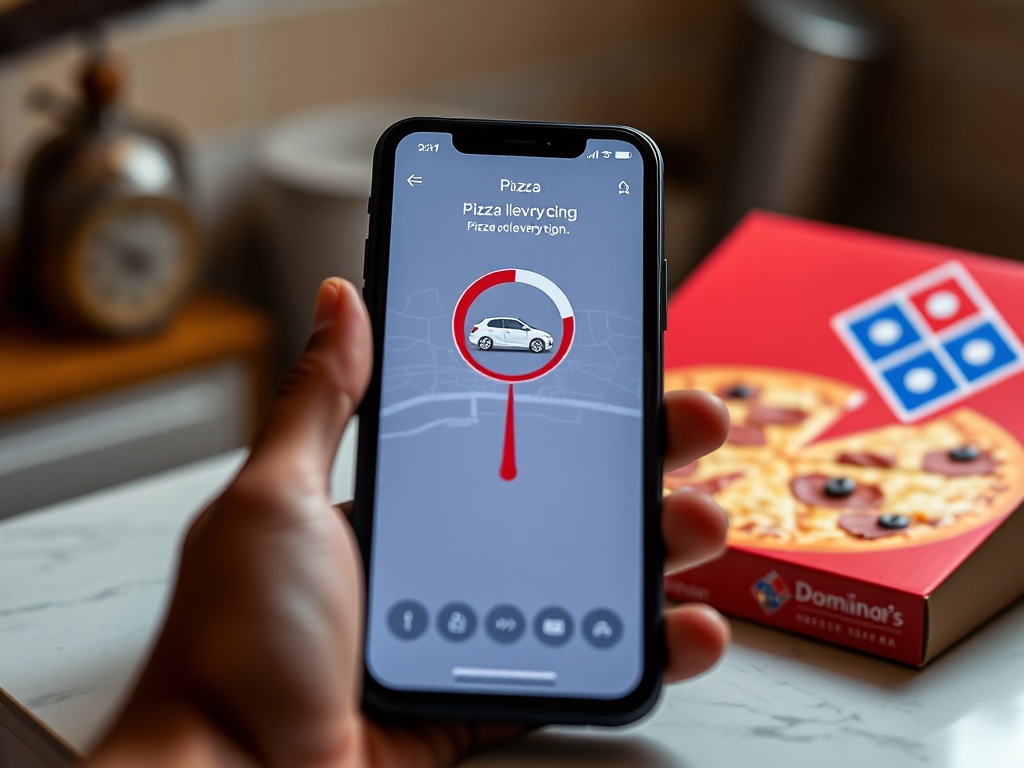
Now, seventeen years later, Domino's has just executed the most significant update to that system. And it did so in a way that most product teams would have dismissed in the first meeting: by simplifying instead of expanding. The new tracker moves from multiple stages named with internal jargon—"Bake," "Quality Check"—to just four states: Placed, Make, Deliver, and MMM. The map tracking interface adopts the visual style of ride-sharing apps. iOS users receive updates directly on their lock screen. Behind that streamlined interface operates a proprietary machine-learning model that the company calls DomOS, designed to calculate delivery times more accurately by considering simultaneous variables: order volume, clustered demand patterns—like those generated during major sporting events—and the real-time status of each delivery driver.
What the AI Model Solves That Previous Algorithms Ignored
The problem with traditional time estimation systems wasn’t technological; it was structural. They calculated each variable in isolation: prep time on one side, traffic on another, store load on another. The result was a delivery promise that frequently disconnected from reality, often enough to erode customer trust. According to Mark Messing, global vice president of digital marketing at Domino's, the new AI model analyzes these signals collectively and adjusts estimates in real-time as conditions change.
That distinction may seem technical, but it has direct implications for the business's economics. A more accurate delivery estimate reduces support calls, decreases cancellation rates due to frustration, and improves the perception of reliability without needing to shorten actual delivery times. Domino's isn’t promising faster delivery; it’s promising to know with better accuracy when it will deliver. That’s a radically different bet. And it’s exactly the kind of bet that produces lasting loyalty because it tackles the variable that irritates modern consumers the most: uncertainty, not just wait times.
The DomOS system also incorporates historical patterns of clustered demand. Peaks in orders during commercial breaks of major events or at the end of significant games generated distortions that previous algorithms couldn’t anticipate. Now those patterns are part of the training model. It’s a use of artificial intelligence that doesn’t aim to surprise customers with a new feature; it seeks to consistently fulfill an existing promise. That difference in purpose is what separates functionality with measurable impact from functionality designed for press releases.
Why Simplification Is the Toughest Decision a Product Team Can Make
There is a very real organizational pressure pushing product teams to add features, never to remove them. Every eliminated function implies an awkward conversation with some internal team that defended it, built it, or viewed it as their visible contribution. Reducing the tracker stages from seven to four isn’t a technical decision; it’s a political one that requires acceptance that the internal granularity that the operations team values isn't the same granularity that customers need to see.
Domino's resolved this tension elegantly: it kept the detailed information within the app—the time when the order went into the oven, the time when the driver left the store—but removed that complexity from the main experience. The customer who just wants to know if their pizza is on the way gets an immediate and clear answer. The customer who wants more detail can find it. That’s not a design concession; it’s an experience architecture built upon a precise understanding of what each user segment needs at every stage of the process.
This type of decision requires a level of organizational maturity that few large companies demonstrate. The dominant trend in product development remains accumulation: more tabs, more metrics, more options. That accumulation rarely serves customers; it often serves the internal narrative of progress. Domino's, in partnership with its agency WorkInProgress, took the opposite direction. It redesigned the experience by eliminating what does not contribute to the single task the customer assigns to that tracker: knowing when their pizza will arrive.
The Tracker as a Positioning Asset in a Pressure Market
The competitive context in which this update occurs is not trivial. Home pizza sales are under pressure in the United States. Pizza Hut, operated by its parent company, announced the closure of 250 locations earlier this year and is evaluating options that include a possible sale. Domino's, in contrast, reported a 5.5% growth in same-store sales during its last fiscal period, driven by a combination of promotions and new product varieties.
In that scenario, the tracker is not just a user experience tool; it’s an active differentiation lever. When competing chains are closing locations and renegotiating cost structures, Domino's is investing in the layer of trust that keeps customers returning. That bet has a clear financial logic: retaining an existing customer costs a fraction of acquiring a new one, and the perception of reliability in delivery is one of the most consistent retention factors in the takeout segment.
What Domino's is doing with DomOS and the redesigned tracker is consolidating an advantage it already had, but making it harder to replicate. Any competitor can build a tracking interface. Very few can construct a model trained on 2.5 billion historical orders and adjusted with real-time demand signals. That data asymmetry is the true competitive barrier that this launch is reinforcing.
Leadership that leaves a mark doesn’t consist of launching more features to justify a product budget; it consists of having the clarity to eliminate everything that distracts from the core promise and the discipline to put technology at the service of that promise, not the other way around. Domino's has been accumulating behavioral data for seventeen years while its competitors have been accumulating menus. That difference in focus is what now translates into a proprietary model that no rival can hurriedly buy or copy. The C-Level that understands this isn't seeking the next feature to impress investors in a presentation; they’re eliminating everything that doesn’t build cumulative advantage and concentrating their capital where the customer is already asking for better service.