
Big Y Celebrates 90 Years: The Risk of Growing Like Average Supermarkets
Big Y Foods will celebrate its 90th anniversary in 2026 with an explicit ambition: to grow within an increasingly competitive supermarket industry. This history is significant as it reveals the company's true strength: it didn’t emerge as a chain focused on maximizing marketing; it started as a lean operation obsessed with detail.
In 1936, Paul and Gerald D’Amour opened a 900-square-foot store in Chicopee, Massachusetts, at the intersection that gave its name to Y Cash Market. The offer was brutally straightforward for that time: fresh meat, fruits and vegetables, basic dry goods, and low prices right in the midst of the Great Depression. By 1952, when they opened their third store, the “Big” appeared. In 1960, they inaugurated a 31,000-square-foot location in Northampton, the largest in the region at that time. This was followed by movements that marked the historical identity of Big Y: expansion through acquisitions (Jumbo in 1968, Popular in 1972, Adams in 1984, former Edwards in 1996), entry into Connecticut (1984), larger formats like World Class Market (1993), and format experiments such as Table & Vine (2005) and Big Y Express (2013).
The MassLive article that sparks this conversation reflects what many large chains have lost: managing the supermarket as a sum of “a million small operational decisions.” This is not a quaint detail. It's a reminder that supermarkets succeed or fail based on friction, shrinkage, store flow, staff productivity, actual freshness, and daily trust—not on catchy slogans. Yet, the significant strategic risk arises precisely when a family-owned business chooses to grow in an environment where all competitors leverage the same tools.
Anniversary as a Trap: Celebrating History While Inheriting a Depleted Value Curve
Reaching 90 years in retail food is an achievement marked by execution and discipline. However, it's also a perilous moment: the company may confuse longevity with the viability of its model. The competitive pressure in New England doesn’t require names to be understood: local supermarkets compete against national giants, warehouse clubs, discounters, and the banalization of “same range, same promotions, same flyers, same cards.” When the market tightens, the industry’s typical reflex is to rush into common ground: more promotions, more SKUs, more signage, more operational complexity, more investment in renovations “to seem modern.” Yet this route often leads to the same outcome: more fixed costs, more shrinkage, more in-store friction, and less margin.
The MassLive article does not announce the number of stores, nor an investment plan, nor growth metrics. This absence is an advantage for analysis: the case remains “exposed” and forces discussions about logic rather than headlines. Historically, Big Y grew in two ways: purchasing footprint (acquisitions) and expanding formats (World Class, Table & Vine, and Express). None of these levers guarantees future relevance if growth is executed by merely replicating the average supermarket recipe.
In marketing, the mistake becomes quickly apparent: the industry has trained its customers to compare based on promotional price, and its teams manage based on flyers and events. The result is a brand that is “measured” by its capacity to subsidize discounts, rather than by its ability to create stable preference. A family chain may endure the reputational impact of a poor decision for longer, but it cannot ignore the math: every new location replicating the same proposition intensifies the same problem. Growing, while under a depleted value curve, is not expansion; it’s multiplying exposure.
The Real Advantage of Big Y Lies in What Others Overlook: Microdecisions, Not Megacampaigns
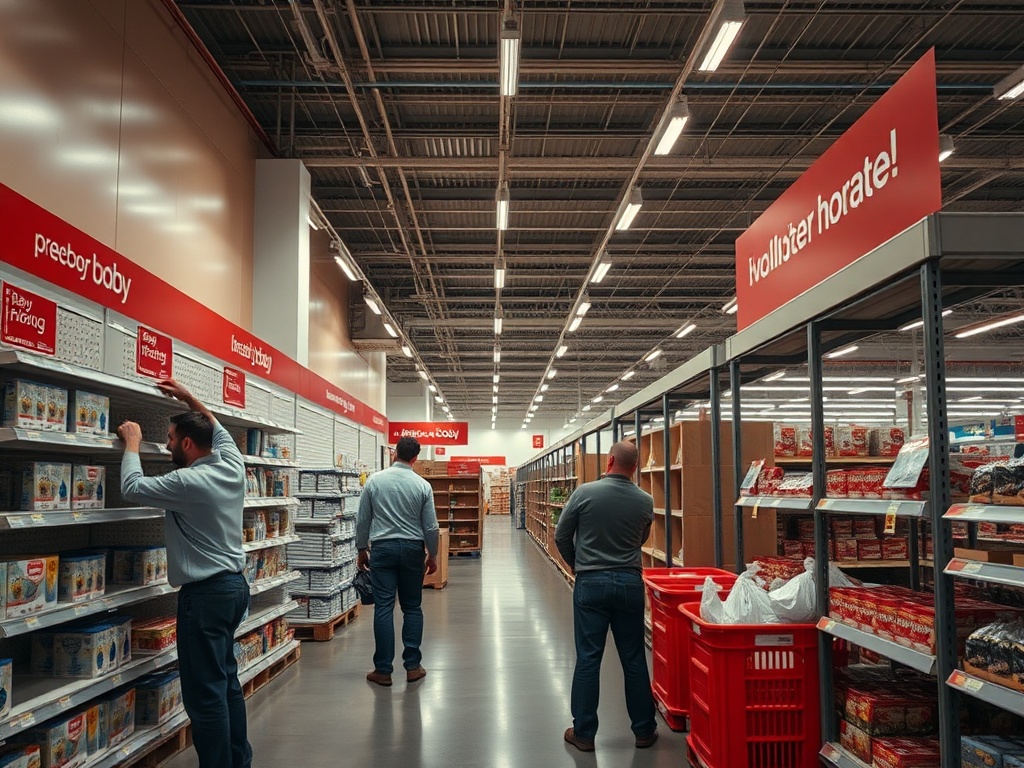
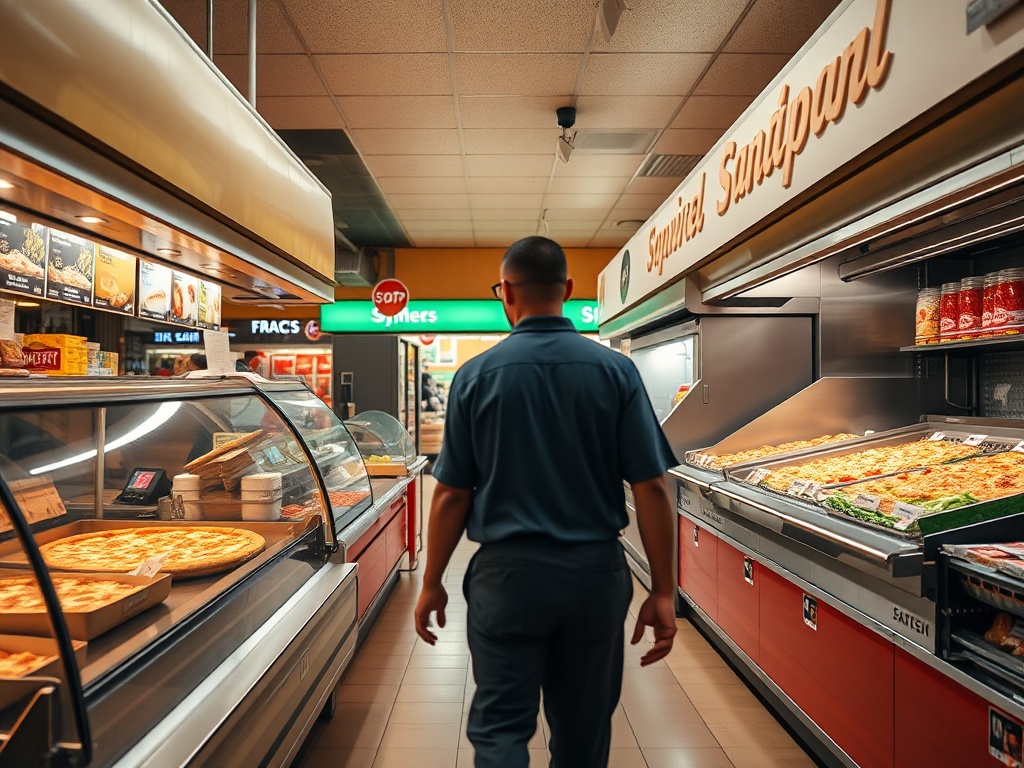
The operational snapshot from MassLive—following the steps of an employee from the pizza counter to sandwiches, or managing flower orders for specific dates—does not simply reflect routine. It signals that Big Y still understands the supermarket as a system. In a sector obsessed with “big bets,” this mentality is a superior marketing asset, as it translates into a consistently good experience.
The problem arises when many companies turn this obsession with detail into expensive over-service. In practice, they fill their stores with stations, sub-stations, and rituals that the customer does not pay for, additionally breaking productivity during off-hours. The strategic opportunity for Big Y is different: to use its culture of microdecisions to eliminate the complexity normalized by the industry and reinvest that oxygen into perceived value.
Three examples that typically separate quiet winners from others:
- Eliminate Variety Theater. Having variety is different from having useful choice. A store boasting 14 brands of the same product incurs shrinkage and sluggishness. Smart marketing here doesn’t shout “we have everything”; it shows “we have the right options that are always fresh.”
- Reduce Operational Friction Disguised as Service. Counters operating partially, manual processes, internal orders traveling throughout the store. The obsession over employee steps should convert into productivity, not anecdotes. Fewer steps and shorter waits are more impactful than any campaign.
- Increase Trust, Not Promotional Noise. A regional chain can win by predictability: consistent freshness, disciplined replenishment, availability of basics, and a clear identity of what purchase it resolves better than anyone else.
Big Y has already proven it understands formats: Express for convenience and fuel, Table & Vine as a specialized offering. The value of these moves is not to “have more things.” It's about diversifying consumption moments without harming the economics of the core. The marketing fitting this logic is surgical: it stops addressing the generic “supermarket shopper” and builds relevance around concrete missions. There’s no need to invent technology for that; it requires making choices.
Growing Without Burning Margins: Eliminate and Reduce to Fund What the Customer Values
When a company announces its growth intentions in a competitive market, the C-Level often thinks of two levers: CapEx (opening more locations and renovations) and promotions (driving traffic). Both are expensive, and in a saturated environment, they tend to raise the sales threshold needed to justify each location. For a private, family-owned business, the risk is not just financial. It's about governance: growth can strain culture, standardize what was distinctive, and turn the operation into a delayed version of what others are already doing better through scale.
The smart play for Big Y consists of redesigning its cost structure before adding footprint. In supermarkets, the real competition doesn’t happen in aisles; it happens in shrinkage, labor hours, assortment complexity, energy, internal logistics, and replenishment speed. If Big Y aims to “grow the family,” it should obsess over increasing its own demand, not inheriting the price wars.
Applied to value proposition design, the pragmatic path appears as follows:
- Eliminate signs of “hypermarket for everyone” if they do not contribute to the customer's mission. Every extra module that doesn’t turn fast incurs inventory and labor costs.
- Reduce the dependency on promotional events as a traffic driver. Continuous promotions train customers to expect discounts and destroy brand positioning.
- Increase the reliability of basics and fresh products. Repeating a good experience represents the true advertising budget.
- Create formats and services that simplify life around specific missions, without turning the store into a theme park of stations. Big Y Express is already targeting that; the key is that the rest of the portfolio doesn’t contradict it.
In this reading, marketing ceases to be mere communication and becomes choice architecture. Every assortment, layout, and flow decision becomes a branding decision. A company that understands this doesn’t need to win the share of voice; it wins the share of routine.
Expansion that Renders Competitors Irrelevant Validates in Store, Not in PowerPoint
Big Y reaches 2026 with an asset that the industry often squanders: an identity built through daily execution and family continuity. The risk is to turn this capital into operational nostalgia and expand by replicating the average supermarket model, with its mix of complexity, promotions, and unforgiving fixed costs.
The defensive move would be to open more stores “just like always” and hope that the brand suffices to sustain traffic. The offensive move is more uncomfortable: choosing what to stop doing to fund what actually creates preference. In a market where so many compete for the same customers with the same stimuli, real growth occurs when the proposition becomes so specific and consistent that price comparisons lose their impact.
The leadership fit for a 90th anniversary is measured not by the number of openings or the modernity of the rendering. It is measured by the discipline of validating on the ground which value people repeatedly pay for and which “industry standards” only drain margin. The C-Level that keeps burning capital to fight for crumbs in a saturated market ends up managing decline. The one who has the audacity to eliminate what doesn’t matter and create its own demand transforms expansion into an advantage, not a gamble.