
Ford and GM in F1: Renting a Marketing Lab Under Real Pressure
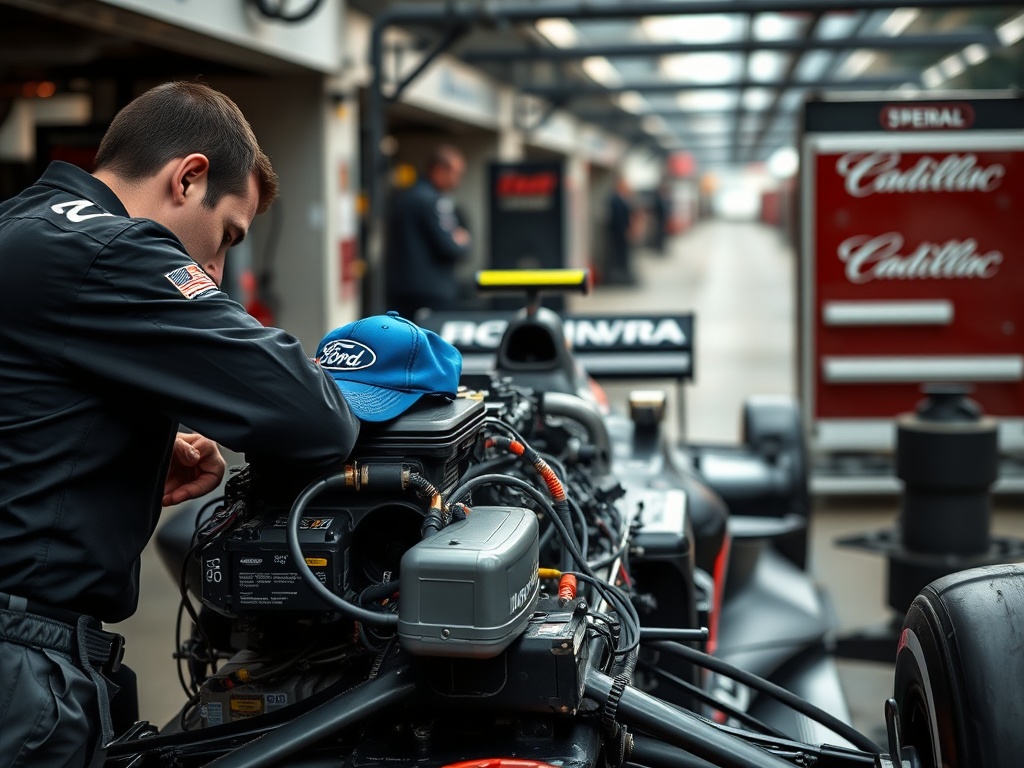
Formula 1 is often marketed as glamorous, but for manufacturers, it serves as a testing ground where the reputational cost is paid per lap. In 2026, Ford and General Motors (via Cadillac) are once again clashing head-on, this time in the most high-profile category of motorsport. Ford will partner with Oracle Red Bull Racing through a long-term technical alliance to develop hybrid power units under the 2026 regulations. GM enters with Cadillac as the 11th team, pending FIA approval and operational management from TWG Motorsports, which will initially use Ferrari power units while building its own capability towards the end of the decade. The rivalry has already heated up off track, with Cadillac's environment describing the Red Bull–Ford partnership as a “marketing deal,” a comment Ford rebutted by emphasizing its technical contribution.
From a marketing standpoint, the easy headline is "two American giants buy global visibility." The structural plan is different: both are attempting to turn F1 into an efficient channel for justifying electrification, software, and performance to consumers who are no longer impressed by slogans. The question is not whether F1 offers reach. What’s at stake is whether that exposure can be atomized into concrete proposals, clear segments, and metrics that hold up when the paddock noise fades.
F1 as a Channel: Massive Reach But Costly Precision
Ford was explicit about its thesis. Jim Farley described the return as a bet aligned with “increasingly electric and software-defined vehicles,” asserting that F1 is a “profitable” platform for innovating and connecting with tens of millions of new customers. This framing is not accidental: the 2026 regulations push technologies that can be translated to the streets, with a hybrid architecture where the electric component gains weight, including a 350 kW electric motor and the use of fully sustainable fuels. Ford isn’t just buying a billboard; it’s buying a stage where the message is stress-tested.
GM, on the other hand, is getting something different: Cadillac enters as an approved team for 2026, with a premium brand narrative and the ambition to become a factory team by the end of the decade. The formal approval by FIA and Formula One Management is a milestone because it turns the narrative into operational commitment: facilities, talent, timeline, and a technical transition plan. Mark Reuss celebrated the “official” nature of the team and the accelerated progress of the work; Dan Towriss spoke of facility expansion, technologies, and hiring top-tier talent. In channel architecture, this implies that Cadillac aims to control more variables of the “media product” delivered every weekend.
The structural risk is that F1 punishes vagueness. If the message is “innovation,” the audience will tolerate it only as long as the car is competitive or at least shows verifiable progress. Global exposure amplifies both success and inconsistency. From a marketing perspective, F1 isn't a megaphone; it’s an amplifier with feedback. And that feedback comes in the form of performance, reliability, engineering narrative, and the social conversation created around each mistake.
Two Paths of Entry, Two Risk Balances: Technical Alliance vs. Own Team
Ford chose a path that, in business design terms, reduces fixed costs and concentrates effort where the story is most credible: the powertrain. Its deal with Red Bull Powertrains focuses on developing the next-generation power unit from 2026 and at least until 2030, contributing expertise in combustion, battery cells, electric motors, control software, and analytics. Instead of shouldering the complete structure of a team, Ford partners with an organization that already has competitive machinery on track and uses its brand to lend industrial legitimacy to the project.
This choice also explains why Cadillac’s comment about a “marketing deal” is more than a media jab. If the alliance is perceived as cosmetic, Ford loses some of the return: technical credibility. That’s why the response was immediate and defensive in terms of content, not ego. In F1, the “halo” of a brand is not manufactured; it derives from the link between what is promised and what is executed.
GM, by contrast, is purchasing a heavier package: a new team on the grid as the 11th constructor. The plan includes appointed leadership—Graeme Lowdon as Team Principal and Russ O’Blenes as CEO of TWG GM Performance Power Units—and a transitional strategy using Ferrari power units and gearboxes before arriving at a self-sufficient solution. This is a typical startup scheme: first, secure the minimum capacity to compete and learn; then internalize the critical parts.
The key difference is exposure to the “learning curve cost.” A new team pays the learning curve in public and at a weekly pace. A technical alliance, if designed well, allows learning to remain more encapsulated, resulting in less variable performance on track. No route is free. They simply distribute risk differently among reputation, organizational capex, and control over the narrative.
The Real Product Isn’t the Car: It’s the Transfer of Meaning to the Streets
The classic mistake in high-profile sponsorships is to confuse audience with conversion. F1 delivers audience by default. What it doesn’t provide by default is a clear translation into sales, preference, or willingness to pay. That’s where Ford and Cadillac are attempting to build a technical bridge.
Ford ties its return to a concrete electrification framework: under the Ford+ plan, it aims for an annual rate of 600,000 electric vehicles by the end of 2023 and 2 million by the end of 2026. These goals turn the presence in F1 into an internal pressure tool: motorsport stops being a “passion department” and becomes a component of the corporate narrative. If the company defines itself as “more electric and software-defined,” then the F1 content must feed that definition with verifiable pieces: energy recovery, control software, electric integration, operation with sustainable fuels.
Cadillac pursues another transfer: premium prestige. F1 serves as extreme signaling of engineering and performance; if executed well, it elevates the psychological price the market is willing to pay for the brand. But the bridge has to be designed precisely. It’s not enough to place Cadillac's emblem on the wing and expect consumers to associate that with a street vehicle. The transfer requires continuity: design, communication, and product.
Here, atomization appears as a discipline: the message must fit a specific segment and a specific channel. In the U.S., F1 is growing with races like Miami and Las Vegas, which opens a clear segment of consumers attracted by technology, status, and sports culture. The channel isn’t “advertising” in the abstract; it comprises activations, content, launches, and partnerships with models that are already coherent with performance and electrification. If that coherence doesn’t exist, reach becomes a vanity tax.
Rivalry as Fuel, and Metrics as Safety Brake
The Ford–GM narrative has historically sold well in NASCAR, Le Mans, and other championships. In F1, this rivalry adds another layer because it reaches a global audience and because the sport is at a regulatory change point that invites manufacturers to tell a transition story. Stefano Domenicali described it as an “important and positive” demonstration of the sport’s evolution, and FIA president Mohammed Ben Sulayem referred to Cadillac's entry as a “transformational moment.” These statements matter because they validate the framework: F1 wants to be an industrial platform, not just entertainment.
But a rivalry can also disarray the marketing architecture if it turns into a slogan war. The public exchange about whether Ford's deal is “marketing” or “technical” reveals a delicate point: the F1 audience punishes empty propaganda because it coexists with engineers, data, and telemetry as part of consumption. In this ecosystem, the narrative holds better when the manufacturer shows the load diagram, not when they paint the façade.
In terms of risk control, the executive financing F1 needs a brutally simple dashboard:
- Evidence of technical contribution that can be communicated without exaggeration.
- Coherence between the on-track story and the street portfolio.
- A funnel for capturing and retention where F1 feeds its own audience, not just rented exposure.
The track offers an additional benefit that many marketing teams underestimate: discipline. The weekly pressure forces the completion of learning cycles and the translation of hypotheses into decisions. This cadence, transferred to product and communication, can enhance corporate execution. If left in the paddock, it’s just expensive spectacle.
The Winner Will Be the One Who Turns Global Noise into a Repeatable Sales System
Ford and GM arrive at 2026 with two distinct architectures to buy something the market values: global technological credibility. Ford leverages Red Bull Powertrains to focus on the piece where it can claim authority—the hybrid power unit and software—while maintaining control over fixed risk. Cadillac enters as a constructor to accumulate premium symbolic capital while also building technical muscle through a gradual transition.
The smart decision won’t be the one that generates the most headlines but the one that best connects three pieces: a verifiable technical message, a segment willing to pay for that promise, and a channel that turns audience into its own demand. F1 multiplies everything, including fit errors. Companies don’t fail due to a lack of ideas, but because their model pieces fail to fit together to generate measurable value and sustainable cash flow.